Women, Peace and Security Conflict Tracker: April Updates

Our Women, Peace and Security Conflict Tracker combines real-time data points and original analysis to offer gender-sensitive insight into conflict dynamics across 27 countries. To see the complete analysis across all 27 countries monitored, please visit the WPS Conflict Tracker and explore by country.
Spotlight: Genocide Awareness and Prevention Month
April marks Genocide Awareness and Prevention Month, a time to honor the victims of genocide and to renew commitments to preventing future mass atrocities. April reflects significant historical dates for many genocides, including those in Rwanda, Cambodia, Armenia, and the Holocaust. Yet genocides are not solely a historical phenomenon: the world continues to struggle to end the most heinous crime under international law.
Genocide—defined as the intent to destroy, in a whole or in part, a national, ethnic, racial, or religious group—continues to occur globally. Millions of people are experiencing genocide and its impacts, from the ongoing ethnically-motivated violence against civilians in Sudan, with estimates of over 61,000 deaths and 4 million displaced people due to the civil war, to Gaza, where there have been over 75,000 estimated deaths, and there is a continuing humanitarian crisis. Many countries are at risk of or are experiencing mass atrocities—including war crimes, crimes against humanity, and ethnic cleansing—some of which could amount to genocide. Across these contexts, women and girls face distinct and compounded risks.
The WPS Conflict Tracker elevates countries at risk of mass atrocities, highlights gendered dynamics, and identifies opportunities to support justice and accountability. This edition examines atrocity risks, ongoing violence, and recovery efforts in contexts including Sudan, Ethiopia, Afghanistan, Ukraine, and Palestine. Genocide and other mass atrocities are not spontaneous—they are preceded by identifiable warning signs and risk factors. The WPS framework provides a mechanism to strengthen early warning and response, institutionalize civilian protection, provide dedicated support to at-risk populations, support local actors working to mitigate risk factors and warning signs, and mobilize timely international action, all of which are critical to prevention.
Risks & Opportunities
The WPS Conflict Tracker analyzes and identifies current risks and opportunities—including new developments, upcoming events, or looming threats—for women in the 27 conflict-affected settings we monitor. Updates for April 2026 include:
- Extreme Weather Shocks Deepen Humanitarian Crisis: Severe flooding and an April 2026 5.8 magnitude earthquake in northern Afghanistan killed dozens, destroyed thousands of homes, and disrupted critical infrastructure. These overlapping shocks—occurring in one of the countries most vulnerable to climate change—are compounding already severe humanitarian pressures amid declining aid and widespread food and water insecurity. For women and girls, restricted mobility and damaged services limit access to healthcare and assistance, while displacement and economic strain heighten risks of gender-based violence and harmful coping mechanisms.
- Cross-Border Conflict with Pakistan Drives Displacement and Access Constraints: Pakistani airstrikes and continued conflict have displaced over 94,000 people—with women and children comprising 73 percent of all those internally displaced. For women and girls, movement restrictions—including “mahram” requirements—alongside checkpoint scrutiny and shortages of female aid workers are limiting their ability to flee violence and access essential services, with acute impacts on women-headed households.
- Escalating Political and Armed Violence Ahead of 2026 Elections: Colombia is experiencing its most violent quarter in a decade, with a surge in both political and armed group violence in the lead-up to the May 31, 2026 presidential election. At the same time, armed groups are intensifying violence and coercion in rural areas, with reports indicating nearly 200,000 civilians have been forcibly confined in contested territories over the past two years. These overlapping dynamics, combined with digital harassment and misogyny toward women journalists and candidates, undermine electoral integrity and heighten risks for women voters, candidates, and civic actors.
Democratic Republic of the Congo
- Violence Persists Despite Diplomatic Efforts: The situation in the DRC remains volatile despite recent diplomatic developments, including a March 18, 2026 joint statement between the DRC and Rwanda reaffirming commitments under the Washington Accords, and an April 18, 2026 agreement between the DRC and AFC/M23 to protect civilians and facilitate humanitarian access. Women have been seemingly absent from negotiations despite bearing the brunt of protracted conflict, prompting UN officials to call for women’s equal and meaningful participation as agents of peace and stability.
- Fragile Peace in Tigray Risks Renewed Conflict: The Tigray People’s Liberation Front (TPLF) has moved to restore its pre-war administration, fueling fears of renewed conflict. Clashes between government forces, government-aligned forces, and the TPLF—alongside reports of drone strikes and political fragmentation—are driving insecurity and displacement, with women and girls facing heightened risks of conflict-related sexual violence, exploitation, and loss of livelihoods. The persecution of ethnic Tigrayans in contested areas—including arbitrary detention, movement restrictions, and denial of documentation and services—is further preventing safe returns and contributing to women’s systematic exclusion from economic and social life.
- Sexual Violence and Child Exploitation Surge: Sexual and gender-based violence (SGBV) continues to rise, with roughly 8,100 cases reported in 2025—a 25 percent spike from 2024. Gangs are also increasingly involved in child trafficking and forced recruitment, with girls facing systematic sexual exploitation; one in six survivors of GBV is under 18, and sexual violence against children has risen by 1,000 percent since 2023. Limited access to services compounds harm, with only around 30 percent of survivors receiving timely care, highlighting critical gaps in protection, recovery, and justice.
- Mass Arrests and Death Sentences: Iranian authorities have intensified a nationwide crackdown, with reports of at least 3,600 arrests since the war broke out, including a surge in the number of women and minors held on broadly defined national security charges. Women and girls are among those detained for protest participation and online expression and are often denied legal counsel, medical care, and basic protections. Repression remains lethal: in April 2026, Maryam Hodavand was sentenced to death for her involvement in protests, amid allegations of coerced confessions and due process violations, marking a continued rise in executions of women.
- Pervasive Sexual Violence and Torture Against Palestinian Women: Reports of widespread sexual violence, harassment, and degrading treatment document a pattern of abuses targeting Palestinian women and girls across Gaza, the West Bank, and Israeli detention facilities. In the West Bank, sexual violence and harassment of Palestinians by Israeli soldiers and settlers are contributing to forced displacement amid Israel’s accelerated settlement expansion. These dynamics reflect the use of gender-based violence as a method of control, with severe implications for the safety, dignity, mental health, and long-term well-being of women and girls.
- Municipal Elections Offer Limited Opening for Local Governance in Gaza and the West Bank: Municipal elections held on April 25, 2026 across parts of the West Bank and in Gaza’s Deir al-Balah offer a meaningful though limited opening for the rebuilding of local governance structures. The inclusion of a quota for women candidates reflects an important step in expanding women’s formal participation—essential for inclusive recovery and reconstruction efforts. However, elections occurred in a highly constrained environment; Gaza’s first local vote in nearly two decades excluded most of the enclave’s displaced population, while voting in the West Bank occurred amid escalating settler violence and forced displacement.
- Widespread Displacement Deepens Gendered Harms: Over 1.1 million people—including an estimated 620,000 women and girls—have been displaced as a result of Israel’s most recent attacks on Lebanon, with many experiencing cyclical displacement amid continued insecurity. More than 70,000 displaced women and girls are living in collective shelters, while an estimated 450,000 more are in cramped private or informal housing arrangements. These conditions are increasing exposure to gender-based violence, exploitation, and harassment.
- Municipal Elections Expand Women’s Local Political Representation: December 2025 and February 2026 municipal elections contributed to incremental gains in women’s political participation at the local level, with women securing seats across multiple councils, including through reserved quotas. The election of Libya’s second woman mayor, Jamila Al-Lawati, signals further progress in advancing women’s representation in local governance.
- Rising Fuel Costs and Power Cuts Deepen Economic Strain: Fuel price increases—driven by global disruptions linked to conflict in the Middle East—are fueling inflation and raising the cost of food and transport in Pakistan. In response, authorities have introduced austerity measures, including extended power cuts, a reduced government work week, and curfews on commercial activity, disrupting livelihoods and access to services. For women and girls, these constraints limit mobility and access to work, healthcare, and education, while increasing unpaid care burdens and exposure to gender-based violence and exploitation.
- 100 Women and Girls Displaced Every Hour as Peace Agreement Nears Collapse: Escalating violence and political tensions are undermining the 2018 revitalized peace agreement, raising concerns that recent clashes could reverse fragile gains and push the country toward renewed large-scale conflict. Insecurity is driving mass displacement, with more than 100 women and girls forced to flee their homes every hour, often going days without food, shelter, or basic services. These conditions increase women and girls’ exposure to violence, family separation, and loss of livelihoods, compounding risks of gender-based violence and limiting access to protection and services.
- Conflict and Humanitarian Crisis Spread as War Enters Fourth Year: April 15 marked three years of war, yet fighting between the Sudanese Armed Forces (SAF) and Rapid Support Forces (RSF) continues to intensify with increased targeting of civilians. Women and children face acute protection risks as a result of the conflict, comprising more than half of the 12 million displaced people, while conflict-related sexual violence remains a widespread and systematic tactic of war. At the same time, a deepening hunger crisis is affecting more than 25 million people, with women and girls at heightened risk of malnutrition, starvation, and exploitation, including transactional sex to access food.
- Progress Towards a Special Tribunal Continues: Efforts to establish a Special Tribunal for the Crime of Aggression against Ukraine have progressed, with legal groundwork largely complete and a team preparing for its launch. The Tribunal—expected to become operational as early as 2027—would provide a forum for addressing conflict-related harms against women and girls, including sexual crimes.
In The News
War in the Middle East Is Devastating the Global Aid System, and Women and Girls Are Paying the Price by Jessica Anania and Rachel George for Ms. Magazine
This article examines how escalating conflict in the Middle East—particularly disruptions in the Strait of Hormuz—is fracturing global humanitarian supply chains and driving a cascading crisis for women and girls. The authors show how blockades, rising oil prices, and restricted shipping routes are limiting the delivery of food, fuel, and medical supplies, while amplifying inflation and deepening global hunger. These economic and logistical shocks disproportionately affect women, who are more likely to experience food insecurity, bear increased unpaid care burdens, and face heightened risks of displacement and exploitation as aid systems strain. The analysis underscores the need to center women’s access to resources and services in conflict response and recovery efforts.
In The Arts
The State of Artistic Freedom by Freemuse
This report documents how war and democratic decline are narrowing space for artistic expression, with women artists facing heightened censorship, harassment, and violence—particularly where their work challenges political authority or gender norms. Across contexts such as Iran and Afghanistan, women are using art as a form of resistance—creating work through underground networks, exile communities, and informal cultural spaces to document repression and sustain dissent. As Iranian activist Parvin Ardalan reflects, even under severe constraints, “pain, fear, and anger become poetry, images, and songs,” underscoring how women’s creative expression functions as both survival and defiance.
Explore More
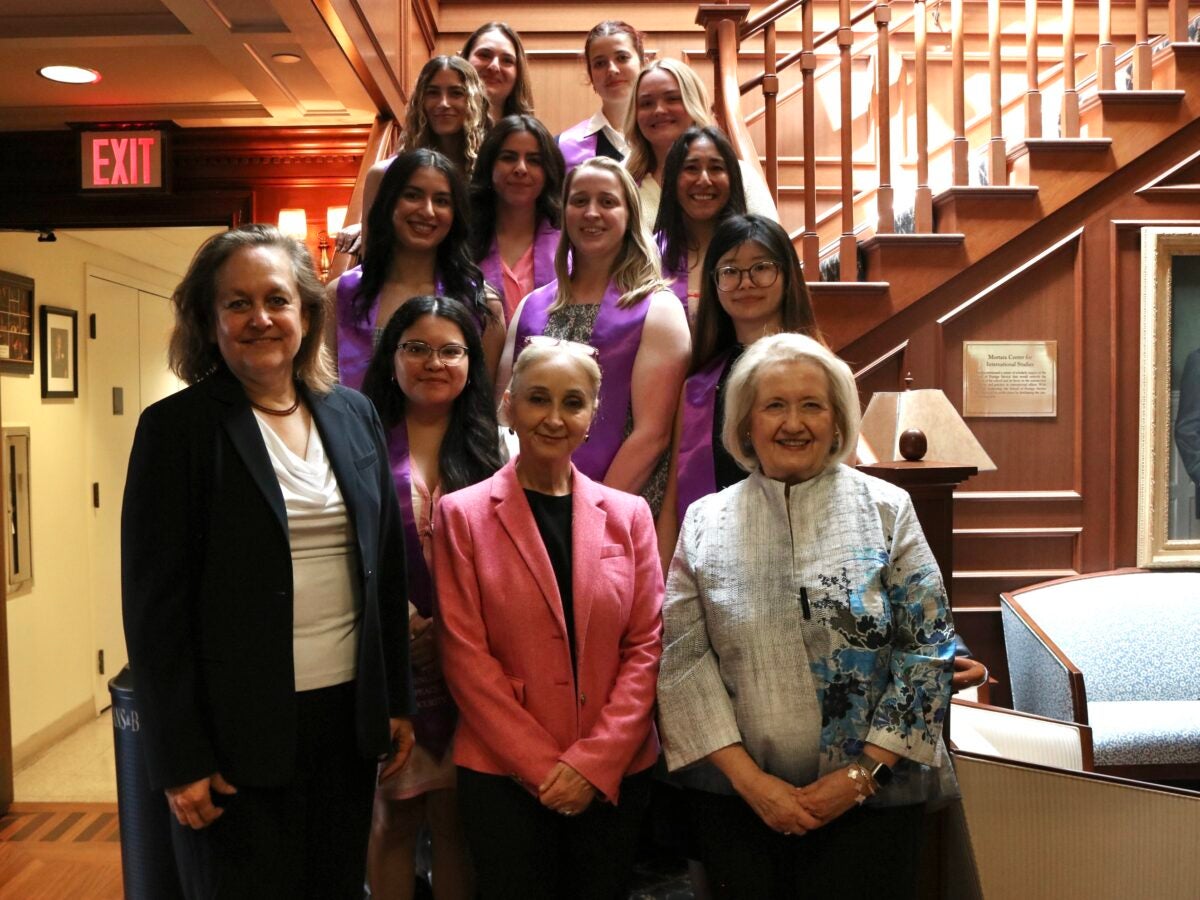
Meet the New Graduates of Georgetown’s Gender, Peace and Security Certificate
This weekend, Georgetown University celebrated the class of 2026 during its annual…

GIWPS Awarded the Francesca Tardioli International Award
We are honored to announce that the Georgetown Institute for Women, Peace…