My Hillary Rodham Clinton 2024-2025 Fellowship: Courage in A Year of Anniversaries

This year, as GIWPS’ Hillary Rodham Clinton Fellow, I contributed monthly analysis to the Women, Peace and Security Conflict Tracker—a conflict monitoring initiative that analyzes global armed conflict through a WPS lens—and found myself at a unique historical crossroads—something I have come to call the “50-30-25th Year:” Fifty years since the Vietnam War, which shaped my family’s journey to America; 30 years since US-Vietnam diplomatic normalization and Hillary Clinton’s declaration at Beijing Conference that “women’s rights are human rights;” and 25 years since the United Nations formalized women’s crucial role in ensuring sustainable peace through the United Nations Security Council Resolution 1325 on Women, Peace and Security (WPS).
The Conflict Tracker, which monitors risks and opportunities for women in global conflicts, offered a unique vehicle to reconcile present and past during this significant year—a time to develop constructive approaches to the WPS agenda. However, rather than meaningful reflection on historical and current conflicts for the future of national security, hard-won progress has regressed under the current US administration: The elimination of WPS at the Department of Defense and the Office of Global Women’s Issues at the State Department represents a dangerous disconnection from the vital lessons these anniversary years should be teaching us. As this year’s Hillary Rodham Clinton Fellow and a child of Vietnam War refugees, I believe there is no better time to revive these lessons and examine courage across time—our present, past, and future.
Lessons from Current Conflicts: The Conflict Tracker
Sustainable peace is a volatile process, and I witnessed WPS in action across some of the world’s most complex conflicts, including Haiti, Israel and Palestine, Lebanon, Libya, Mozambique, Myanmar, Nigeria, and Ukraine. Despite all odds in conflict zones, women actively create survival networks, negotiate humanitarian access, and preserve social cohesion when formal institutions fail. Throughout my fellowship, I have documented consistent patterns where women establish parallel systems during governance breakdown. This includes women’s political and economic leadership in wartime Ukraine, women-led human rights networks in and outside of Myanmar, women’s tireless advocacy to fight against sexual and gender-based violence in Haiti, as well as women leaders’ recommendations for conflict resolution in Sudan.
These are not isolated incidents but enduring patterns that deserve serious policy attention. The data has always been clear: when women participate meaningfully in peace processes, agreements last longer. When women achieve economic security, communities become more resilient against extremism. When women hold political office, policies address citizens’ needs in a more comprehensive and community-driven way. These elements ensure peace actually lasts.
Lessons from Past Conflicts: The Vietnam War
I have also witnessed how these patterns of women’s courageous leadership manifest not only in conflict zones abroad but also on our own soil. This brings me to the Vietnam War, America’s own conflict from 50 years ago. Many who lived through the war have developed more poignant reflections on how it marked the roots of division and distrust in the American government—considerations that remain relevant for the future of American foreign policy, especially in today’s polarized political climate.
For now, I can offer a personal testimony to how good policies can shape women’s lives and opportunities. My mother and aunts, who knew only war throughout their childhood and young adult lives, fled its aftermath and navigated complex challenges while establishing new lives in America during the 1990s. Policy frameworks such as the Refugee Act of 1980 provided critical resettlement assistance, while welfare reforms during the 1990s altered immigrants’ access to benefits—directly shaping women’s opportunities.
These policies created possibilities for my mother and aunt as they made a living as tailors; in turn, they wove a pathway not only for my future but for others as well. My aunt launched a beauty school to guide women from various ethnic backgrounds in making a living by opening their own nail or hair salons—creating a multiplier effect that enriched the entire community with economic growth. This microcosm reinforces the broader pattern evident in the Conflict Tracker: Women do not merely participate in rebuilding economies—they transform them, constructing networks of opportunity that sustain communities through upheaval.

Celebrating Courage in Conflict:
Women Shape Global Security
Women in conflict zones and women in America, especially immigrant women, continue to persist in their courage. At the 2024 Hillary Rodham Clinton Awards, we celebrated women’s courage in various forms. The Institute honored three female heads of state and government who demonstrated exceptional leadership, alongside grassroots organizations like Women of the Sun and Women Wage Peace—Israeli and Palestinian women collaborating to build peace in Israel and Palestine. At the event, Ambassador Melanne Verveer powerfully noted, “We live in troubled times; war seems to be the new normal. Death and destruction are raging. Missiles fly, bombs drop, people suffer. Peace is elusive, indeed, seemingly impossible. Today’s crises envelop many places, and significantly, Palestine and Israel. It’s been said that some people see things as they are and ask, ‘Why?’ Others see them as they could be and ask, ‘Why not?‘”
These words, “Why not?” were asked amongst all generations of women during this year’s Commission on the Status of Women, the event From Resolution to Revolution: Marking 25 Years of the Women, Peace and Security Framework at Georgetown University, and the Global Women’s Leaders Summit. Throughout all the events I attended or was briefed on, I witnessed decades of evidence showing that women conceptualize security not primarily through military strength, but through economic stability, political representation, and freedom from violence—threads that actually create lasting peace for all.

Fast Forward: A Commitment to Courage
As I move into my new role focused on building a more progressive American foreign policy, I am committed to ensuring these anniversary years become foundations for meaningful action. Together with women across generations, while leaning on lessons from present and past conflicts, I will continue to question the status quo with “Why not?” The Institute’s forthcoming research outputs—the Women, Peace and Security Survey and the updated Women, Peace, and Security Index—will provide essential data to support this work, offering both qualitative insights and quantitative measurements to guide our efforts. The path ahead presents significant challenges, particularly as American democracy faces unprecedented threats. Global patterns show that women not only bear the heaviest burdens during democratic backsliding but also stand as democracy’s most steadfast defenders. Yet, I find inspiration in the Institute’s collective staff story for moving forward in 2025: “One woman can make a difference. Women together are the difference.”
Dawn Le is the Hillary Rodham Clinton 2024-2025 Fellow, where she provided analysis for the Conflict Tracker. After her fellowship, she will transition to the Center for American Progress’s National Security and International Policy Team.
Explore More

End of Year Reflections
This year has been particularly challenging for peace around the world, with…
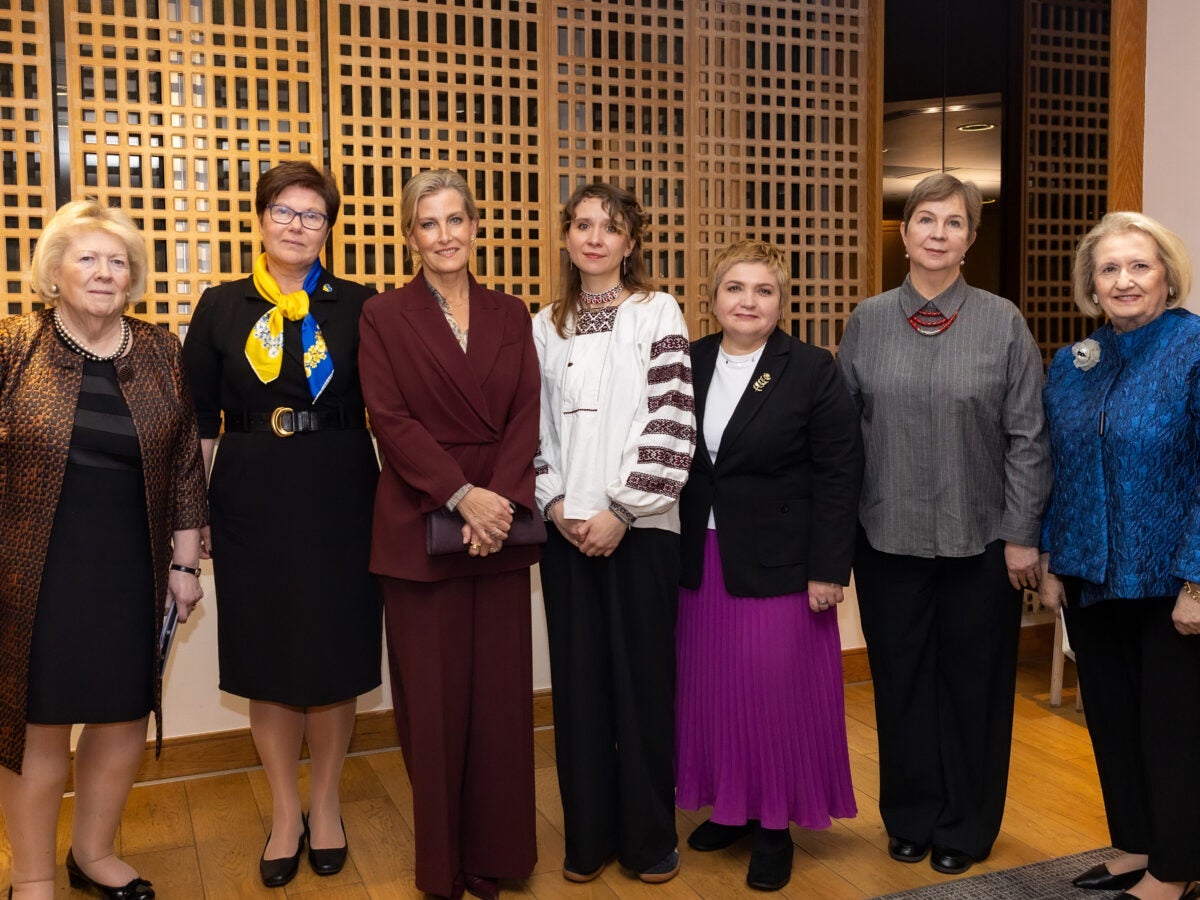
“No Amnesty, No Silence:” Ukrainian Women Urge Accountability for War-Time Sexual Violence
Last week, the Georgetown Institute for Women, Peace and Security (GIWPS) brought…