Hillary Clinton Headlines Anti-Human Trafficking Summit at Georgetown

“The work is urgent, the stakes are high, but we can make even more progress on behalf of dignity and justice,” former Secretary of State Hillary Clinton said during a summit on the fight against human trafficking and forced labor at Georgetown University this week.
The event, hosted by the Georgetown Institute for Women Peace and Security (GIWPS), marked the 25th anniversary of the United States’ Trafficking Victims Protection Act (TVPA) and the UN’s Palermo Protocol—two landmark frameworks that defined human trafficking in law and strengthened protections for survivors.
“Advocates had long raised alarms about what they were seeing, particularly in conflict zones and in places of great poverty. Women and girls were being bought and sold, trafficked across borders, forced into servitude,” Clinton said. “It was treated as an invisible crime, and in many places it wasn’t treated as a crime at all.”
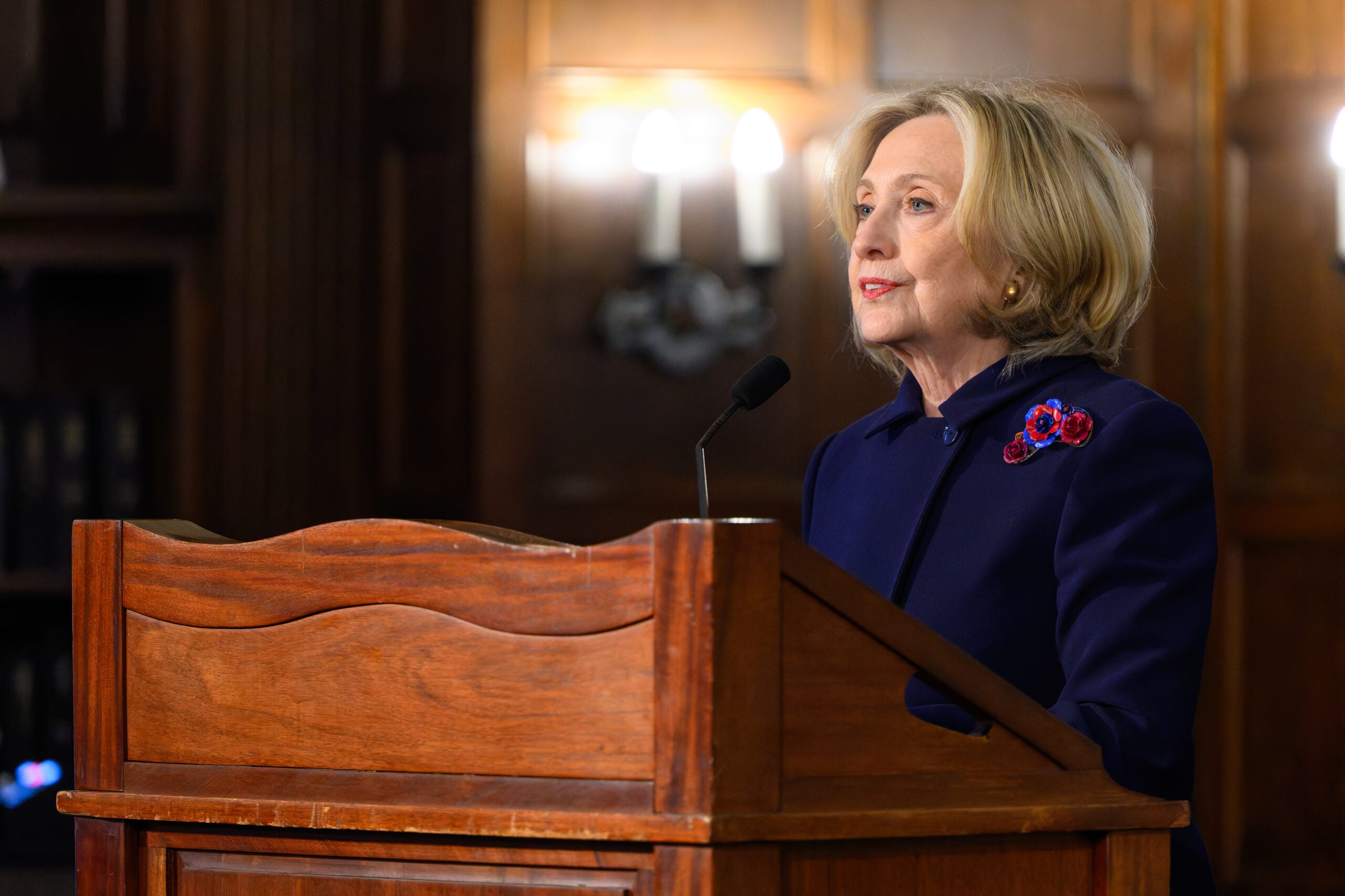
Clinton recalled that her motivation to work on anti-human trafficking policies began when she met women and girls who had been trafficked to brothels in Bangkok.
“It was such a devastating encounter, to hold the hand of a 12-year-old dying of aids,” Clinton said.
Not long after, she also heard from women in Ukraine that women were disappearing in their country after being promised good jobs–only to realize they’d been trafficked. They pleaded with her to “do something.”
As a result of hearing from women firsthand, she advocated strongly for U.S. action to address human trafficking. After years of bipartisan negotiations in Congress and in the Clinton Administration, the TVPA was signed into law in October, 2000. It was the first comprehensive U.S. legislation that addressed a three-pronged strategy of prevention, prosecution of the perpetrators, and protection for victims of trafficking.
“The TVPA and the Palermo Protocol didn’t stop trafficking. No single law can. But they changed the world,” Clinton said. “They created a common language, a common legal standard, a common set of responsibilities. That progress didn’t happen overnight or by accident. It happened because of persistence, particularly from survivors.”
Survivor Advocacy
The audience broke into applause as Evelyn Chumbow, the Human Trafficking Legal Center’s advocacy and survivor leadership director, and survivor of forced labor trafficking, took the stage to join in a conversation with Martina Vandenberg, President of The Human Trafficking Legal Center.
Chumbow, who was trafficked from Cameroon to Maryland at age 9, described being forced into domestic servitude, beaten, and denied schooling. With the help of a cousin, she escaped at 17. Her trafficker received a 17-year prison sentence.
“Education is the key, and I didn’t give up,” said Chumbow, who earned her GED and later a bachelor’s degree in homeland security.
She received a T visa, which allows survivors to stay legally in the United States and seek support–a protection she described as life-saving.
“If you don’t have a T visa as a trafficking survivor, you’re just left being more vulnerable than the situation that you were already forced to be a part of,” Chumbow said.
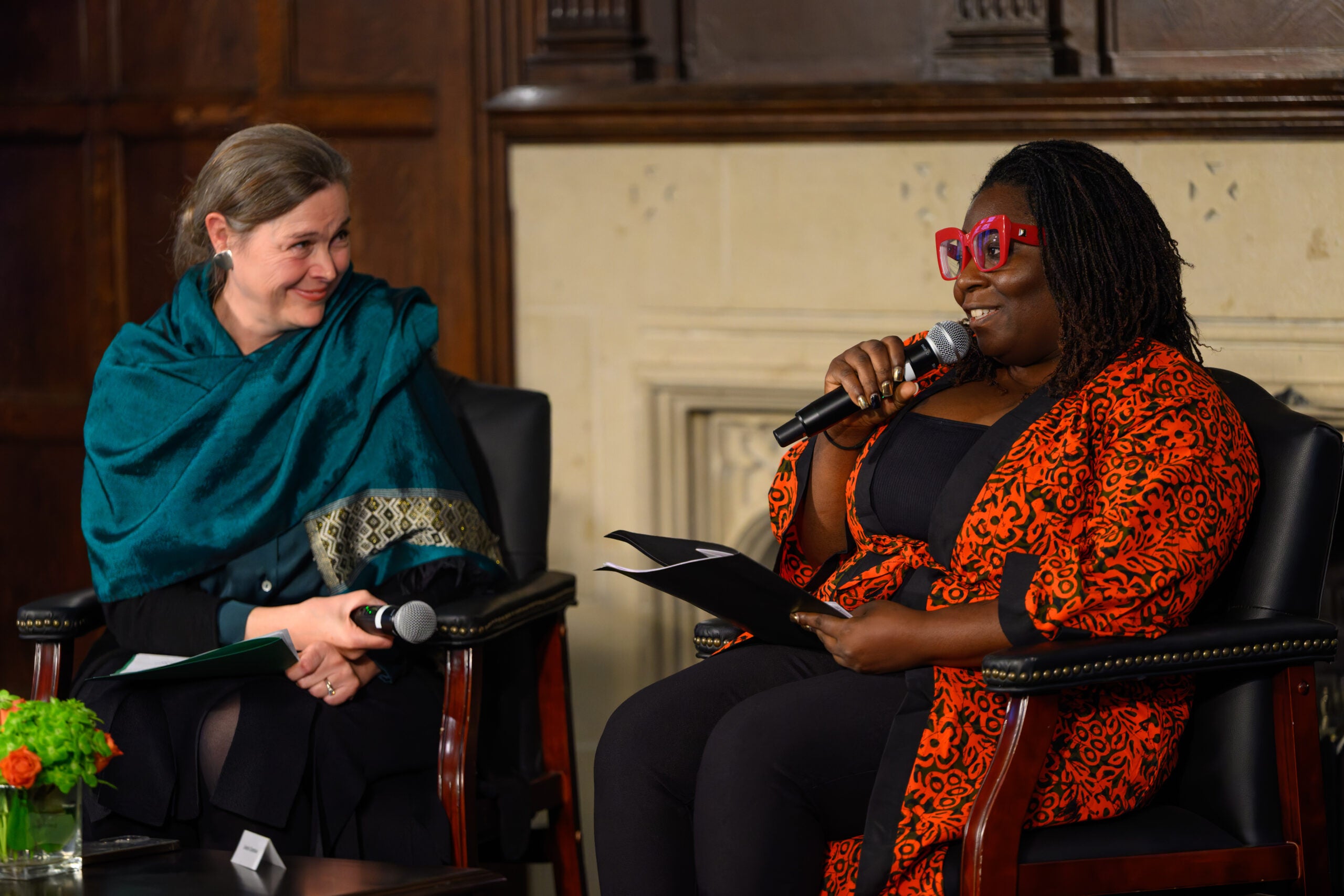
Chumbow now advocates for survivors and called for renewed distribution of T visas and reauthorization of the TVPA.
The TVPA, which expired in 2021, was authorized to provide crucial resources to combat human trafficking through 2026. As Chumbow pointed out, its reauthorization for resources beyond 2026 could mean life or death for millions of survivors. She also stressed the importance of including survivor voices in policymaking and encouraged every country to establish survivor advisory councils like the one she helped create at the White House.
The Origins of the Trafficking Victims Protection Act
The summit also featured two panels of leading experts from government, civil society, law, academia, and advocacy who reflected on two decades of anti-trafficking work and identified new challenges.
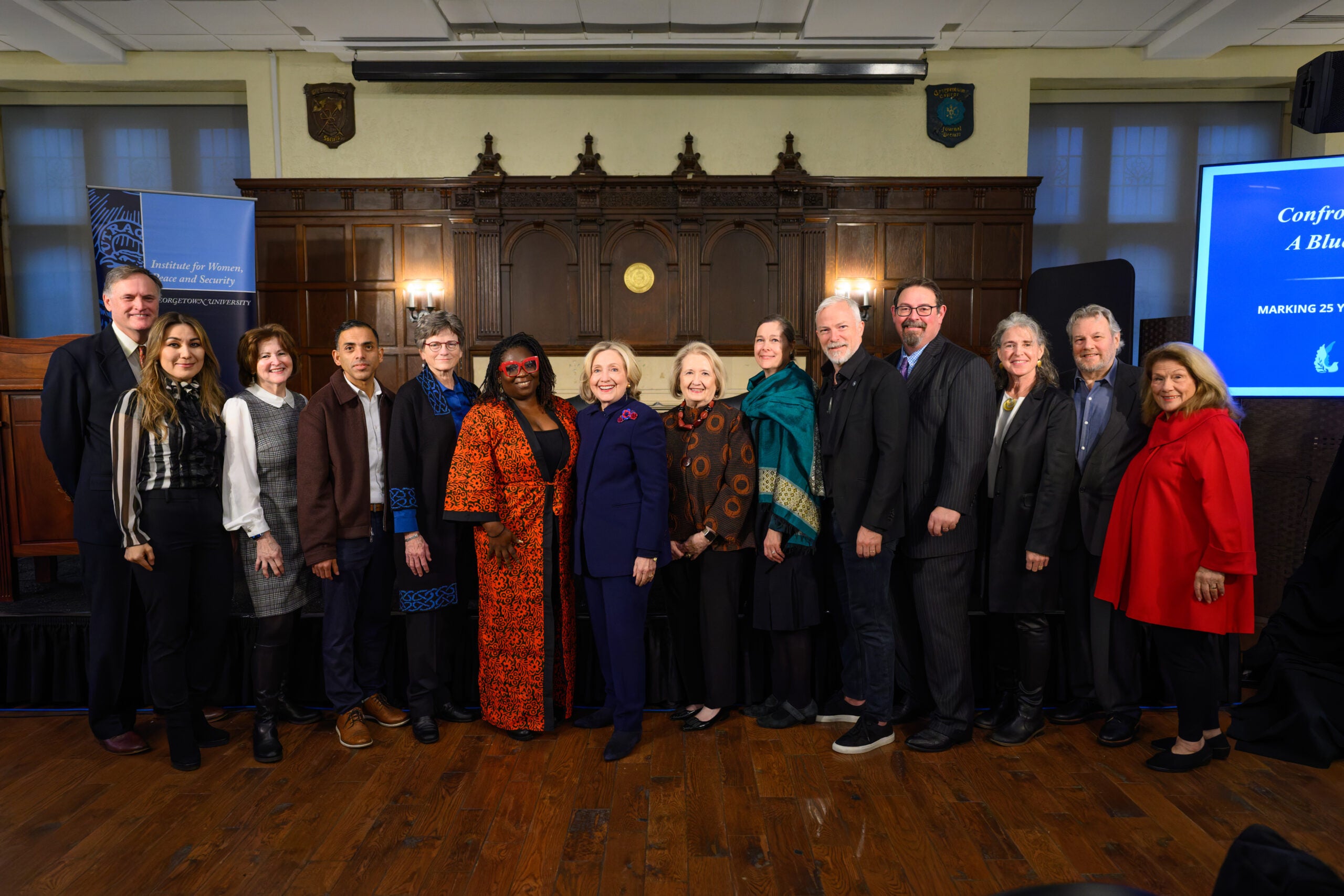
The first panel was moderated by Ambassador Melanne Verveer, executive director of GIWPS, who spent many years tirelessly working on human trafficking at the White House and State Department. It focused on the origins of the TVPA and anti-trafficking work.
“Human trafficking continues to be a global scourge, and our work must continue now more than ever,” Verveer said.
The panel included Gillian Caldwell, whose 1997 documentary “Bought and Sold” exposed traffickers in Russia through undercover work and gave momentum to the anti-trafficking movement. Caldwell said political will is the main challenge in bringing the issue to a halt. She also reflected on the difficult position women often face when trafficking occurs.
“The reality is, the economic circumstances that women are facing around the world continue to be dire, and many will do what they need to do to support their families notwithstanding the risk, so we shouldn’t kid ourselves into thinking law enforcement is the only way to address this problem,” she said.
Dorthy Taft described the bipartisan cooperation that led to the passage of TVPA and established a legal definition of human trafficking. Taft served as chief of staff for the Helsinki Commission and as a key aide to Representative Chris Smith, a Republican who was one of the leaders on anti-trafficking legislation. She called for renewed education efforts—particularly among diplomats and the younger generations–to lead to greater engagement on the issue.
“We all need to speak up, and we need to coalesce, and we need to gather a new generation,” she said.
Ambassador Luis C.deBaca, a former Department of Justice prosecutor who prosecuted numerous sex and labor trafficking cases, outlined the evolution of U.S. policy. He credited the TVPA with providing essential tools for prosecutors, such as T visas. However, he warned that shifting priorities within the Department of Homeland Security are pulling agents away from trafficking cases.
“How do we not lose the skills and the caring that we have in people across the U.S. government, and how do we maintain relationships with the NGOs so we can get our attention back to where it needs to be, which is finding and supporting the survivors?” he asked.
Many ambassadors and other panelists raised similar concerns about the impact of the erosion of the government’s effort to combat human trafficking today.
“We can’t allow this fight against human trafficking to stall, and we can’t allow it to be reversed,” said Clinton.
Expanded Accountability and Modern-Day Challenges
The second panel, moderated by Shawn Macdonald, the CEO of Verité—an organization that promotes workers’ rights in global supply chains—focused on looking ahead to the next 25 years of anti-human trafficking policy in terms of expanded accountability and current issues related to human trafficking.
Benjamin Skinner, author of “A Crime so Monstrous” and founder of Transparentem—a non-profit investigative unit that works to expose and eradicate human rights and environmental abuses in global supply chains—urged the audience to expand accountability beyond individual traffickers and examine the supply chains that exploit migrant labor, among others. Skinner noted how requiring companies to disclose their monitoring practices through the California Transparency in Supply Chains Act was a turning point. He remembered the leading role that the late Allison Freedman had played in California and later at the state department.
“That was the beginning of a really important shift in conversation around accountability,” said Skinner.
Elfidar Iltebir, former president of the Uyghur American Association, described her advocacy behind the Uyghur Forced Labor Prevention Act—the federal law that bars products made with forced labor from the Uyghur population from entering the United States. She explained that forced labor is central to the Chinese government’s persecution of Uyghurs, as it removes Uyghurs from their communities.
“They’re using forced labor while they continue their genocidal policies and make a profit,” Iltebir said. “Uyghurs—we’re human too, but we were treated as products.”
They were joined by Mahendra Pandey, the senior manager of forced labor and human trafficking at Humanity United, one of the largest migrant worker networks. The network’s purpose, he said, is to make sure no survivor feels alone, and to build solidarity, empowerment, and access to resources. Mahendra knows of what he speaks as he was a migrant worker from Nepal and experienced first hand the harsh experience of many migrant workers.
“Don’t feel sorry for us, take action,” Pandey said. “We want to make sure that we are not just invited to speak and tell our story—we want to make sure we can provide solutions and ideas, and that we can be at the decision-making table.”
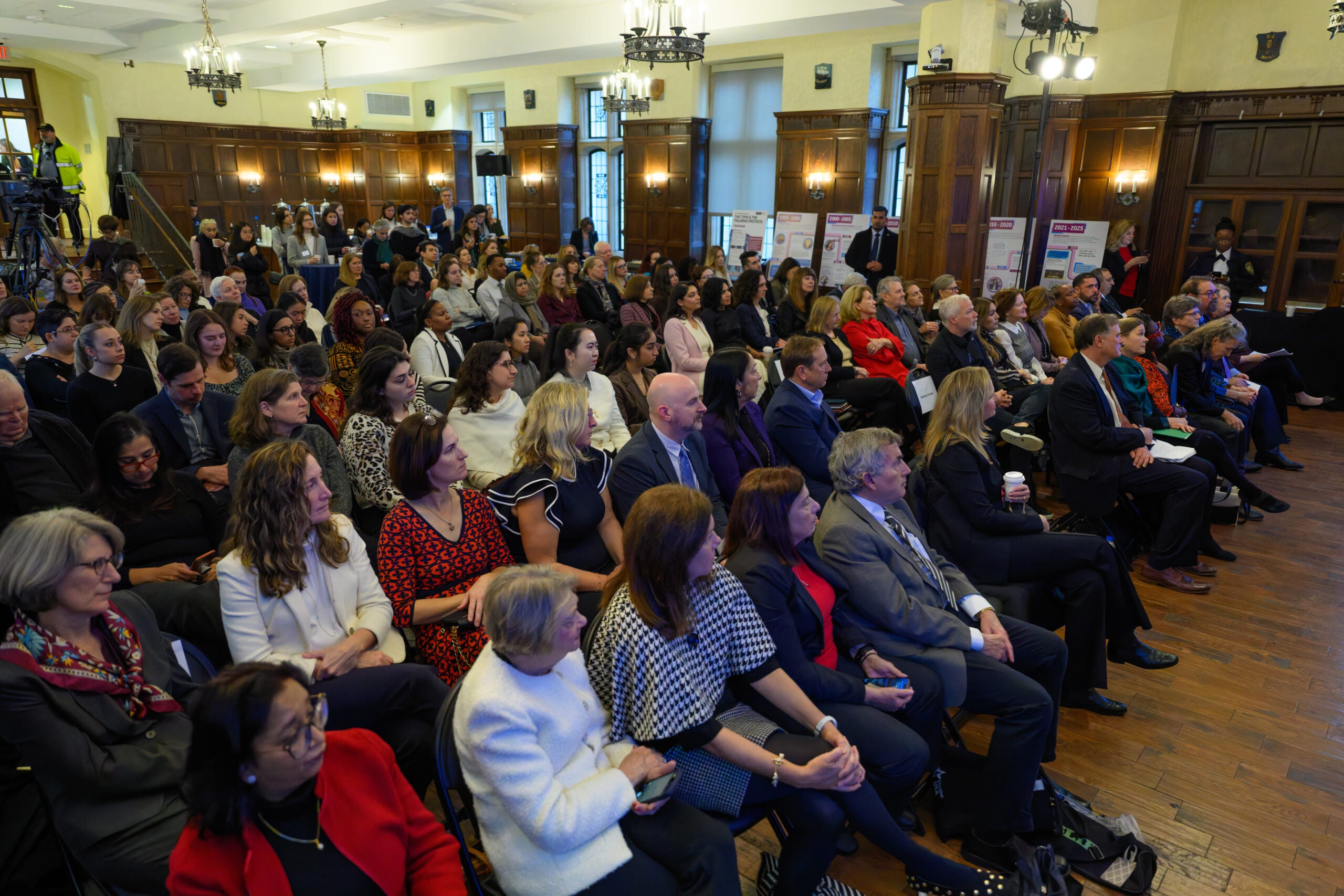
The summit made clear that while the TVPA and the Palermo Protocol transformed global understanding of human trafficking and provided tools to support survivors and prosecute the traffickers, the fight is far from over. Survivors, advocates, and leaders called for renewed political will, stronger protections such as T visas, and increased investment in younger generations to carry the work forward.
“I truly believe that leaders do build leaders,” said Chumbow. “We’re not all here forever, so we need the next generation to keep fighting the fight, and if we’re gonna do so, we need to empower them and invest in them.”
Explore More

Wellbeing of women goes hand in hand with wellbeing of nations
International Women’s Day amid gender backlash: defending Women, Peace and Security at…
GIWPS Analysis: U.S.–Israeli Attacks on Iran
The U.S.–Israeli attacks on Iran this weekend have been met with a…