Women, Peace and Security Conflict Tracker: January Updates

Our Women, Peace and Security Conflict Tracker combines real-time data points and original analysis to offer gender-sensitive insight into conflict dynamics across 27 countries. To see the complete analysis across all 27 countries monitored, please visit the WPS Conflict Tracker website and explore by country.
As of January 2026, two new countries—Venezuela and Pakistan—have been added to the WPS Conflict Tracker. To learn more, visit our dedicated country pages for Venezuela and Pakistan, which include monthly risk assessments and essential WPS background analysis. Both countries will also be profiled in our forthcoming 2026 WPS Forecasting Report, slated for release in February.
Spotlight: Iran
Mass protests against the government—which began on December 28, 2025—have been violently suppressed by the regime’s security forces, with thousands killed, injured, and arrested. Although estimates of the total death toll vary, sources inside the country have stated it could be as high as 36,500 people. Iranian women have been on the frontlines of this uprising and were some of the first confirmed to have been killed by state authorities. Though the protests have largely quieted due to the state’s brutal crackdown, anti-regime sentiment persists, and Iranian authorities may escalate repressive and anti-democratic tactics—including executions of dissidents—to maintain power.
Protestors, including at least one teenager, have reported being sexually assaulted by members of the security forces while in detention. At least 51 women have been transferred to the Yazd central prison, where they are at immense risk of harassment and violence. Iran’s prison system has long-been notorious for torture and other abuse, including documented rapes of protestors detained during the Woman, Life, Freedom uprising. Iranian authorities also imposed a weeks-long strict internet blackout in response to the protests, inhibiting internal communication and impeding human rights reporting and data collection. Outside monitors have flagged that Iran may be moving towards adopting an intranet. This would effectively cut off internal access to the worldwide internet, blocking global awareness and activism related to government repression—including of women’s rights, cutting women off from a vital channel for protest and support, and making it harder for families to locate and identify victims of state brutality.
Spotlight: Myanmar
Elections held in late 2025-early 2026, and backed by the military junta, have been widely criticized and rejected as a sham by UN experts and rights groups, with women in ethnic minority and resistance-held areas excluded from voting and at risk of violent retaliation for political engagement. The electoral period saw increased violence specifically targeting women, including the abduction of nine women teachers to prevent them from casting ballots, while repressive laws criminalizing dissent have created a climate of fear that disproportionately deters women’s political participation. Ongoing conflict has killed nearly 800 women through airstrikes and ground attacks in 2025 alone, with violence severely restricting women’s safe movement and access to health and protection services. More than 3.6 million people remain internally displaced; conditions in displacement camps have increased women’s exposure to forced marriage, harassment, violence, and exploitation, compounding the crisis facing women and girls across the country. Despite these challenges, women remain key resistance organizers and frontline responders and must be included in any future legitimate elections, governance structures, and conflict-related negotiations.
Risks & Opportunities
- Taliban Imposes Repressive New Laws: Taliban authorities released a new Criminal Procedure Code which further entrenches discrimination and abuse, including against women and girls. The code effectively legalizes slavery, formalizes a strict social hierarchy, and enshrines the punishment of women for leaving their husband’s home without permission. Vague legal provisions—such as allowing “places of immorality” to be destroyed—also increase the threat that the few remaining public spaces open to women, including beauty parlors, may be vandalized and closed.
- Opportunity to Recognize Gender Apartheid: Advocates are calling for negotiating states to include gender apartheid in the new UN Treaty on the Prevention and Punishment of Crimes Against Humanity in Afghanistan, as well as to center Afghan women’s voices in relevant decision-making. This comes alongside the resumption of UN preparations to create an updated Crimes Against Humanity Treaty on January 19, 2026—a further opportunity to recognize and codify gender apartheid as an international crime.
- Accountability for Crimes Against Humanity: The conviction of former Congolese minister Roger Lumbala Tshitengain in December 2025 marks a historic milestone in efforts to combat impunity for mass atrocities and may set an important jurisprudential precedent for future prosecutions. A French court sentenced Lumbala to 30 years in prison for his complicity in crimes against humanity, including facilitating the mass rape of women and children. Women survivors were central to the trial, breaking “decades of silence and stigma to testify” and help secure accountability.
- Surge in Child Marriage Since Personal Status Law Amendment: Child marriage has risen sharply since the passage of the Ja’afari Personal Status Amendment in 2025, which expanded the authority of sectarian courts over family affairs, severely restricting women’s autonomy. More than one in four Iraqi girls is married before the age of 18, often with limited legal protections: husbands can divorce their wives without their knowledge or consent, and fathers automatically gain custody of children after the age of seven. The enactment of increasingly restrictive family laws over the past year has undermined progress on women’s rights in Iraq by formalizing unequal power dynamics in marriage, child custody, and divorce.
- Exclusion of Women in Peace Process Persists: No Palestinians appear to be invited to US President Donald Trump’s ‘Board of Peace’ for Gaza. Israeli Prime Minister Benjamin Netanyahu has confirmed his participation, but no women from Israel have been announced as participants. While consistent with women’s apparent marginalization from the October 2025 ceasefire negotiations, the continued absence of Palestinian women from decision-making spaces shaping Gaza’s future represents a significant gap in legitimacy and inclusiveness. With one in seven households in Gaza headed by women—and women serving as key providers of essential services throughout the war—their full and meaningful participation is critical for effective recovery and long-term stability.
- BARMM Bill Seeks to Safeguard Women’s Representation: The Bangsamoro Parliament’s Committee on Amendments, Revision, and Codification of Laws has approved a regional law that seeks to expand protections for minority representation, including a proposed “zipper system” that would require political parties to alternate male and female nominees on party lists. While BARMM elections remain at risk of a fourth postponement due to recent changes to the election code, the official passage of this law would be a significant milestone toward advancing women’s meaningful representation and participation in the Bangsamoro Parliament.
- Women at Greater Risk of Economic Precarity: Survey data finds that a lack of livelihood opportunities is the greatest challenge to Somalians’ resilience to income shock. Women are more likely than men to engage in informal, lower-paying labor, have less access to financial assets, and lack a social safety net in the event of a financial shock. Conflict further strains access to services and reduces available employment opportunities, increasing overall economic vulnerability.
- Ethnically Motivated Violence Escalates: RSF forces and allied militias continue to enact a campaign of ethnically motivated atrocities targeting non-Arab communities throughout Darfur, with reports emerging of worsening “town by town” violence. This ethnic violence includes mass executions, arbitrary detentions, and widespread rape used as a weapon of war against women and girls.
- Education Crisis Continues: Almost half of Sudanese children have missed nearly 500 days of school amid what is now one of the world’s longest school closures. Without access to education, children—particularly girls—are at increased risk of sexual exploitation and violence, which undermines their long-term health and economic empowerment.
- Recent Clashes Threaten Stability Efforts: Security conditions in Syria have become increasingly fragile following the latest outbreak of deadly fighting between Syrian government forces and the Syrian Democratic Forces in Aleppo and surrounding areas in early 2026. The desecration of a woman’s body during fighting raises concerns about ongoing gender-based violence, while clashes displaced thousands of women and girls who now face constrained access to essential services like healthcare and education. As Syrian President Ahmad al-Sharaa aims to consolidate the country, women and girls in Kurdish controlled-areas fear that losing autonomy may also mean the erasure of hard-won progress toward gender equality, including in local political institutions.
- Expanding Access to Reparations for Long-term CRSV Survivors: A growing civil society advocacy effort is urging the international community and the Council of Europe to expand the mandate of the International Register of Damage for Ukraine to include harms suffered since 2014. The Register currently limits claims to violations occurring on or after February 24, 2022, excluding survivors of Conflict-related Sexual Violence (CRSV), displacement, and loss linked to Russia’s earlier aggression in Crimea and eastern Ukraine. OHCHR documentation from 2014-2017 previously identified CRSV incidents—most affecting women and girls—though these figures are widely understood to represent significant undercounts. Broadening eligibility would advance survivor-centred justice, acknowledge the full temporal scope of harm, and strengthen accountability and reparations pathways for women affected by prolonged conflict.
In The News
The Vanishing Coverage of Women’s Lives Is a Policy Risk, by Sarah Little and Zahra Nader
Despite women and girls being at the center of today’s global crises, journalism that tells their stories is vanishing. Women appear in just 26 percent of news coverage—a figure which has been largely stagnant for 15 years, while gender-based violence is mentioned in less than two percent of news stories. This erasure risks further marginalizing women’s experiences and undermining democratic accountability and human rights advocacy.
In The Arts
No Good Men Opens the 76th Berlin International Film Festival for Berlinale Special
The 76th Berlin International Film Festival will open on February 12, 2026, with the world premiere of “No Good Men,” the third feature film by Afghan director Shahrbanoo Sadat. The film tells the story of Naru, Afghanistan’s only female camerawoman at Kabul TV. The internationally co-produced film, which was shot in Germany and features Sadat herself in the lead role, represents a continuation of her work highlighting Afghan women’s lives.
Explore More
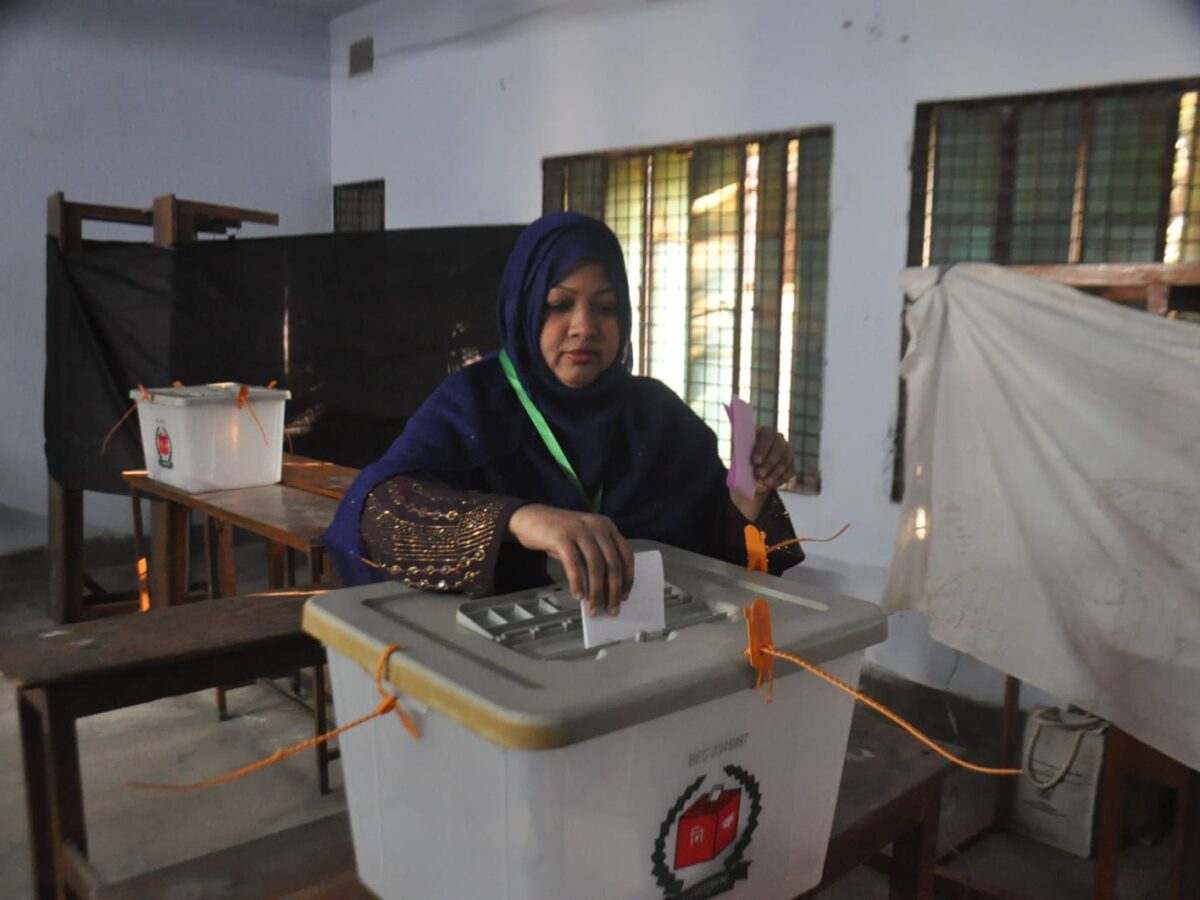
Reassessing Bangladesh’s National Election 2026
The Constitutional Referendum and General Election held on 12 February 2026 was…

Afghanistan’s new laws give animals ‘more rights’ than women
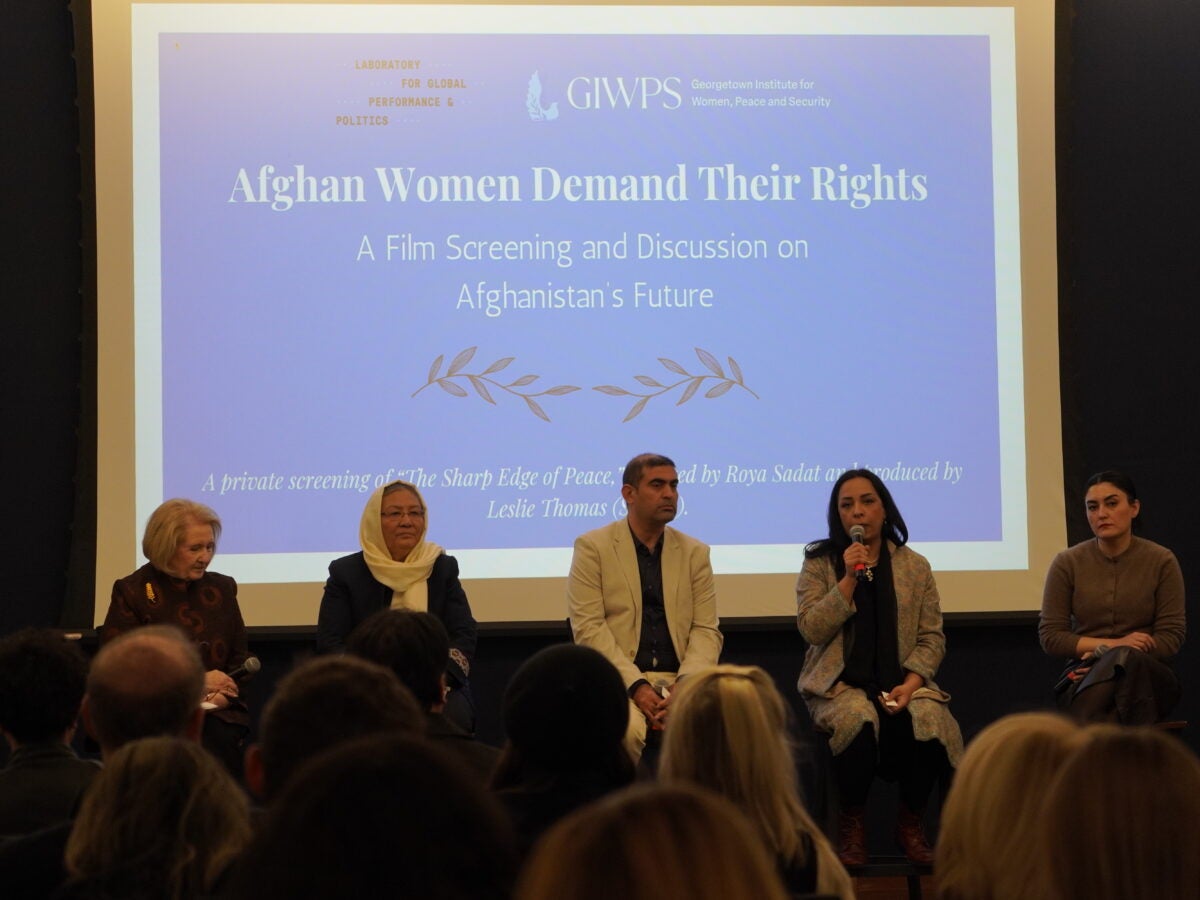
A Community Holding onto Hope: Georgetown Screens Documentary on the Fight for…
When the Taliban took over Afghanistan after U.S. troops withdrew in 2021,…