Women, Peace and Security Survey

The Georgetown Institute for Women, Peace and Security (GIWPS) released results from a global survey of nearly 3,000 women in 121 countries—one of the largest samples of women peacebuilders to date. The Women, Peace and Security (WPS) Survey highlights perspectives of women peacebuilders from around the world: where they find influence and meaning, the challenges they face, and how the international community can better support their critical work.
Key findings from the Women, Peace and Security Survey include:
Women drive change in their communities, but they have limited influence in formal spaces such as government and international organizations.
- 62 percent see themselves as able to create change in their households, and 51 percent in their workplaces, but 21 percent report no ability to create change in their national government.
- While women’s influence at the community level is crucial, we must continue to expand efforts to ensure women’s meaningful—rather than tokenistic—inclusion in all spaces where decisions are made, including formal institutions.
Poverty is one of the most pressing challenges shaping women’s experiences of their peace and security work. Women are calling on the international community to provide long-term funding to support their peace and security work.
- One-third identify poverty as one of the biggest challenges in their work, highlighting deep interconnections between peace and development.
- 43 percent identify long-term funding as an urgent need to accomplish their peace and security goals; 40 percent also report a decrease in funding for their work over the past two years.
- Responding to this call requires donors to offer funding that is sustained, accessible, and flexible, empowering women-led organizations to respond to crises, build lasting peace, and strengthen their communities.
The most challenging and urgent issues women identify differ by region.
- Key challenges include, education in South Asia (highlighted as a core challenge by 46 percent of respondents), women’s leadership in the Middle East and North Africa (42 percent), climate-related security concerns in East Asia and the Pacific (15 percent), and infrastructure deficits in Central and Eastern Europe and Central Asia (26 percent).
- WPS implementation will be more successful if it is tailored to local needs and priorities, as identified by women in those contexts.
Women report that their peace and security work is deeply meaningful, but it comes at great personal costs.
- 63 percent report gaining new skills through their peace and security work, but 46 percent experience fatigue, and one in four report burnout and worsening mental health as negative consequences of their peace and security efforts, underscoring the strain of sustaining these efforts with limited support.
- Migrant, refugee, and displaced women are more than twice as likely as women who are not in these groups to perceive more risks associated with their peace and security work.
- Addressing challenges that endanger women peacebuilders and jeopardize broader progress toward peace and security, such as burnout, financial strain, and exposure to risk, requires interventions that provide sustained protection, resources, and support to women doing this crucial work.
The survey was supported by the Embassy of Denmark in the United States and authored by Kristine Baekgaard, Vanessa Rickenbrode, and Jessica M. Smith.
We extend our deep gratitude, admiration, and solidarity to the peacebuilders and women’s organizations that shared their expertise, contributed to content, and helped distribute the survey to their networks—and who work with courage and persistence every day to build more just and peaceful societies.
This project would not have been possible without the generous support for our women leaders’ networks from The Rockefeller Foundation and the UK Foreign, Commonwealth & Development Office (FCDO).
Researchers
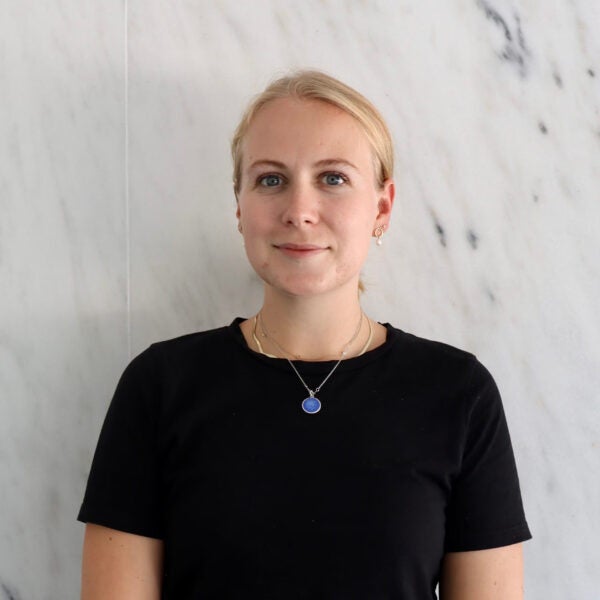
Kristine Baekgaard
Research Fellow
Research

Vanessa Rickenbrode
Independent Consultant

Jessica Smith
Director of Research
Research