“Action is the springboard of hope”: Trailblazer for Women’s Rights in Iran Celebrated at Georgetown

A standing ovation erupted in Georgetown’s Copley Hall as famed Iranian feminist, women’s rights activist, and author, Mahnaz Afkhami, took the stage on Tuesday during an event hosted by the Georgetown University Library and the Georgetown Institute for Women, Peace and Security (GIWPS).
Afkhami played a key role in securing women’s legal, political, and social rights in pre-revolutionary Iran, where she served as Iran’s first-ever Minister for Women’s Affairs between 1975 and 1978. At the time, she was one of just two women worldwide with this position.
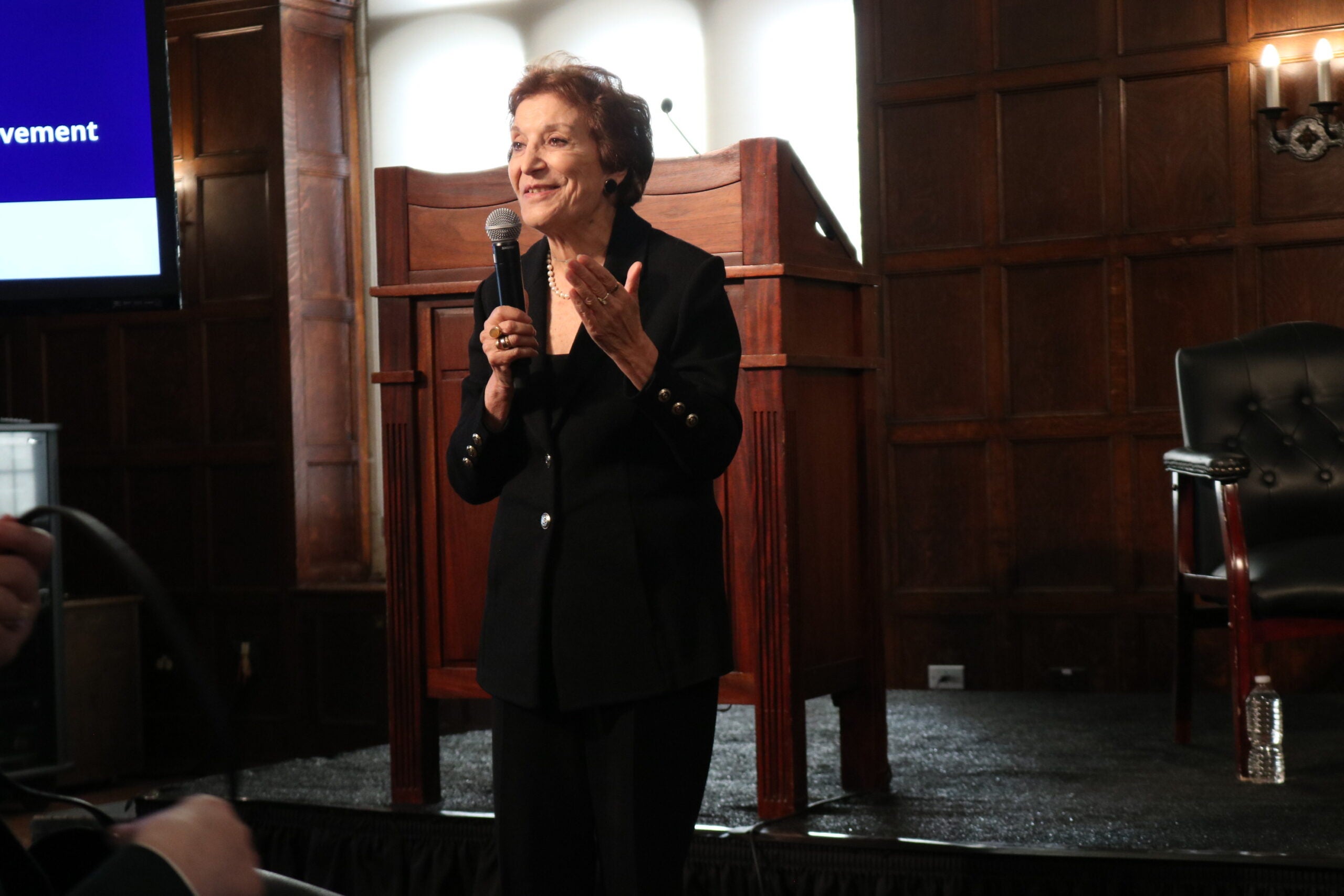
As Minister for Women’s Affairs, Afkhami led the passage of the 1975 Family Law Act in Iran, which increased women’s rights in marriage, child-rearing, and divorce. When the Islamic Republic came into power, it reversed this hard-won progress on women’s rights. However, Afkhami’s influence continued globally.
“A Lioness,” According to Christiane Amanpour
In an interview with award-winning journalist and recipient of the 2024 Hillary Rodham Clinton Award, Christiane Amanpour, Afkhami reflected on the rise of Ayatollah Khomeini, who took over as Supreme Leader of Iran after the Iranian Revolution and the overthrow of the Pahlavi dynasty in 1979.
The first thing the Ayatollah did was repeal the laws Afkhami had passed.
“The first group who started the demonstrations against Khomeini was the women,” said Afkhami.
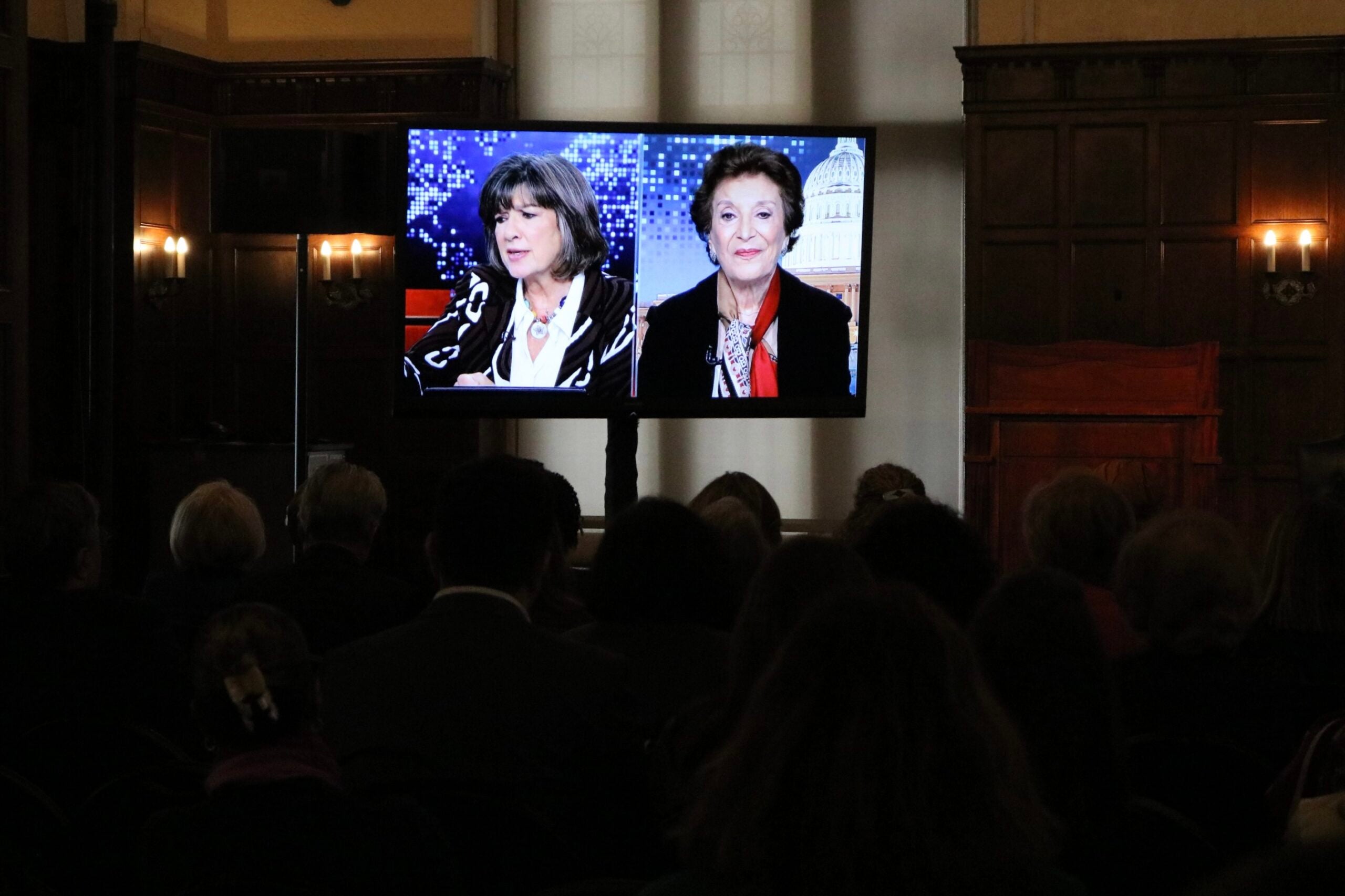
Afkhami was exiled to the United States, but her fight was not yet over. She went on to inspire a transnational feminist movement, including leading the Sisterhood Is Global Institute and founding the Women’s Learning Partnership for Rights, Development, and Peace.
Amanpour endearingly called her “Shirzan,” the Persian word for lioness, for her strength.
Preserving History
After the Revolution, many important historical documents were lost or destroyed, including those about the women’s rights movement in Iran. Fortunately, Afkhami diligently kept records about women’s accomplishments and milestones around the world, forming a priceless collection of history.
Afkhami recently dedicated her entire collection of papers, oral histories, books, periodicals, and art to the Georgetown University Library in the hopes of preserving Iran’s pre-revolutionary history and the global women’s movement.
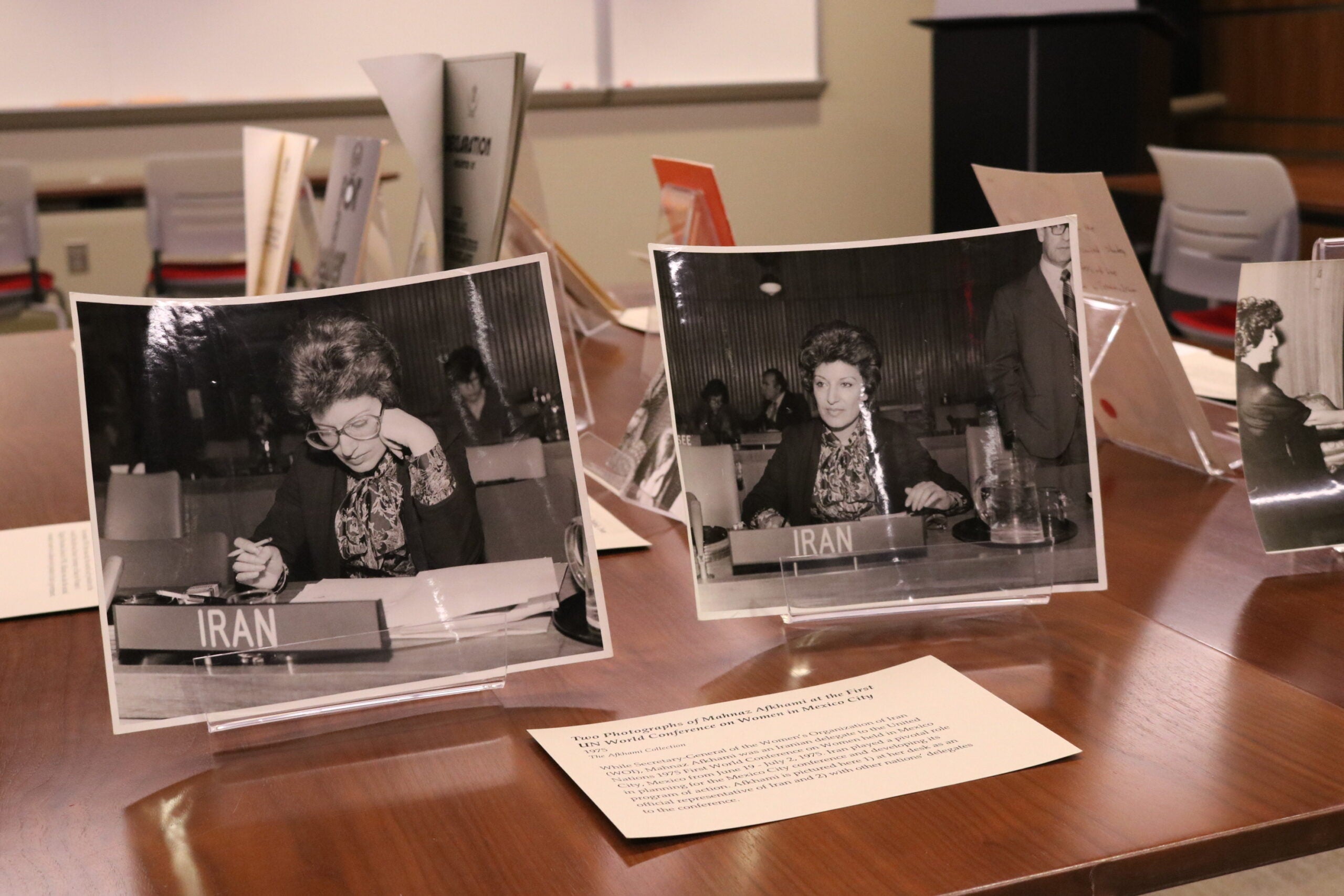
“This collection is not simply a historical repository,” said Dean of Georgetown University Library Alexia Hudson-Ward. “It is in fact a beacon, illuminating decades of courage, strategy, international solidarity, and visionary leadership in pursuit of dignity and equality for women everywhere.”
To honor her trailblazing career and her invaluable contribution to the library, the Georgetown University Library and GIWPS hosted a symposium consisting of two robust panels on advancing human rights.
Global Solidarity and Sisterhood
The first panel focused on how Afkhami helped build the transnational women’s movement and how, despite being in exile, Afkhami helped stand against extremism in Iran.
Azar Nafisi, the critically acclaimed author of “Reading Lolita in Tehran,” reflected on how dangerous Afkhami was to the Iranian regime, despite being unarmed.
“Women are dangerous by just being women,” said Nafisi. “The more visible women become, the more invisible the regime becomes.”
Nafisi, famous for her books that tell the story of women in post-revolutionary Iran, added that, along with simply existing, producing a counter-narrative against a totalitarian regime is a form of protest.
“The first thing the totalitarian governments do is tell you that the world doesn’t care about you, that you’re forgotten. You need to have a counter-narrative,” she said.
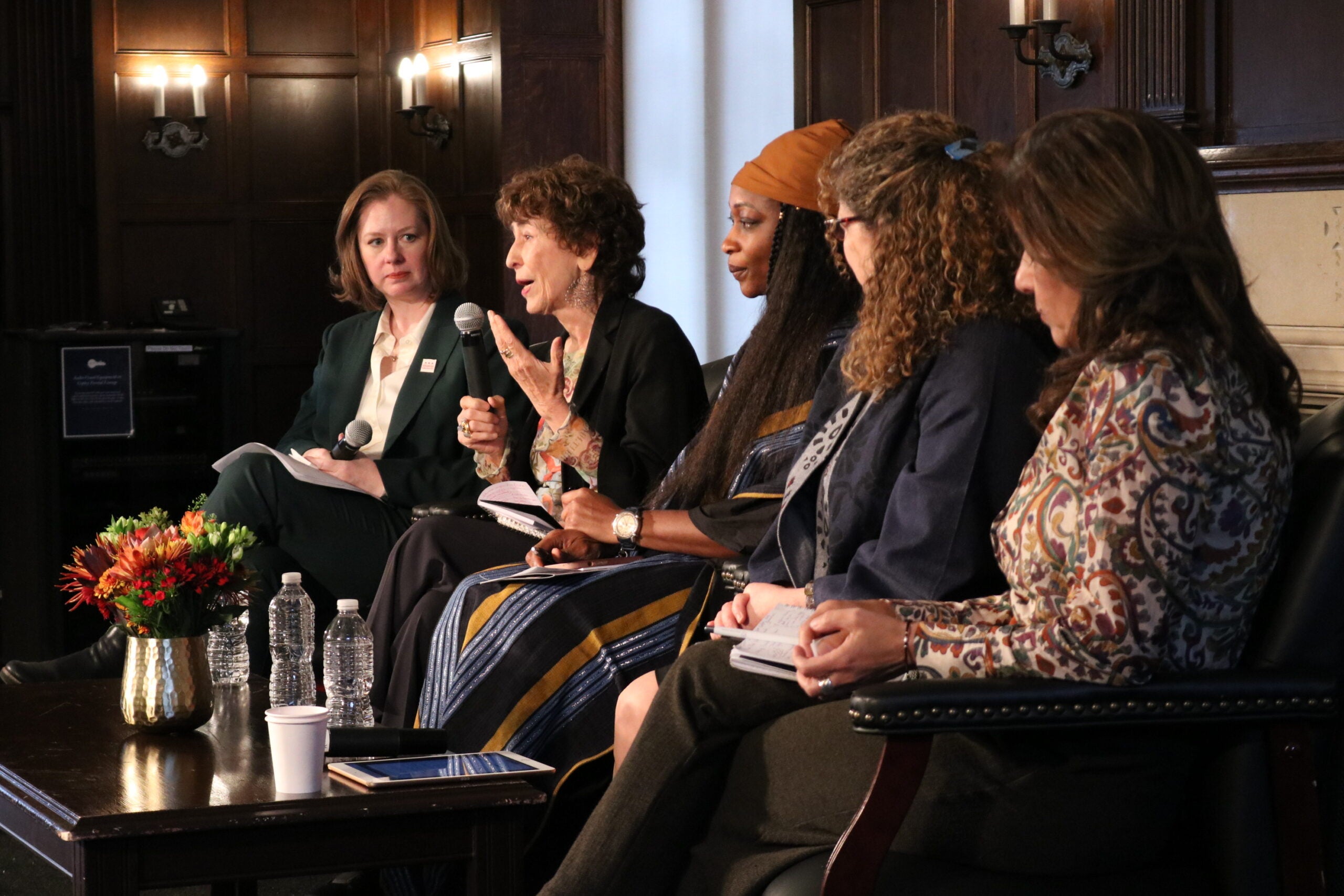
Hafsat Abiola, President and CEO of the Women in Africa Initiative, Founder and President of the Kudirat Initiative for Democracy, and one of the founding members of Afkhami’s network Women’s Learning Partnership (WLP), reflected on how Mahnaz helped create a global movement for women’s rights.
“What Mahnaz did was move us from individual stars, fluttering around from one global conference to another, into a global constellation of women leaders all working towards a certain goal,” she said.
The panel ended with a call to action on how to combat authoritarianism—whether in Iran or around the world.
“No matter the scale of the destruction, you just keep organizing against it, you build networks, you amplify the voices of others, including the next generation,” said Karima Bennoune, Professor of Law at the University of Michigan and Former UN Special Rapporteur on Cultural Rights.
“Pessimism is a privilege of the privileged,” added Sanam Naraghi-Anderlini, Author, Founder and CEO of International Civil Society Action Network, peace strategist, and consultant to the UN.
Women’s Leadership in Afghanistan and Iran
The second panel focused on women’s leadership and political power in both Iran and Afghanistan, and how to sustain and preserve the legacy of women leaders who have been pushed out of the public sphere.
Dr. Habiba Sarabi, who served as the former Deputy Chair of Afghanistan’s High Peace Council for the former Bamyan Governor, said she was influenced by Afkhami’s advice to women leaders in the Islamic world, including taking a middle-ground approach, building coalitions, and collaborating with male allies.
The legacy of women’s leadership was especially important to Sarabi, given the attempted erasure of women after the Taliban takeover in 2021.
“When the villagers, especially women, saw that a woman could lead, they felt a kind of confidence,” she said. “This is a legacy that we have to leave. It should be a positive and good legacy and a role model; otherwise, the door will be closed for the next generation.”
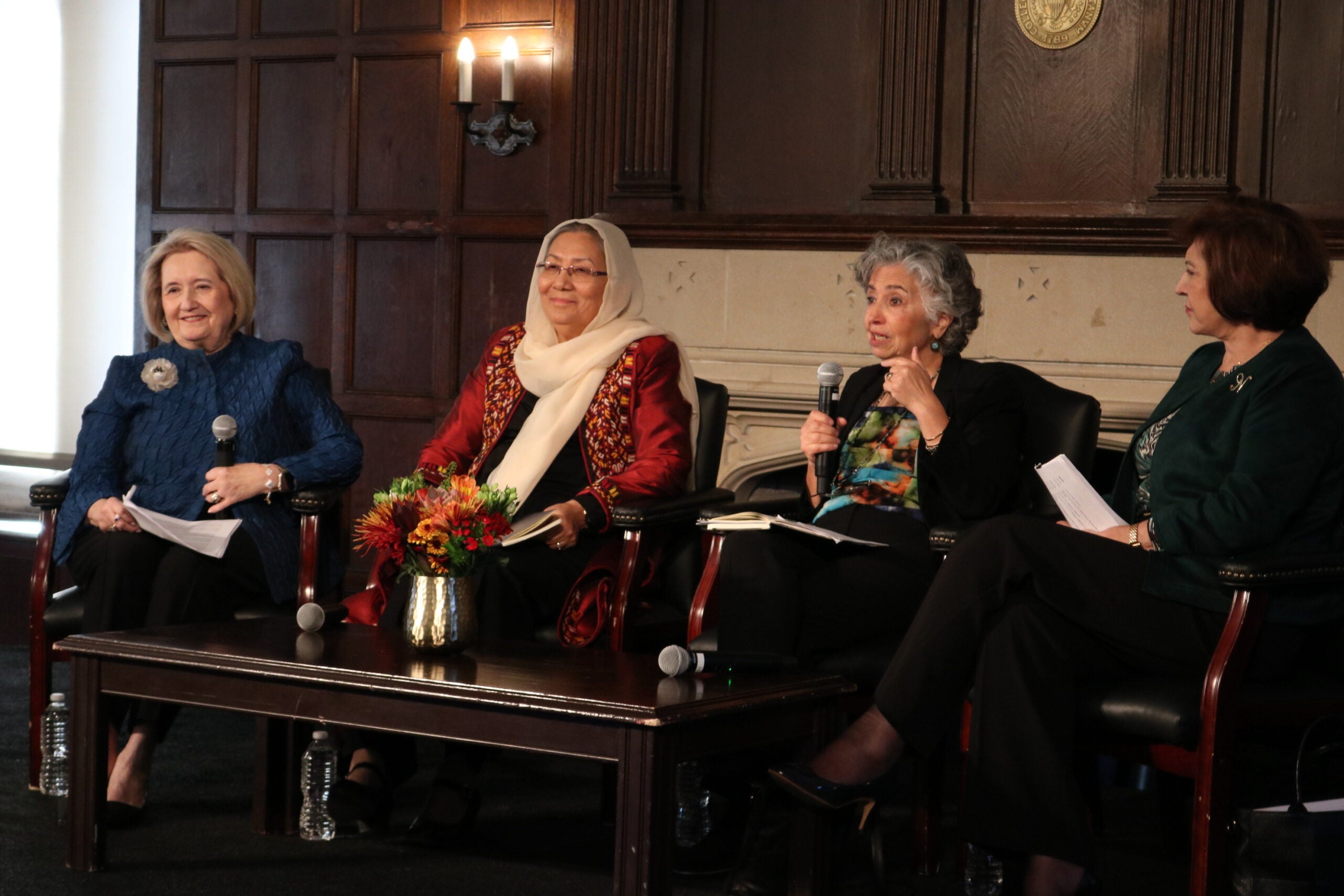
Dr. Shahla Haeri, Professor of Anthropology and former Director of the Women’s Studies Program at Boston University, created a documentary film following six presidential candidates for Iran who put their names forward, knowing their bids would be rejected. She spoke about the history of women in power in the Middle East, dating back to Queen Sheba, who is written about in the Quran.
“Women have always had power,” she said, noting that Iranian women presidential candidates drew their legitimacy from predecessors in Islamic tradition, like Khadija and Aisha, powerful wives of the Prophet Muhammad.
Nadereh Chamlou, a member of the WLP Board of Directors, said she came to Georgetown’s School of Foreign Service, dreaming of being a diplomat for her country, Iran. She graduated at the worst possible time—1979, when women were forced to exit the workforce and the diplomatic corps ceased to exist.
Her remarks focused on primary sources as a way of preserving the legacy of women leaders.
“When I look at primary sources, I read things very differently from what interpretation of other books has been. Primary data can be interpreted very differently in five years,” she said. “Georgetown is sitting on a goldmine,” she added in reference to the Afkhami collection that ignited the gathering.
Collective Action As the Future of Human Rights
The symposium concluded with a dinner, a preview of the collection, and a reminder from former President of Ireland, Mary Robinson, on how the future of human rights relies on collective care and action, rather than individualism.
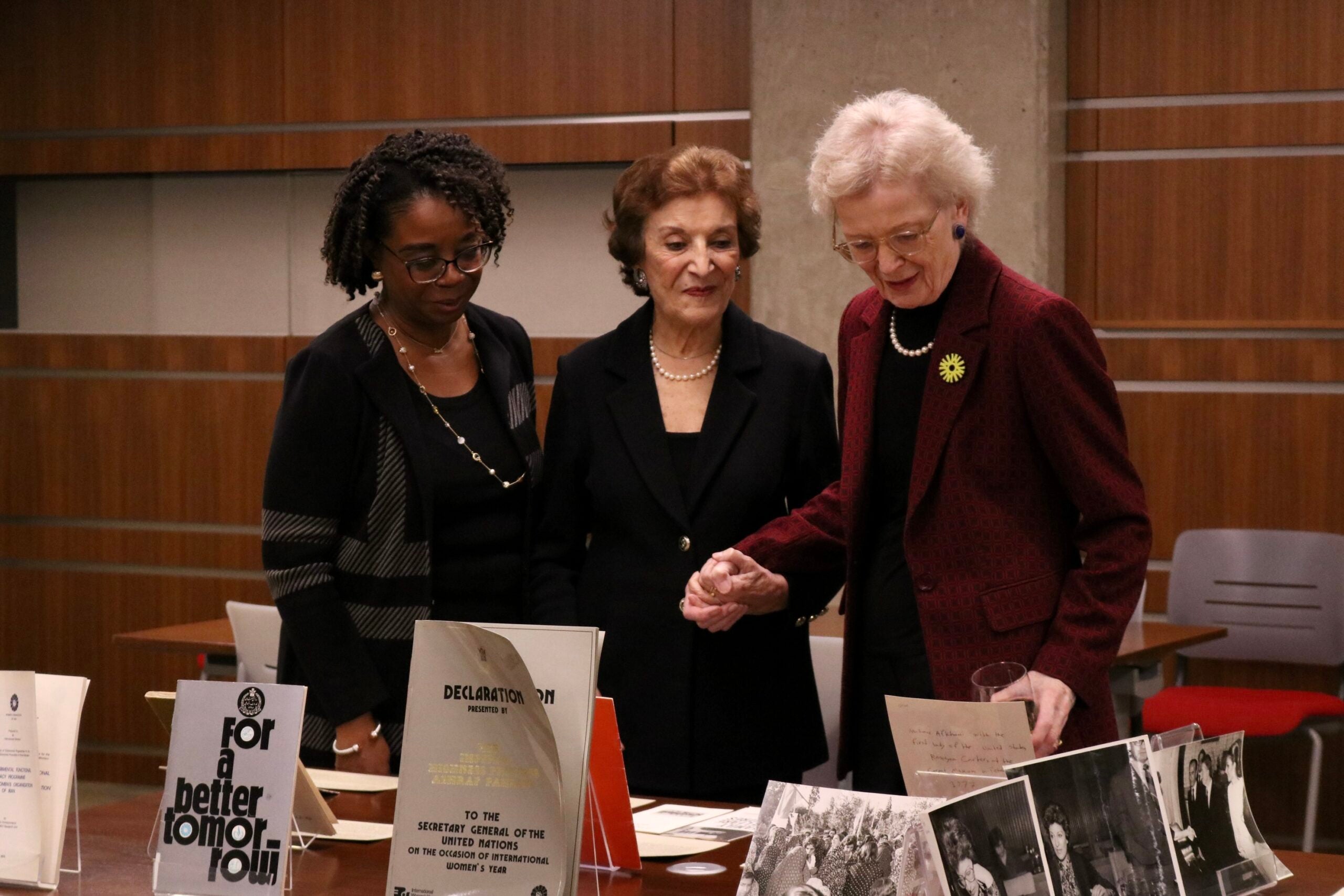
In her remarks, she referred to Article 29 of the Universal Declaration of Human Rights, that “everyone has duties to the community in which alone they reach the free and full expression of their personality.”
“Women-led organizations used to work in silos. When we started coming together and affirming the other and recognizing the other and enjoying and embracing and promoting the other, it made us all stronger,” she said.
Executive Director of the Georgetown Institute for Women, Peace and Security, Ambassador Melanne Verveer, reminded the audience that, “Women in Iran have been and continue to be on the frontlines of change. They are fighting for freedom and equality, and a brighter future at great personal risk.”
Read this article in Persian via Kayhan-London.
Explore More
‘A Huge Injustice’: Ukraine’s War Widows Battle to Claim Compensation for Fallen…
This is a shortened version of a story originally published by Fuller.…

Seven Questions on Human Rights, Institutional Leadership, and Democratic Resilience in Poland…
Sylwia Gregorczyk-Abram took office as Poland’s Commissioner for Human Rights in July…
Suara dari Muara: Untold Stories from the Women Documenting Life on Jakarta’s…
In July of this year, the women of Kampung (village) Muara Angke,…