‘A Huge Injustice’: Ukraine’s War Widows Battle to Claim Compensation for Fallen Soldiers

This is a shortened version of a story originally published by Fuller. Writer: Anna Conkling; Photographer: Serhii Korovayny.
Ulyana was living at her parents’ home in Ternopil in western Ukraine when she received the news that her husband of 17 years, Vlad, a Ukrainian soldier, had reportedly died by suicide in 2023 while at a military base in the eastern Donbas region of Ukraine near the fronlines.
“We lived in harmony. Vlad was the most important person in my life,” said Ulyana, who asks to be referred to by her first name as she sat at her kitchen table in a two-bedroom apartment in Kyiv.
Ukraine pays out compensation to war widows and families of fallen soldiers under certain circumstances, provided certain criteria are met. But in cases where a soldier’s death has been declared as death by suicide, which Ukraine classifies as a non-combat loss, war widows and families are not entitled to receive any specific death compensation.
Following Russia’s full-scale invasion on 24 February 2022, the government announced that a one-time payment of 15 million Ukrainian hryvnias ($340,000) would be offered to the families of soldiers killed while defending their motherland on the frontlines. Later in September 2024, the government introduced a second option, which allows families to claim 2.7 million hryvnias ($60,190) over seven years, and is typically issued when a soldier dies while on duty, but not at the front.
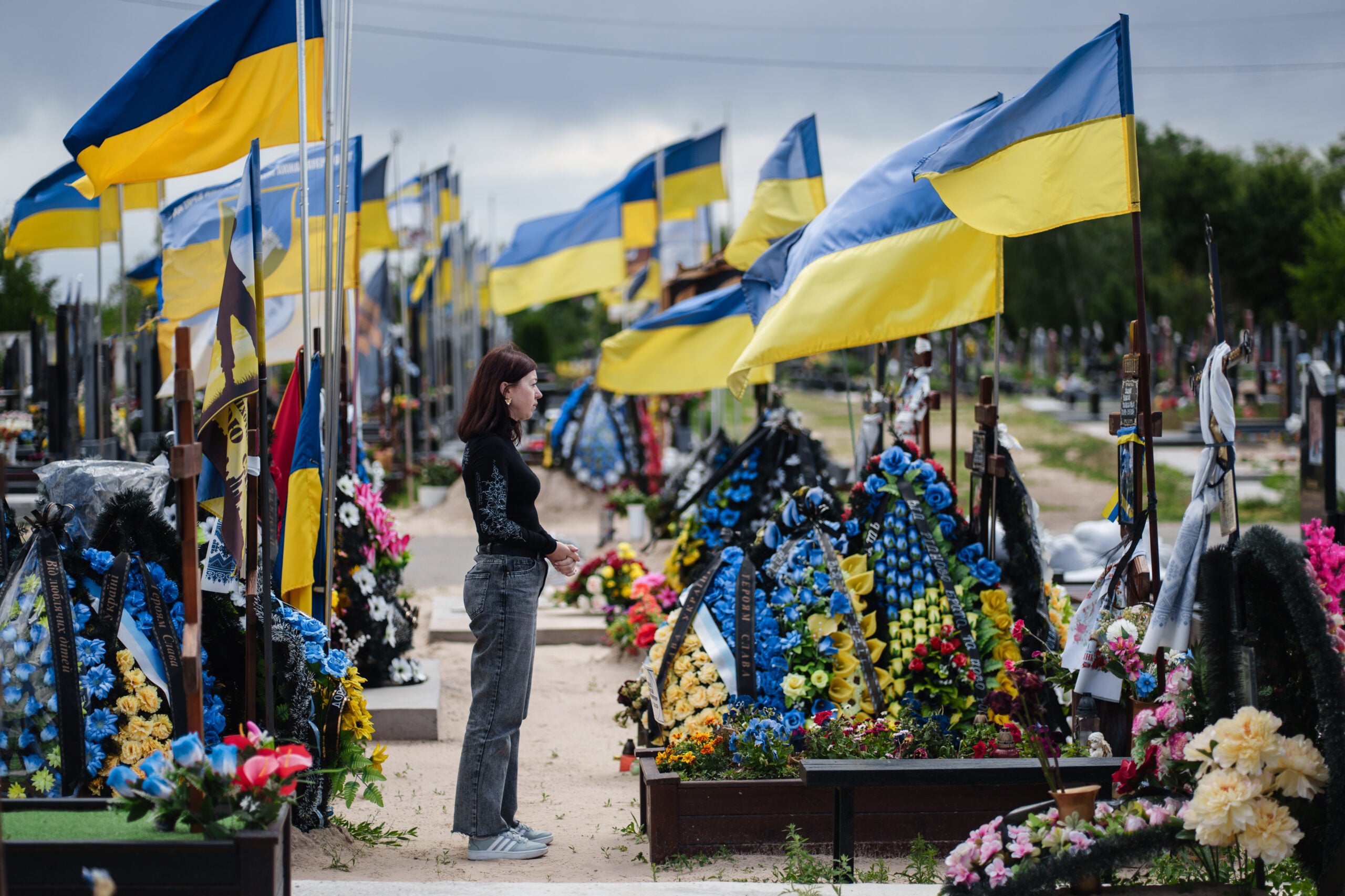
At first, Ulyana said Vlad’s brigade told her that her husband had died from a self-inflicted gunshot wound to the head. She told Fuller that she refuses to accept this. Her husband’s death certificate shows that his cause of death was empty and was left blank when she received it. With no official cause given, her compensation claim is in limbo.
Ulyana hired a lawyer to argue that her husband had been killed by someone in his brigade and died as a hero of Ukraine, but the court case has continued for years.
“I’m the wife of a soldier who died. Do I feel pain differently?” Ulyana said.
It is not known how many war widows have received compensation or how many have sought claims and been rejected. The government does not disclose the data.
But independent lawyer Roman Lykhachov, who heads his law firm, and Legal Hundred, a non-profit organization that offers free legal advice to veterans and their families – said that they know of, or have supported, a combined estimated total of 1,000 families who have not received the compensation they believe they are legally entitled to since the since the start of Russia’s full-scale invasion in 2022.
Unclear payment rules have left hundreds of war widows and the families of fallen soldiers with nothing, according to Yulia Morii, head of Legal Hundred. Those complex cases that are not clear-cut, she says, can include soldiers who die in non-combat-related deaths, like car crashes, from heart attacks after returning from dangerous assault missions, or from pneumonia at a base after weeks spent in frozen temperatures in wet trenches, or death by suicide.
Olena Bieliachkova, an advisor to Ukraine’s Office of the Military Ombudsman, said she has seen cases in which the circumstances surrounding a service member’s death “were assessed superficially, without full and proper investigation”.
“The hardest part is that it’s not always possible to help a family or give them what they’re hoping for,” she wrote in an email.
For Ulyana, she wants recognition not only for herself, but also for her son, now six. They have not received any state social benefits because of Vlad’s suicide status.
“It’s understandable that families have distrust toward military units, especially in cases where the cause of death is listed as suicide,” Bieliachkova said.
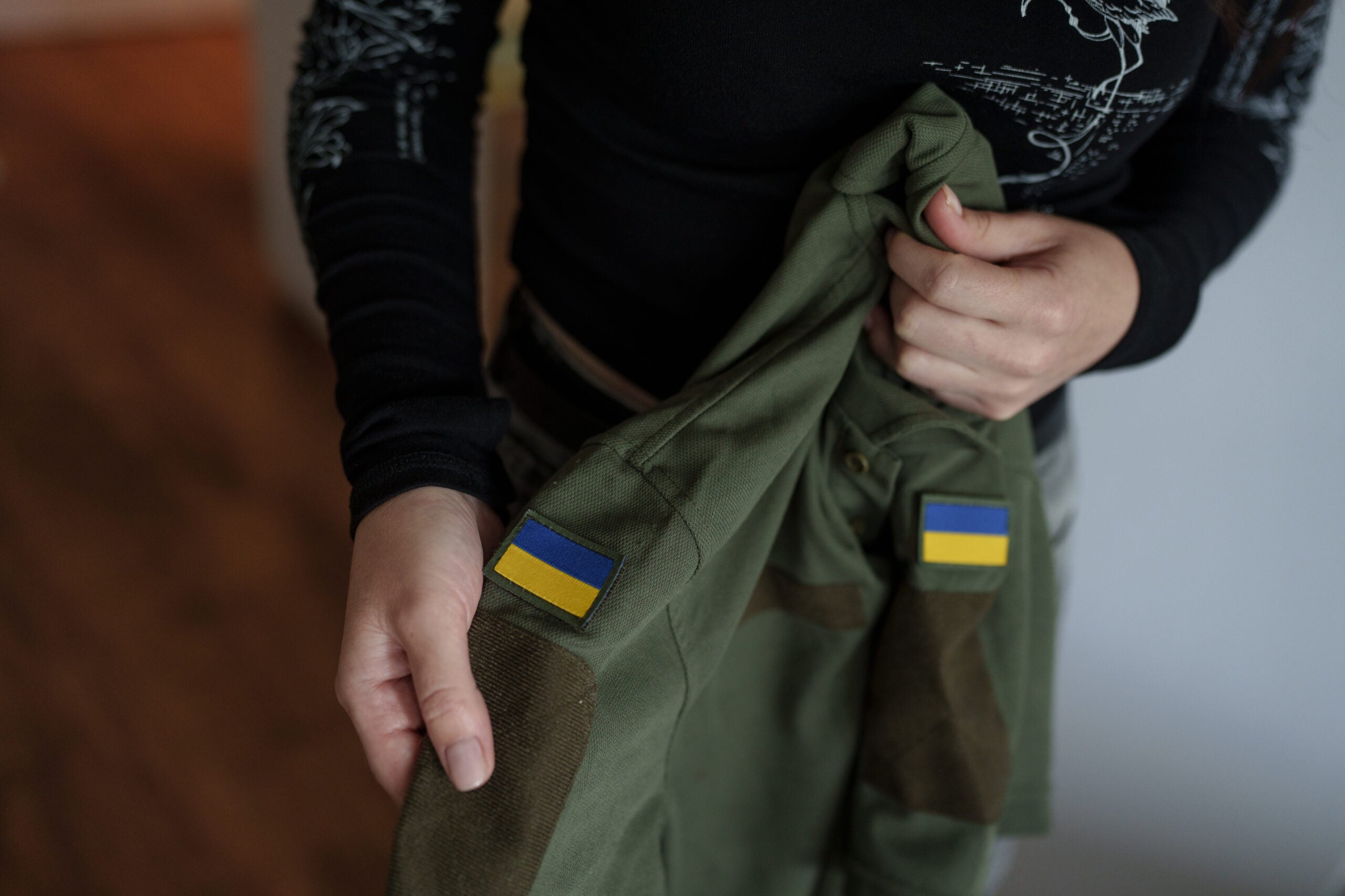
‘They weren’t just at home’
Ulyana is part of a group of war widows who believe Ukraine has deemed that their husbands did not die in the right way, as determined by the military, and that their sacrifices were not great enough. In February this year, President Volodymyr Zelensky said 55,000 Ukrainian soldiers have died in the war with Russia.
In search of support, Ulyana turned to an online community, a non-governmental organization called the All-Ukrainian Association of Families of Unrecognized Defenders. Its Facebook group has 931 members, and helps war widows and families struggling to claim compensation by getting in touch with lawyers, organizing meetings with armed forces and lobbying lawmakers.
“It’s a problem that hundreds of people have … families shouldn’t have to prove that their relatives gave their lives, their time, for the country, that they really defended the state; they weren’t just at home,” said Nataliia Vozna, who founded the organization after her son, Anton, a 20-year-old border guard, drowned alongside another soldier while patrolling the Dnipro River in northern Ukraine in April 2023.
Initially, Anton’s death was ruled by the Ministry of Defence as not occurring in the line of defending Ukraine. But after two and a half years of fighting in court with a lawyer, Vozna eventually received the 2.7 million hryvnias ($60,190) in compensation. But she knows that others are not as fortunate.
“These soldiers might not have died in a way that our country considers defending the homeland, but still this person died while defending the state, and they gave up a lot,” Vozna said.
Read the full article.
Explore More

On Ukraine’s Independence Day: A Call to Stand Firm in Support of…
Thirty-five years ago, Ukraine declared its independence and set out to build…
Four Questions on NATO, Resilience, and Ukraine’s Future with Iryna Nykorak
The July 2026 NATO Summit in Ankara marked a strategic shift in…
UN Adds Israeli and Russian Forces to ‘Shame List’ Over Conflict-Related Sexual…
The unprecedented inclusion of Israeli and Russian armed and security forces in…