Global Women Leaders
The Global Women Leaders Network includes former and current heads of state, ministers, and high-level government and private sector representatives.
The Global Women Leaders Network includes former and current heads of state, ministers, and high-level government and private sector representatives. Together, they form a united force to advance gender equality and address the world’s most pressing challenges. The Network was first convened in 2022 by The Rockefeller Foundation and Georgetown University’s Institute for Women, Peace and Security (GIWPS) and is chaired by Secretary Hillary Rodham Clinton and Ambassador Melanne Verveer.
Meet the 2025 Global Women Leaders
Hillary Rodham Clinton has dedicated over four decades to public service as U.S. Secretary of State, U.S. Senator from New York, and First Lady of the United States. Secretary Clinton was the first woman to win a presidential nomination by a major U.S. political party. Secretary Clinton is a lifelong advocate for women and girls and the Honorary Founding Chair of the Georgetown Institute for Women, Peace and Security. During her tenure as Secretary of State, Clinton launched the U.S. National Action Plan on Women, Peace and Security at Georgetown University in 2011, at which time she also announced the creation of the Institute.
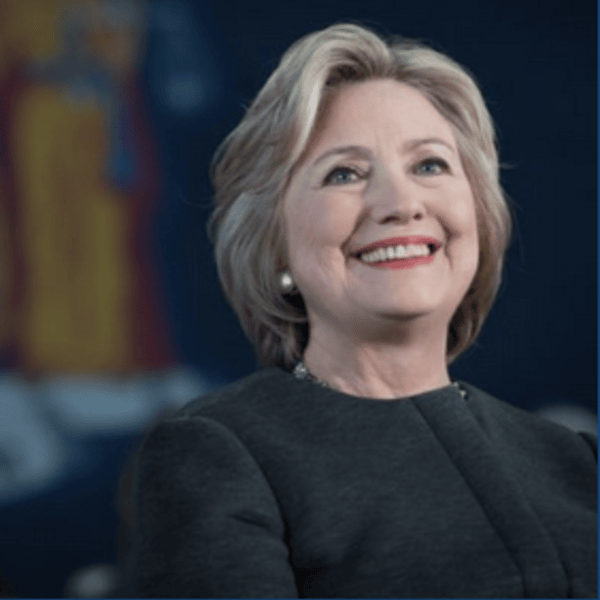
Michelle Bachelet was the first woman to hold Chile’s presidency and later became the United Nations’ high commissioner for human rights. She had previously been the first woman to serve Chile as defense minister from 2002 to 2004. Bachelet also served as the country’s health minister from 2000 to 2002. Following her second term as president, Bachelet was appointed as the United Nations High Commissioner for Human Rights from 2018 to 2022. She has also served in leadership roles at multiple international organizations, including as the first executive director of UN Women, as chair of the Partnership for Maternal, Newborn, and Child Health, and as chair of the ILO’s Social Protection Floor Advisory Group.
Helen Clark is a respected global leader in sustainable development, gender equality and international cooperation, who served as the former Prime Minister of New Zealand. She led policy debates on a wide range of economic, social, environmental and cultural issues, including sustainability and climate change. She also served as the United Nations Development Programme (UNDP) Administrator for two terms from 2009 to 2017, the first woman to lead the organization. She was Chair of the United Nations Development Group, a committee consisting of the Heads of all UN funds, programmes and departments working on development issues. In 2019 Helen Clark became patron of The Helen Clark Foundation.
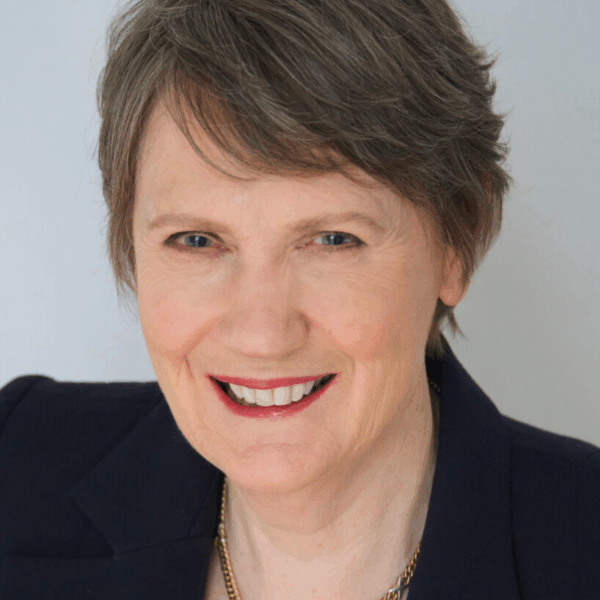
María Fernanda Espinosa Garcés, a leading Ecuadorian politician and diplomat, served as the President of the seventy-third session of the United Nations General Assembly. She has more than 20 years of multilateral experience in international negotiations, gender equality, climate change, and matters of peace and security. She has served Ecuador as Minister of Foreign Affairs, Minister of National Defense, and Coordinating Minister of Natural and Cultural Heritage and was the first female Ambassador and Permanent Representative of Ecuador to the United Nations in New York and the United Nations in Geneva. She is recognized as a global advocate of multilateralism and women’s rights and empowerment.
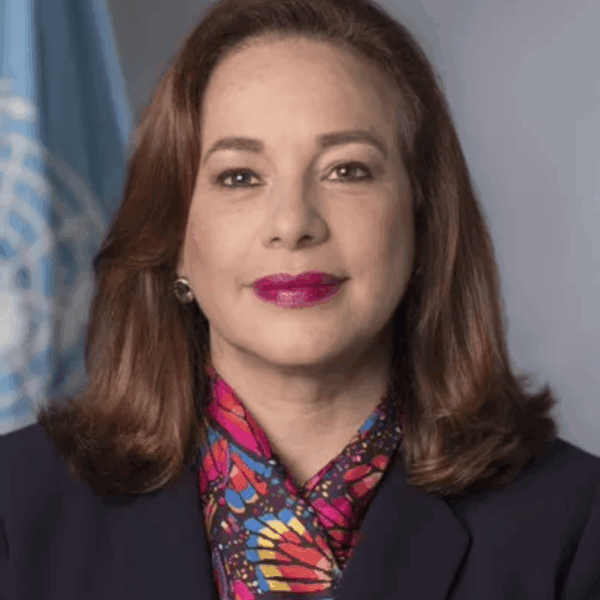
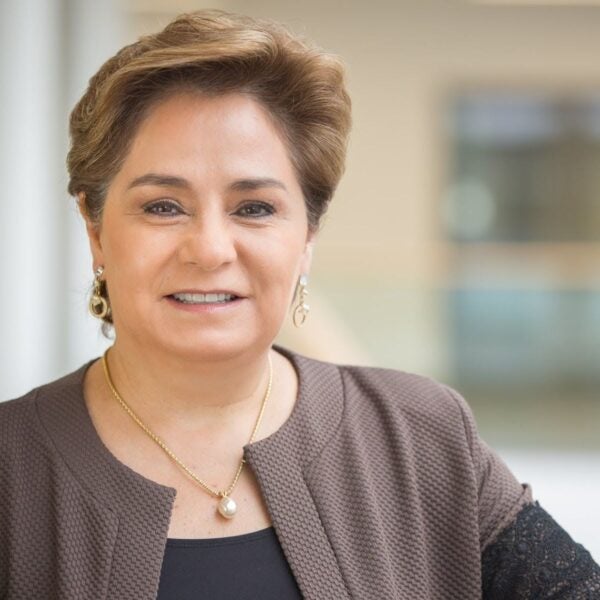
Patricia Espinosa is a Mexican politician and diplomat who has served as the Executive Secretary of the United Nations Framework Convention on Climate Change. Prior, she was Secretary of Foreign Affairs and Mexican Ambassador to Austria, Germany, Slovenia, and Slovakia, and Permanent Representative to the UN in Vienna, Austria. As Mexico’s representative on multilateral bodies and international organizations in Vienna, Geneva, and New York, she has led the global movement to address climate change, notably as Chair of COP16, leading to the adoption of the Cancun Agreements. Named by the UN Secretary-General to the High-Level Panel of Eminent Persons on the Post-2015 Development Agenda, she is a tireless supporter of multilateralism as a way to improve conditions for development in all regions of the world.
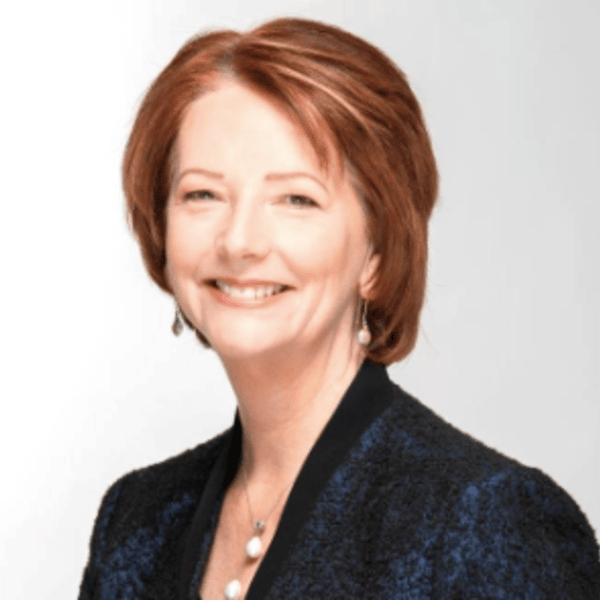
Julia Gillard was the 27th Prime Minister of Australia. She currently serves as the Chair of Beyond Blue, one of Australia’s leading mental health awareness bodies; is the inaugural Chair of the Global Institute for Women’s Leadership, which, through research, practice, and advocacy, is addressing women’s under-representation in leadership. In 2021, she was appointed as the Chair of Wellcome, a global charitable foundation which supports science to solve urgent health challenges. She was recently appointed to lead the Royal Commission into Early Childhood Education and Care in South Australia. Her second book, Women and Leadership: Real Lives, Real Lessons, is co-authored by Ngozi Okonjo-Iweala and was released in 2020. Her third book, Not Now, Not Ever – 10 years on from the misogyny speech, was released in October 2022.
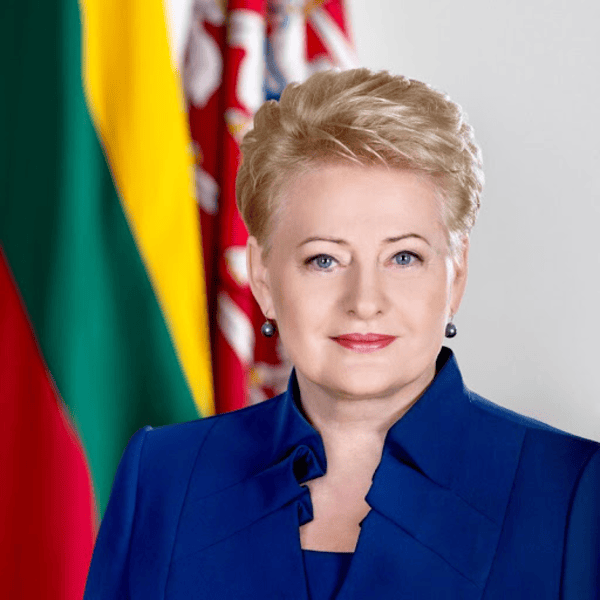
Dalia Grybauskaitė is a Lithuanian politician who served as the eighth President of Lithuania from 2009 until 2019. The first woman to hold the position, she also became the first President of Lithuania to be reelected for a second consecutive term. Previously, Grybauskaitė served as Minister of Finance, strongly supporting privatization and liberalization efforts, as well as European Commissioner for Financial Programming and the Budget. She was also selected as the “European Union Commissioner” in 2004, responsible for financial programming and budgeting and spearheading efforts to reform the European Union budget. From 2014 to 2019, she also served as Chair of the Council of Women World Leaders.
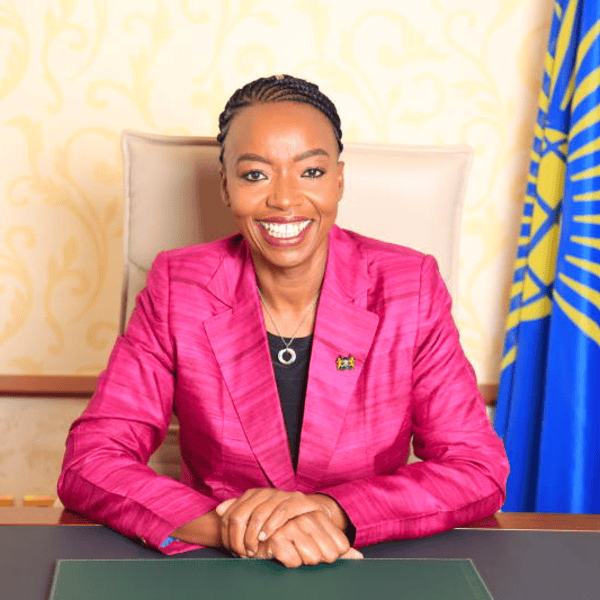
Monica Juma is the first-ever National Security Advisor to the President of the Republic of Kenya. Before her appointment, she served as Cabinet Secretary in five strategic Ministries of the Republic of Kenya, namely the Ministry of Energy, Ministry of Defence, Ministry of Foreign Affairs, and as Acting Minister in the docket of Petroleum and Mining. She has served as Principal Secretary in the security triad: Defence, Interior and Foreign Affairs. She was Ambassador Extraordinary and Plenipotentiary of Kenya to Ethiopia and Djibouti, and Permanent Representative of Kenya to the African Union, the Intergovernmental Authority on Development (IGAD) and the United Nations Commission for Africa (UNECA). She was in the United Nations Secretary General’s (UNSG) High-Level Panel on Resourcing African Union, led UNSC-mandated peacekeeping missions, and consulted for Marquezmany UN and African Union agencies on matters of security, peace, governance and development. She is the patron of the Athena Mentorship programme and is well-published in security and peace studies.
Yoko Kamikawa was elected to the House of Representatives for the first time in June 2000 and was continually reelected. In November of 2005, she became Parliamentary Vice-Minister for International Affairs and Communications. In the year following, she served as Deputy Chairperson of the Policy Research Council for the Liberal Democratic Party. In 2015, she was appointed chairperson of the Headquarters for Promoting Women’s Active Participation, also at the Liberal Democratic Party. Minister Kamikawa has also served as Minister of State for Gender Equality and Social Affairs and Minister of Justice. She was appointed Minister of Foreign Affairs in September 2023.
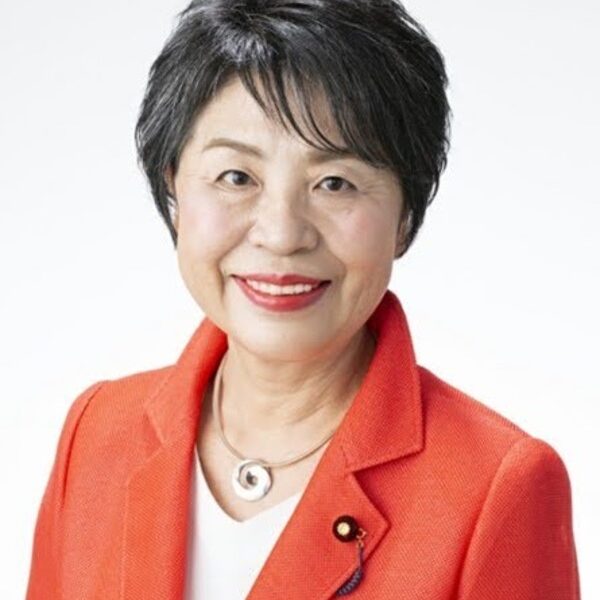
Carla Koppell has a long and distinguished international affairs career. She served as the Vice President of the U.S. Institute for Peace, leading the Center for Applied Conflict Transformation. During the Obama Administration, she was USAID Chief Strategy Officer and Senior Coordinator for Gender Equality and Women’s Empowerment. In the Clinton Administration, she served as Deputy Assistant Secretary for International Affairs for the US Department of Housing and Urban Development. Outside of government, Ms. Koppell has directed the Institute for Inclusive Security, led the conflict prevention project at the Woodrow Wilson International Center for Scholars, and worked for the Food and Agriculture Organization of the United Nations. She has published several books and has worked in over 30 conflict zones and developing nations globally.
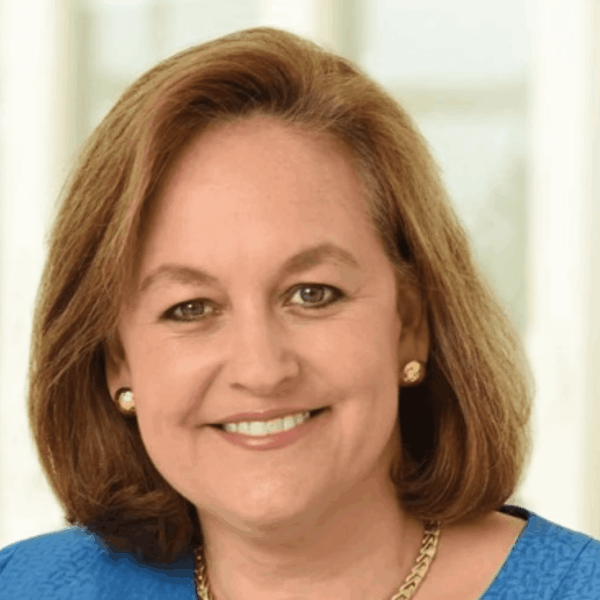
Sanna Marin was born in Helsinki on 16 November 1985. Serving as prime minister of Finland from 2019 to 2023, she was the youngest person to serve as prime minister of Finland and the youngest female Head of Government in the world. In 2014, Marin was elected as second deputy party leader of the Social Democratic Party, and since 2017, she has served as the First Deputy Party Leader. In 2015, Marin was elected to Parliament for her first run. There she served as a member of the Grand Committee, Legal Affairs Committee and Environment Committee. She is a member of the Tampere City Council, which she chaired in 2013–2017. Environmental values are also close to Sanna Marin’s heart. During the government formation talks in spring 2019, Marin chaired the negotiating table that addressed the theme ‘Carbon neutral Finland that protects biodiversity’.
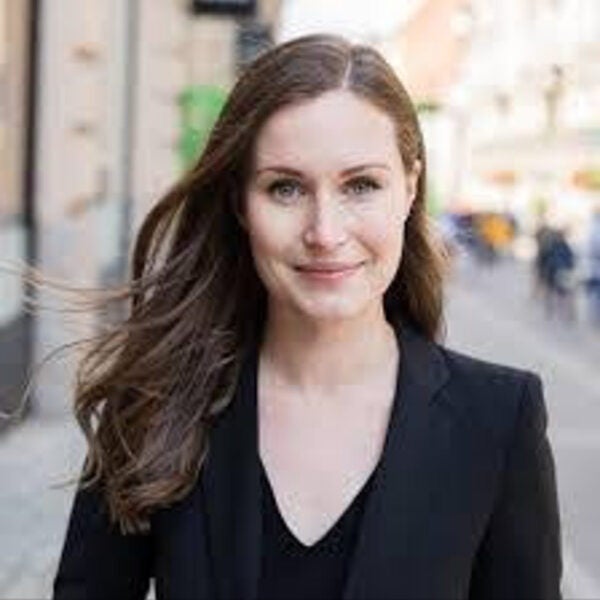
On August 7, 2022, Francia Márquez became the first Black woman to be elected Vice President of Colombia. The following year, she was also sworn in as Minister of Women and Equality in the Cabinet of Colombian President Gustavo Petro. In 2015, Márquez received the Colombia National Prize. In 2018, in Paris, France, Márquez received the prestigious Goldman Environmental Prize, the equivalent of the Nobel Prize for the environment, for the removal of all illegal gold miners and equipment from La Toma. In 2021, she began serving as president of the National Peace and Co-existence Council.
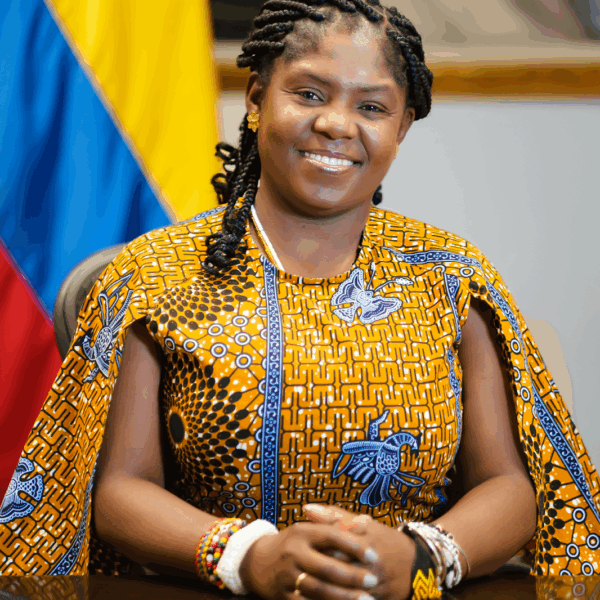
Monica McWilliams was a lead negotiator in the Good Friday talks, which brought an end to three decades of conflict in Northern Ireland. She was a co-founder of the Northern Irish Women’s Coalition, a political party created by women civil society leaders in order to ensure women had a voice at the negotiating table when parties convened to write a peace agreement in 1996. As a negotiator in the Good Friday talks, McWilliams ensured that the ‘bread and butter’ issues like integrated education, prisoners’ and victims’ rights, reconciliation, and women’s participation were included in the final agreement. McWilliams continues to be involved in Northern Irish politics and reconciliation, including as a member of the Commission on the Disbandment of Paramilitary Organizations. Importantly, she also continues to be an advocate for women’s inclusion in peace talks around the world. In the past year, she’s traveled across the globe to train women in Myanmar, Colombia, and Syria, sharing her own experiences in the Good Friday negotiations with other women striving to influence the peace process in their countries. Currently, she works as Professor of Women’s Studies, based in the Transitional Justice Institute at the University of Ulster.
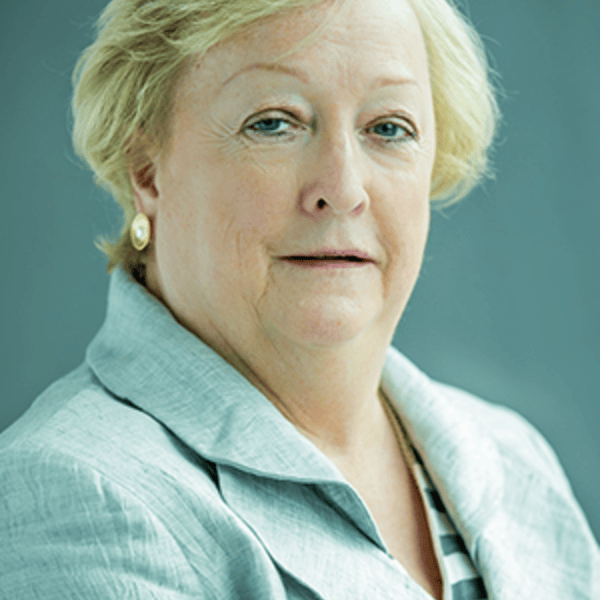
Mary Robinson is a founding member and Chair of The Elders, a group of global leaders who use their independence, collective experience and influence for peace, justice and human rights worldwide. Prior, Robinson was the first woman elected as President of Ireland (1990-1997) and she has been credited with transforming the role with a presidency of inclusiveness, equality and peacebuilding. Robinson also served as the UN High Commissioner for Human Rights from 1997-2002, where she became renowned as an outspoken voice dedicated to investigating and exposing human rights abuses across the world. Robinson has been a barrister in the Irish and European Courts and a member of the Irish Senate representing the University of Dublin (Trinity College) constituency from 1969-1989. Mary’s work with the United Nations, Oxfam International, the Mo Ibrahim Foundation, the GAVI Alliance, The Mary Robinson Foundation – Climate Justice, and others has made her a climate justice champion and forceful advocate for gender equality, women’s participation in peacebuilding and human dignity.
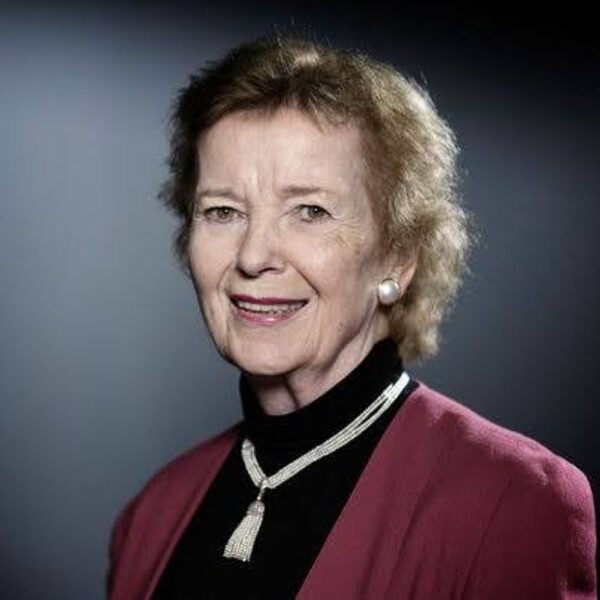
Internationally known as Africa’s “Iron Lady,” President Ellen Johnson Sirleaf was elected President of Liberia in 2005 and became the first woman to lead an African nation. Before that, she served as Assistant Administrator and Director of the Regional Bureau for Africa of the UNDP and was the first woman to lead the UN Development Project for Africa. She additionally served as the Chairperson of the Governance Reform Commission of the National Transitional Government of Liberia. In October 2007, President Ellen Johnson Sirleaf was awarded the Presidential Medal of Freedom for her unwavering commitment to improving the lives of people in Liberia and across Africa. In 2010, she was named by Newsweek Magazine as one of the World Top Ten Leaders.
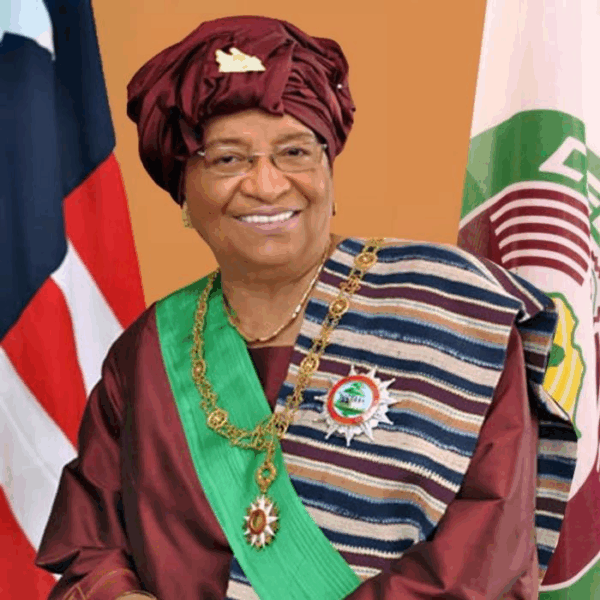
Ambassador Melanne Verveer is the Executive Director of the Georgetown Institute for Women, Peace and Security. She most recently served as the first U.S. Ambassador for Global Women’s Issues, a position to which she was nominated by President Obama in 2009. She coordinated foreign policy issues and activities relating to the political, economic and social advancement of women, traveling to nearly sixty countries, and helped develop the U.S. National Action Plan on Women, Peace and Security. She has also served as the Special Representative on Gender Issues for the OSCE Chairperson-in-Office, Chair and Co-CEO of Vital Voices Global Partnership, and Assistant to the President and Chief of Staff to the First Lady in the Clinton Administration.
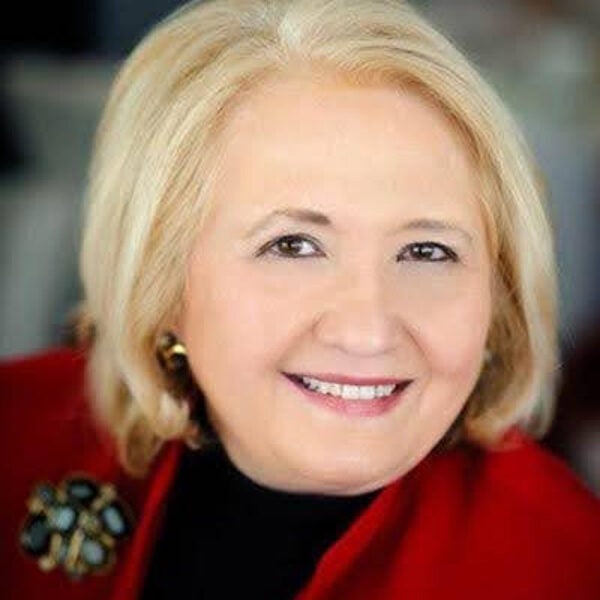
Elizabeth Yee is the Executive Vice President of Programs. She oversees The Foundation’s portfolio of global programs, regional offices and learning and impact team, and leads the advancement of the Foundation’s strategic priorities. She is the former Chief of Staff and joined The Foundation in 2019 as the Managing Director of Climate and Resilience. From 2015 to 2019, Liz held various executive leadership roles at 100 Resilient Cities, a sponsored project of The Foundation, where she led the development of strategic partnerships and collaborated with member cities and investors to develop and mobilize financial solutions. Before joining 100 Resilient Cities, Liz co-led the Public Power and Utilities practice at Barclays Capital. During her seventeen years in financial services at Morgan Stanley, Lehman Brothers and Barclays Capital, Liz originated, developed, structured and executed over $30 billion of infrastructure, energy, commodities and derivative transactions. She and her team were two-time “Bond Buyer Deal of the Year” recipients for their innovative approaches to renewable energy finance. She was appointed to SEforALL’s Board, which aims to accelerate and deliver the solutions needed to achieve the UN’s Sustainable Development Goal 7 – access to affordable and clean energy by 2030, and serves on the Advisory Boards for Co-Impact’s Foundational Fund and Gender Advisory Boards. She is a Life Member of the Council on Foreign Relations. Liz is a graduate of the University of Pennsylvania.
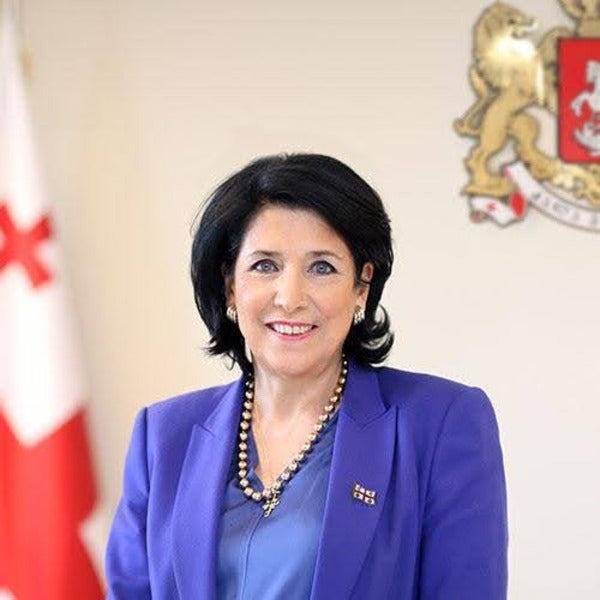
Salome Zourabichvili was inaugurated as the first female President of Georgia on December 16, 2018. Zourabichvili was educated at the Institute of Political Studies in Paris and the School of International and Public Affairs at Columbia University. From 1974 to 2004, she worked in the diplomatic service for the Ministry of Foreign Affairs of France in embassies including Italy, Chad, and the United States. In 2003, she was appointed as Extraordinary and Plenipotentiary Ambassador of France to Georgia. From 2004 to 2005, Zourabichvili served as Minister of Foreign Affairs of Georgia. She was an Associate Professor of International Relations at the Institute of Political Studies in Paris from 2006 to 2015, and from 2010 to 2015, she led the UNSC monitoring group on sanctions against Iran. In 2016, she became an independent Deputy in the Parliament of Georgia, and since 2018, she has served as Georgia’s first woman President.
Subscribe to our Mailing List
Signing up for our mailing list will alert you to our new research and analysis and our upcoming virtual and in-person events.