Afghan Women Pursuing Peace Under Oppression

Executive Summary
August 2026 marked the fifth anniversary of the Taliban’s return to power in Afghanistan, during which time the regime has systematically erased Afghan women and girls from public life. The Taliban has imposed over 160 restrictive decrees on women, denying their access to education, employment, and healthcare as well as restricting other human rights such as freedom of expression and movement.
Afghan women face such extreme repression that many scholars agree it amounts to gender apartheid. This unprecedented structural oppression of women has been implemented against the backdrop of over four decades of continuous war, foreign intervention, and insurgency that devastated the country. Together, it demonstrates Afghanistan’s unique context, where women are disproportionately impacted by systemic subjugation repression as well as the long-term effects of conflict. Data highlights this reality, with Afghanistan continuing to rank lowest out of 181 countries on the Women, Peace and Security (WPS) Index, which scores countries based on women’s status since 2017.
Despite facing this systemic cruelty, Afghan women demonstrate extraordinary persistence every day, continuing critical work on peacebuilding, human rights, and development. Grounded in this reality, this report brings findings from a digital survey of nearly 500 Afghan women working on peace and security to highlight their choices, challenges, and needs, as well as their actionable recommendations for international support. The results show that Afghan women peacebuilders are working across multiple areas, from education and healthcare to economic empowerment and mediation–underscoring that peace and security efforts do not occur in siloes. They are also doing this work with far fewer resources than in the past and with mounting personal and collective challenges. However, despite reporting their peace and security work generates negative repercussions at higher rates and personal benefits at lower rates than women globally, the majority of Afghan women confirm they will not stop their efforts. They demonstrate clarity and resilience, offering urgent and strategic ways to support their work that is building peace and helping uphold the rights of women and girls in their communities.
Anchored in a rigorous 32-question survey administered across Afghanistan through local networks,
the report’s empirical findings center Afghan women’s voices and self-articulated priorities instead of external assumptions. In a moment where they are fighting simultaneously on multiple fronts to assert their fundamental human dignity, international actors must step up with sustained, multifaceted solidarity and support that matches Afghan women’s bravery.
Watch our Launch Event
The Georgetown Institute for Women, Peace and Security (GIWPS) hosted a virtual event to commemorate five years of Afghan women’s bravery and resistance. The event shared these report findings and examined the situation of women and girls today in Afghanistan—the ways that they are standing up for their rights and what the international community can do to help.
Acknowledgments
This report was produced by the Georgetown Institute for Women, Peace and Security (GIWPS) in partnership with the Organization for Policy Research and Development Studies (DROPS). Syeda Haleema Hasan served as lead author and conducted principal research with Lailuma Nasiri (DROPS).
The researchers are grateful to Ambassador Melanne Verveer, Carla Koppell, Kim Hart, and Mariam Safi for their critical review and guidance. Thanks are also due to Sarah Rutherford and Alexandra Gopin for their communications and publication support. We would also like to acknowledge Kristine Baekgaard, Vanessa Rickenbrode, and Jessica M. Smith, authors of the Global WPS Survey report. Finally, we extend our sincerest gratitude to our partners at the Embassy of Denmark in the United States, whose leadership and generous support made this project possible.
Explore More
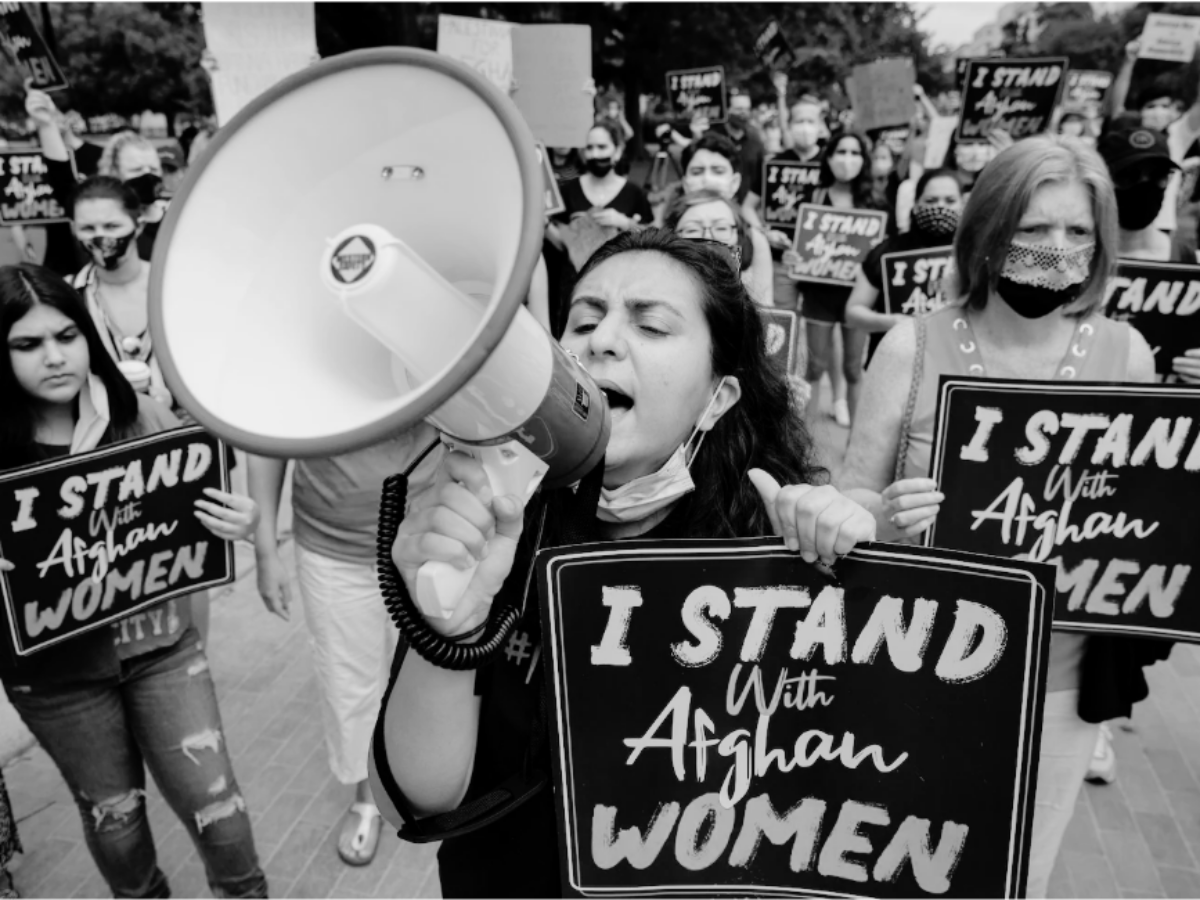
Five Years On: Women’s Fight for Freedom in Afghanistan

Film Screening: Champions of the Golden Valley