Women, Peace and Security Conflict Tracker: October Updates

Our Women, Peace and Security Conflict Tracker combines real-time data points and original analysis to offer gender-sensitive insight into conflict dynamics across 25 countries.
This month, we are launching new country profiles for 25 countries to better reflect developments for women’s participation, protection, prevention, and relief and recovery. This blog post highlights select updates. To see the complete analysis across all 25 countries monitored, please visit the WPS Conflict Tracker and explore by country.
Spotlight: Colombia
Colombia’s political and security landscape is growing more precarious ahead of the May 31, 2026, presidential election, undermining the safety and wellbeing of women and girls. Tensions continue to escalate between Colombia and the US, with the US announcing new aid cuts and tariffs after Colombia’s President Gustavo Petro criticized recent US strikes in the Caribbean. The US also decertified Colombia as a drug control partner on September 15, 2025, further distancing the two countries from one another. Colombia is one of the largest recipients of US foreign aid, and recent cuts jeopardize implementation of the 2016 peace agreement and programming upon which women and girls depend.
Despite these setbacks, efforts to end conflict and provide accountability for victims continue. The Special Jurisdiction for Peace issued its first sentences, convicting seven former FARC leaders of kidnapping, torture, and sexual violence and twelve former soldiers of extrajudicial executions linked to the “false positives” scandal, in which members of the military killed young men and falsely represented them as combatants. The fight for recognition and accountability for “false positives” has been spearheaded by women, including mothers of murdered men and boys. Unique reparations are also being adopted, including the allocation of land from narco-trafficker Pablo Escobar’s former estate to local female farmers impacted by fighting. Members of the National Coordinator of the Bolivarian Army also completed their first weapons handover as part of ongoing peace talks—the greatest success so far of the current president’s efforts to end longstanding conflict.
Spotlight: Global Youth-Led Protests
Youth-led uprisings—often called “Gen Z” protests—have recently escalated, including in Morocco, Madagascar, and Nepal. Women and girls are too often missing from coverage, despite their importance at all stages of these movements. Protests in Morocco, for instance, erupted after several women died during C-section surgeries in the city of Agadir. Their deaths became a symbol of Morocco’s depleted healthcare system and galvanized demonstrations against the national government. Young women are also on the frontlines as youth-movement leaders—as seen in Madagascar and Bangladesh. Protests also create new opportunities to advance women’s leadership. Notably, uproar in Nepal led to the removal of the former government and the appointment of Sushila Karki as the interim leader and first female prime minister. With young people continuing to mobilize around the world, the involvement of women and girls within these efforts must be recognized.
Risks & Opportunities
Afghanistan
- Taliban Shuts Off Internet for 48 Hours: Taliban authorities shut off the internet and blocked social media apps nationwide following escalating digital crackdowns across the northern provinces; this eliminated girls’ access to online schooling and further isolated Afghan women and girls from social, economic, and mental health resources. Although access was restored after 48 hours, concern remains about future internet blackouts.
- People’s Tribunal for Women of Afghanistan: More than two dozen survivors of Taliban repression testified during hearings for the People’s Tribunal for Women of Afghanistan from October 8–10 in Spain. This tribunal presented an opportunity for the official recognition and documentation of their suffering. Although its conclusions are not legally binding, the tribunal found that the Taliban was responsible for crimes against humanity of gender persecution and issued indictments for ten Taliban authorities. Two of those indicted are already subject to warrants issued by the International Criminal Court.
Ethiopia
- Cuts to Refugees’ Food Rations: As of October 2025, the World Food Programme reduced food rations for refugees in Ethiopia from a 60 percent ration to 40 percent due to funding shortages, meaning people are receiving less than 1,000 calories per day. Without additional funds, programs for breastfeeding women and malnourished children will end in December 2025.
Haiti
- New International Security Force: The UN Security Council’s September 30, 2025 resolution transitions Haiti’s underperforming Multinational Security Support mission into a more robust Gang Suppression Force (GSF), with up to 5,500 personnel deployed to target gang violence and protect infrastructure. Civil society actors and the transitional government in Haiti have cautiously welcomed the shift, calling on the international community to back it with sustainable funding and respect for Haitian sovereignty. If deployed with gender-sensitive oversight, the GSF presents an opportunity to reduce sexual violence, restore safe space for women’s participation, and strengthen delivery of essential services in gang-affected zones.
Iran
- Women Face Deadly Prison Conditions: At least two inmates have died in Iran’s notorious Qarchak women’s prison, where those incarcerated are often denied access to adequate healthcare and sanitation. At least 150 former prisoners—including 45 women—condemned the Iranian prison system and called for Qarchek’s closure in an open letter.
- Iran’s President Supports Right to Choose Hijab: President Masoud Pezeshkian affirmed women’s right to choose their dress during a September 26, 2025 interview. His remarks come as women are increasingly resisting the mandatory hijab law. Yet, Pezeshkian has little ability to determine security forces’ implementation of morality laws, with his comments representing a growing schism between moderates and hardliners within Iran’s government.
Israel/Palestine
- No Women at the Negotiating Table: Two years after the deadly October 7 attacks in Israel and subsequent genocide in Gaza, Israel and Hamas agreed to the first phase of a proposed ceasefire plan. Initial steps require the return of all hostages, release of thousands of Palestinian prisoners, increased humanitarian aid into Gaza, a cessation of fighting, and the withdrawal of Israeli troops from parts of Gaza. However, no high-level women appear to have participated in the negotiations between Israel and Hamas, including amongst representatives from the US, Qatar, Egypt, Turkey, and the UN. The alarming absence of women echoes historical precedent, such as the all-male Israeli hostage negotiation team and decades of exclusion of Palestinian women from decision-making spaces. Given the disproportionate suffering and unique needs of women and girls in Gaza, and evidence demonstrating that women’s participation is essential for inclusive and lasting peace, women must have a seat at the table in all formal and informal discussions going forward.
- Israeli Parliament Advances Bill to Annex Occupied West Bank: Amidst the already fragile ceasefire between Israel and Hamas, far-right members of Israel’s Knesset voted on October 23, 2025 to advance two bills calling for the annexation of the occupied West Bank. Though unlikely to pass without support of Prime Minister Netanyahu’s Likud party, any attempts to formally annex the West Bank would be a significant provocation and heighten risks for the thousands of women and girls in the area who already suffer from displacement and settler violence, including attacks on water valves, infrastructure, and olive trees.
Kosovo
- Female Politicians Targeted Before Elections: Women running for office in Kosovo’s October 12, 2025 local elections encountered gender-based hate speech and disinformation in the run-up to voting. Just 20 of 206 candidates were women, in part due to this continued hostility as well as entrenched gender stereotypes. This election follows the previous six-month delay in forming a government and the US suspending its strategic dialogue with Kosovo.
Myanmar
- Education and Employment Crisis Limits Opportunity for Young Women: Myanmar’s worsening education and employment crisis is pushing a generation of young women to the margins. A new UNDP report finds that nearly one in four girls leave school due to caregiving duties, and that women are three times more likely than men to not be in education, employment, or training—with rates of disengagement highest in conflict-affected regions. These intersecting gender, economic, and conflict pressures heighten risks of exploitation and early marriage, eroding women’s participation and prospects for peace.
Somalia
- Extremist Groups Gain Ground—and Legitimacy: The extremist group al-Shabab has advanced to just 40 kilometers outside the capital city of Mogadishu. Although the frontline has stabilized, concerns persist that the group is aiming to control towns outside of Mogadishu. This poses a continued threat to women and girls exposed to displacement, violence, and potential restrictions on their mobility and access to basic services. Al-Shabab is also being increasingly perceived as a legitimate source of governance in territories it controls; this may create challenges for aid access given the group’s restrictions on humanitarian organizations. Women and children comprise 80 percent of Somalians in need of humanitarian support.
South Sudan
- Warning Signs of Mass Atrocities: Violence has reached the highest level since the 2017 cessation of hostilities agreement was signed, with women and girls often targeted. Experts warn that risk factors for mass atrocities are emerging, including ethnic cleansing and mass sexual violence. The prosecution of the Vice President for treason and murder—charges his party dismissed as a witch hunt—now marks an escalation of political tensions, further pushing South Sudan towards civil war.
Sudan
- El-Fashir Under Deadly Siege: El-Fashir has been under siege by the Rapid Support Forces armed group for 18 months, trapping more than 250,000 people with no way to safely escape. Food has run out as the RSF has completely encircled the city and continues to indiscriminately target and kill civilians. Nearly 40 percent of pregnant and lactating women are malnourished, while 60 percent of girls aged 15 to 19 are experiencing life-threatening levels of malnutrition.
- Conviction for War Crimes: The International Criminal Court convicted a Janjaweed militia leader of rape and gender persecution, alongside other war crimes and crimes against humanity perpetrated in Darfur. This marks the Court’s first-ever conviction for gender persecution as well as its first conviction related to Darfur—an important precedent which could expand access to justice for gender-based crimes in Sudan and beyond.
Syria
- Syrian Elections: Syria’s new government held its first election on October 5, 2025. Although there is a non-binding 20 percent quota of seats for women, only seven women were elected to the parliament, amounting to 13 percent of contested seats. Since one-third of parliamentary seats are direct presidential appointments, some observers expect that President al-Sharaa will appoint more women to hit the quota target. A lack of meaningful representation for women in the Syrian government poses a risk to ensuring their voices are heard and to inclusive governance.
Ukraine
- Risks Associated with Territorial Concessions: As peace negotiations continue, remarks about territorial concessions threaten to entrench protection risks for women and girls in occupied territories. There are at least 365 survivors of conflict-related sexual violence in Russian-occupied areas—nearly two-thirds of whom are women—with estimates of 10–20 unreported cases for each documented incident. Occupying authorities maintain severe restrictions on civil and political rights, creating a climate of fear for survivors seeking help.
- Fall 2025 Ukraine Action Summit: The upcoming Summit in Washington offers a vital platform to elevate the WPS Agenda in Ukraine’s recovery by linking women’s leadership, protection, and economic empowerment to the broader rebuilding process. With delegates—including advocates, experts, and policymakers—attending from across the US, the Summit is a chance to secure concrete commitments for women’s participation in peace negotiations, gender-responsive reconstruction programmes, and inclusive governance reforms.
In The News
Trump Erases Women from Foreign Policy by Rebecca Turkington and Saskia Brechenmacher for Foreign Policy
In this article, GIWPS postdoctoral fellow Rebecca Turkington and Carnegie Endowment for International Peace senior fellow Saskia Brechenmacher reveal efforts by the Trump administration to remove six decades of bipartisan policy advancing women’s economic and political status. Legislation on women’s economic integration was first passed under President Richard Nixon in 1973 and leaders from both parties have—until now—consistently affirmed that women’s empowerment is good for the economic and geopolitical interests of the United States. The Trump administration’s effort thus represents a stark deviation from precedent.
Death by Aid Cuts: How a Decision in the US Led to the Loss of a Mother in Yemen by Kat Lay and Saleh A Binshamlan for the Guardian
This article investigates the death of a woman named Fatima and her unborn son in eastern Yemen, illustrating how US foreign aid cuts have decimated access to maternal care in Yemen. Fatima’s family report that she was turned away from the nearest hospital due to a lack of diesel to power its generator. Support for obstetric and reproductive care, as well as for basic maintenance of health facilities, has been dramatically reduced or eliminated following US foreign aid cuts, with nearly 1.5 million women in Yemen losing access to life-saving services.
In The Arts
Correcting the Record on Women’s Experiences of War by Laura Cappelle for the New York Times
Laura Cappelle profiles a new theater adaptation of Nobel laureate Svetlana Alexievich’s groundbreaking 1985 book, “The Unwomanly Face of War,” which drew from interviews to document Soviet women’s diverse involvement in World War II. Both the play and book center the voices of women who enlisted in World War II, but whose contributions were largely overlooked.
Burmese Women Wield Art as Resistance
A New Burma—a creative collective founded by Ma Hnin—brings together young creatives whose work seeks to redefine resistance. Past exhibits have interwoven advocacy and artistic expression to reveal challenges amid ongoing conflict. Khin Sandar Nuynt, for instance, documented frontline physicians in her work as a photographer and ethnographer. A New Burma also publishes a dual-language magazine, “For the Love of Coming Home,” which centers writing on displacement and diaspora.
Explore More
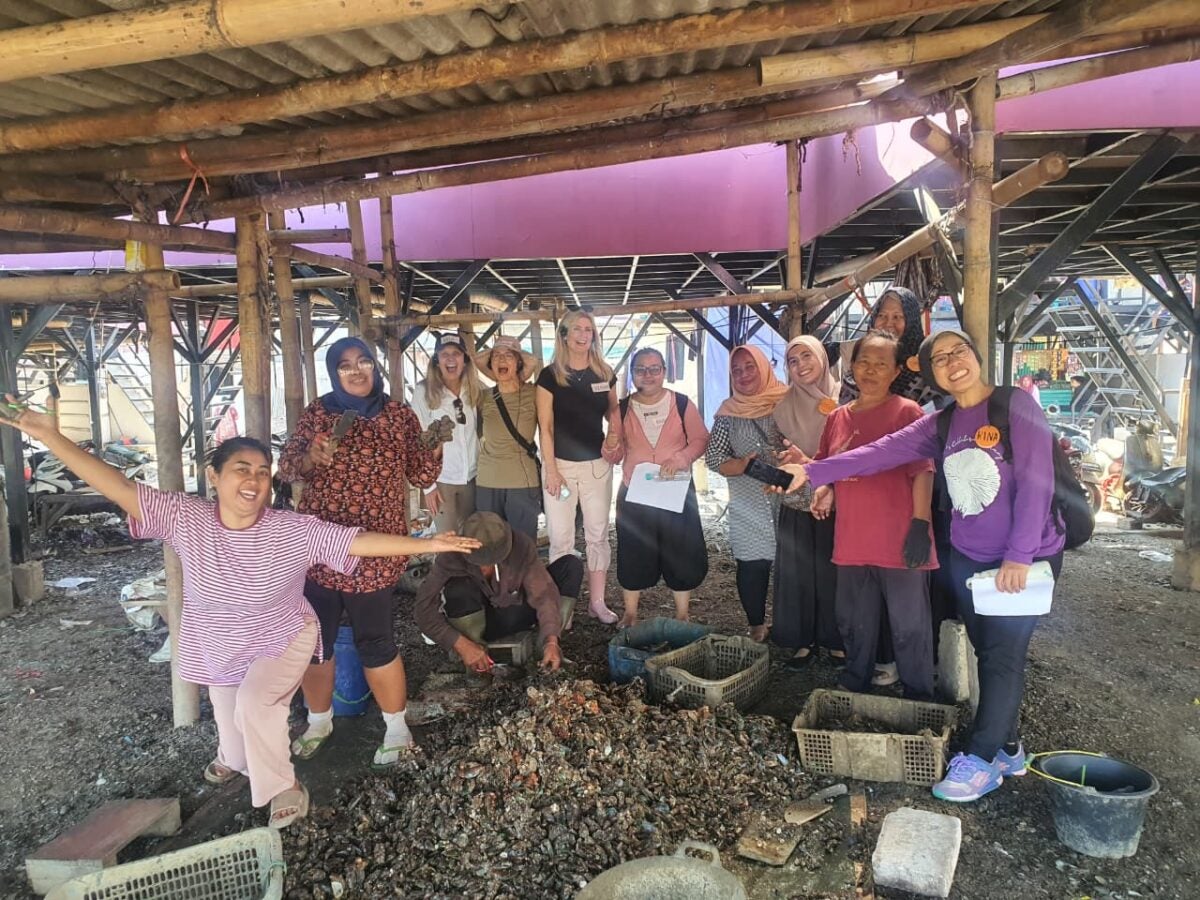
Advancing Women, Peace, and Security in Indonesia: Lessons from Jakarta
The Georgetown Institute for Women, Peace and Security (GIWPS) traveled to Jakarta…

Women, Peace and Security Conflict Tracker: April Updates
Our Women, Peace and Security Conflict Tracker combines real-time data points and…
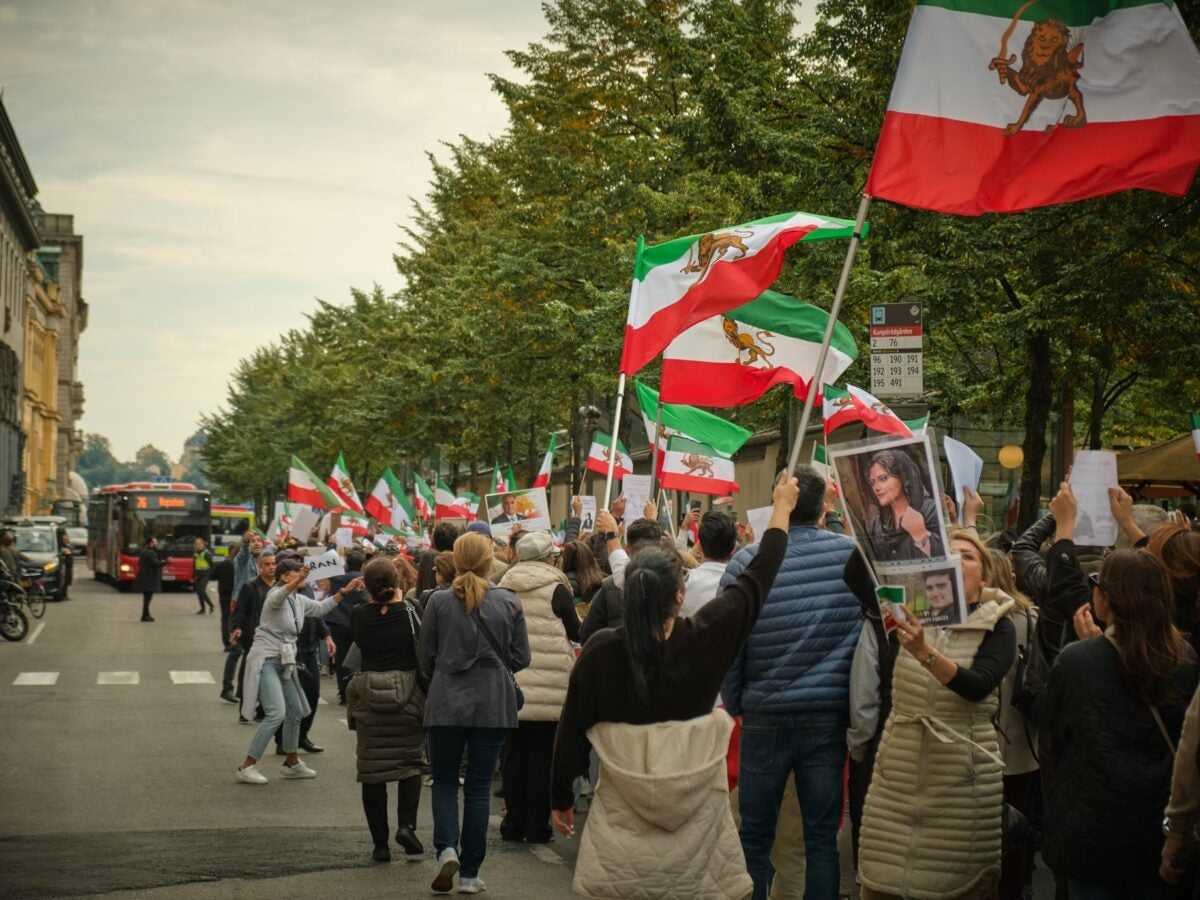
Keeping Hope Alive Amid Conflict: Insights from Iran, the Gulf, and Global…
A GIWPS ‘Meet the Moment’ discussion on the gendered impacts of the…