GIWPS Analysis: The People’s Tribunal for Women of Afghanistan Issues Landmark Judgment

Yesterday, the People’s Tribunal for Women of Afghanistan issued its landmark judgment—a ruling that confirms what Afghan women have long insisted: the conditions for women and girls in the country are catastrophic, and women’s rights are being violated every day. The Tribunal’s assessment found that the Taliban has carried out a “coordinated and institutionalized campaign of repression” against Afghan women, amounting to gender persecution and other inhumane acts under international law.
For many survivors, the proceedings offered the first authoritative international forum in which they could speak publicly about what has happened to them since 2021—testifying to bans on education, the collapse of healthcare access, arbitrary detention, torture, and the systematic erasure of women from public life. As the Tribunal’s statement affirms, women are “the real subjects of the process,” reclaiming narrative power long denied to them.
The courage of the 22 women who testified—from both inside and outside of Afghanistan—was central to making this process possible. Their agency as survivors and witnesses sits at the core of the Tribunal’s work, which was itself driven by Afghan leadership: Afghan organizations led the process (two of them women-led), Afghan prosecutors presented the case (including three women), and the panel of judges included an Afghan jurist. By establishing a formal record of harm in the absence of any functioning domestic justice system, the Tribunal provides an essential platform of recognition and affirms the central role Afghan women continue to play in documenting, resisting, and exposing the Taliban’s abuses.
People’s tribunals have historically acted as “platforms of last resort” for communities facing systematic violence in places where accountability and justice through the formal legal system is not possible, either because the legal system is unwilling or unable. These tribunals are “shadow tribunals” because they do not hold full legal authority, but they utilize real lawyers and judges to critically engage with evidence of crimes—including human rights violations—and render symbolic judgments on cases. These tribunals help provide some justice and accountability, frame legal arguments and advocacy, and formally document crimes that might otherwise slip into silence.
The Tribunal’s framing document underscores that Afghan women face a “system of structural violations” that devastates both individual lives and the country’s future. As policymakers look ahead, this judgment should serve as an urgent call to sustain pressure on the Taliban regime and to protect Afghans at risk abroad. As Shaharzad Akbar, Executive Director of Rawadari, reminds us, “We will use the judgment to seek reversal of bans and restrictions on women in Afghanistan, pursue all avenues to accountability, raise awareness about the situation and counter normalization of the Taliban’s policies.” In that spirit, we reiterate our recent argument in Just Security about the insecurity created by removing Temporary Protected Status (TPS) for Afghans in the United States. Justice for Afghan women must begin with listening to them—and today, they have made themselves heard.
Explore More
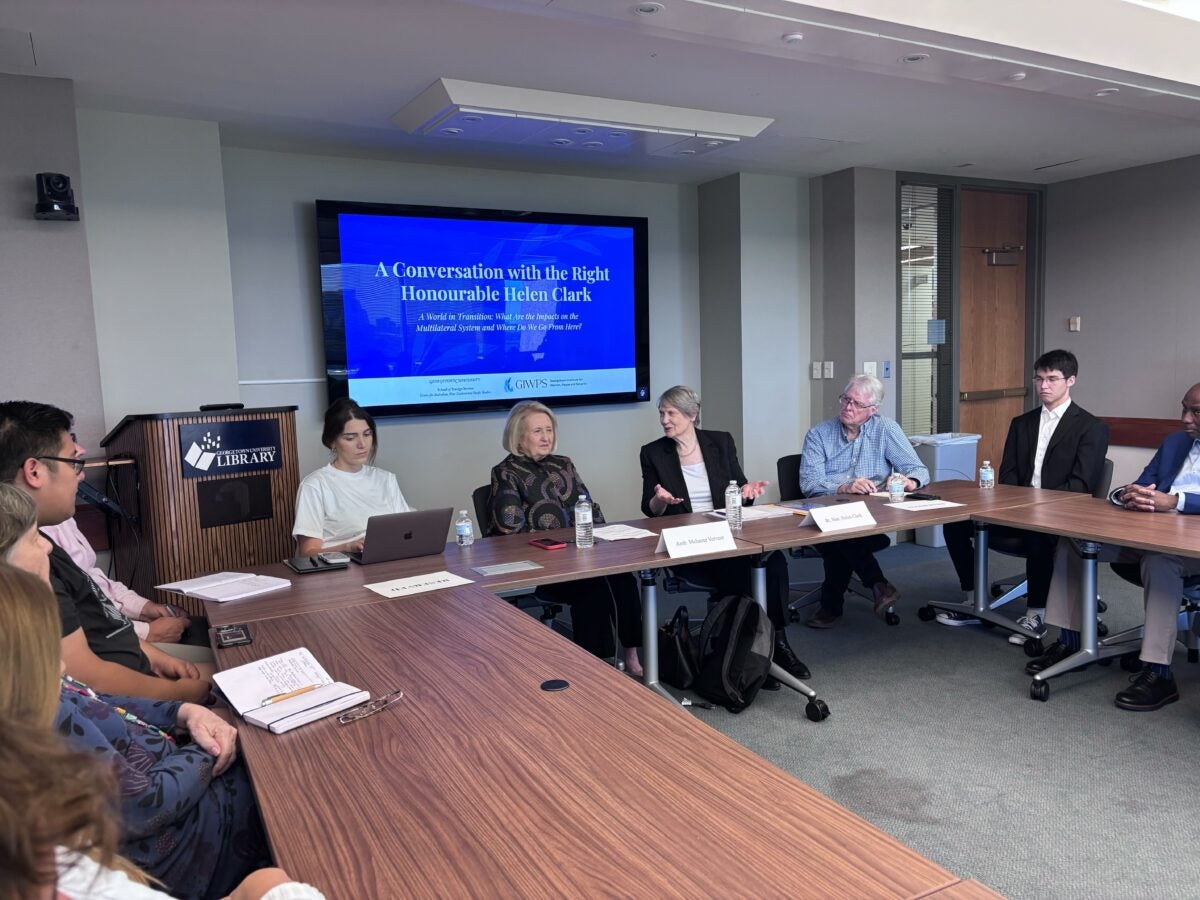
A World in Transition: Helen Clark on the State of the World
This week, the Georgetown Institute for Women, Peace and Security welcomed the…

Women, Peace and Security Conflict Tracker: September Updates
Our Women, Peace and Security Conflict Tracker combines real-time data points and…