Why Is America Abandoning One of Its Smartest Tools for Peace?

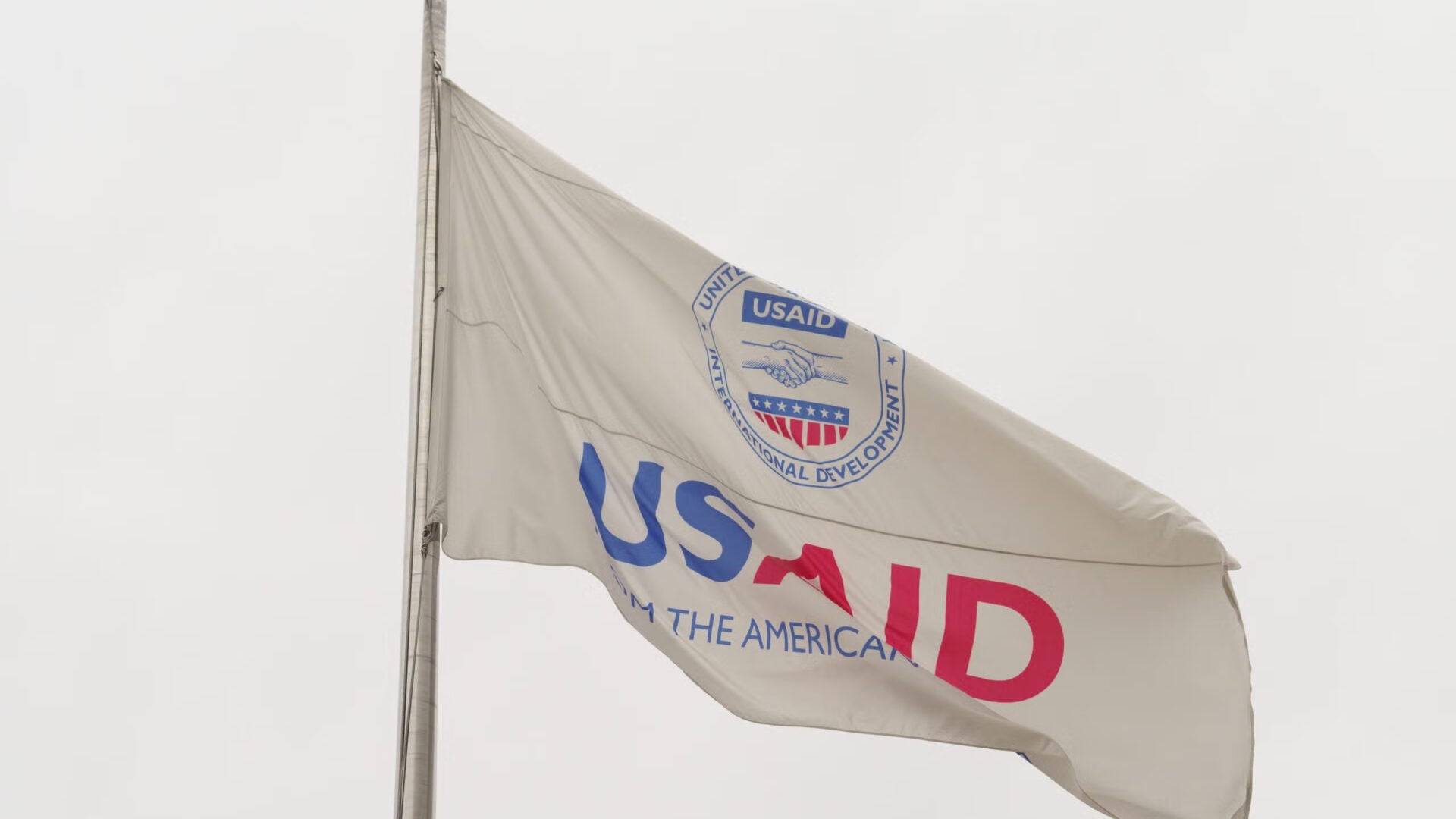
The United States has one of the smartest, most effective tools for advancing peace and security, so why is it being abandoned when we are experiencing the most conflicts since World War II?
Women play a critical role in sustaining peace and security: not because women are more peaceful, but because their inclusion provides a more holistic view of how communities must build back from conflict and crisis. In fact, when women participate in peace processes, agreements are 64% less likely to fail and 35% more likely to last at least 15 years. This leads to a more stable world, benefiting the U.S.’s own security and interests at a critical time when armed conflicts and humanitarian disasters are on the rise.
For years, the United States leveraged the Women, Peace and Security (WPS) approach across government, including in the international development programs implemented by the U.S. Agency for International Development (USAID). In 2017, Congress even passed the WPS Act with bipartisan support, recognizing the key role played by women and girls. It was signed by President Donald Trump and championed by multiple members of his current Cabinet. The law made the U.S. the first country in the world to enshrine women’s leadership and protection in conflict prevention, resolution, and recovery into law. And it identified the crucial role that development programs have in realizing these commitments.
Yet today, the U.S. government’s ability to implement this landmark law is being harshly dismantled with the gutting of offices, tools, and expertise needed for implementation across each named department and agency. This is especially true with our international development and humanitarian assistance, where local communities were living and breathing this work. The deliberate dismantling of USAID—long a cornerstone of U.S. foreign policy for Republican and Democratic administrations alike—is not just a functional loss; it is a profound strategic failure.
For over 60 years, USAID served as the development arm of the diplomacy–defense–development trifecta, wielding “soft power” to promote global stability, democracy, human rights, and prosperity. In that time, USAID has advanced American interests by supporting countries in crisis and transition, helping communities become healthier, democratic, more resilient to violence and extremism, and economically prosperous.
The WPS agenda doesn’t live in theory—it lives in programs that support survivors of gender-based violence, invest in women peacebuilders, fund women-led organizations in crisis zones, ensure women have seats at negotiation tables, and so much more. These efforts don’t happen without strong development institutions, and USAID has been the backbone of that work. Between 2017 to 2022 alone, USAID supported over 388,000 women in leadership, conflict mediation, legal, political, and peacebuilding processes. The agency provided critical gender-based violence health care, psychosocial support, legal aid, and economic services to 22.2 million people worldwide—providing not just aid, but dignity, healing, and hope. In doing so, we also helped provide security, stability, economic resiliency, and advance American influence overseas.
This is what international development looks like in action. It’s how the WPS agenda becomes reality.
But now, that work is in freefall. As of July 1, thousands of USAID staff have been fired, in addition to tens of thousands of partners and contractors who have lost their jobs. By September 2, all remaining staff will be gone, with the exception of a tiny group of people who have been folded into the Department of State with no clear leadership, mandate, or plan. USAID has been erased, seemingly overnight. Programs have been terminated mid-stream. Women-led organizations in crisis zones—lifelines for survivors of violence—are already scaling back or shutting down, according to UN Women. Most may close within six months. And if current trends continue, defunding USAID could contribute to as many as 14 million deaths by 2030, according to The Lancet.
We say this not only as longtime development professionals, but as two of the last advisors for Women, Peace and Security and Human Rights at USAID—roles that no longer exist. Working in partnership with our dedicated colleagues around the world, we’ve seen firsthand how our WPS initiatives improve lives across more than 180 countries.
In Somalia, we saw how USAID programs helped communities peacefully resolve grievances. In the absence of accessible, trusted justice systems, USAID trained and empowered women as legal professionals, supported their inclusion in land dispute committees, and provided free legal aid to nearly 700 rural women. The program helped reduce drivers of conflict such as land disputes, gender-based violence, and social exclusion.
Around the world, we’ve seen how USAID programs strengthened systems and supported women’s efforts towards addressing issues like:
- Countering Violent Extremism: In countries like Azerbaijan and Mozambique, USAID’s WPS programs have proven essential to countering violent extremism by addressing its root causes and understanding the different roles men and women play—offering economic opportunities, trauma counseling, and community leadership training that prevent recruitment into extremist networks.
- Conflict Prevention: From rural Egypt to Guatemala’s highlands, USAID programs have enabled women as frontline leaders in their communities, where they are preventing violence, challenging harmful norms, and helping build the kind of inclusive societies that are more stable and resilient to conflict.
- Democratic Governance: U.S. support for WPS in Southeast Asia has helped shape regional policies and National Action Plans that center women’s voices in peace and security—demonstrating how American foreign policy can promote inclusive governance and strengthen democratic institutions abroad that represent the will of the people.
- Justice and Accountability: USAID programs in Guatemala, Georgia, Sierra Leone, and Somalia have transformed justice systems by expanding access to legal representation for women, operationalizing specialized courts, and supporting women legal professionals,showing that investing in women’s justice is fundamental to lasting peace and accountability.
- Women’s Rights: From Burma to Central America, USAID supported women human rights defenders—from civil society advocates to journalists to champions within governments—who put their lives on the line to demand the protection and promotion of universal rights through technical assistance, safety and emergency support, network strengthening, and partnerships.
- Humanitarian Assistance: Through lifesaving assistance to the most vulnerable populations in extremely dangerous circumstances, USAID delivered gender-based violence services in crisis zones—from Ukraine to Haiti—while shifting power and resources to local women leaders, proving that humanitarian assistance is stronger and more effective when it centers women and girls.
In every one of these places, USAID’s role was critical. US development assistance isn’t charity—it’s strategic infrastructure and investments for peace. It brings the WPS agenda to life in places where war and inequality threaten global security. It strengthens our alliances, reinforces democratic values, and reduces the need for costly military interventions down the line.
Time and again, women and girls have stepped up to lead in their communities, and they will continue to do so. They haven’t waited for permission. They’ve defied deeply entrenched harmful norms, often at great personal risk, because they know what their communities need to forge a more peaceful future.
Now the question is: will the United States continue to stand with them?
As the infrastructure of U.S. development assistance collapses around us, the loss will reverberate far beyond our borders. The WPS agenda was never meant to be symbolic. It is a proven, practical framework for creating more inclusive and lasting peace. Weakening our commitment now—especially in the face of escalating global crises—is dangerous.
This must not be the end for US international development and WPS. Rather, this moment is a call to reimagine how the U.S. supports women in peacebuilding, crisis recovery, and conflict prevention. The U.S. must recommit to development as a pillar of its foreign policy—and ensure the Women, Peace, and Security agenda is not just preserved, but implemented as required by law, fully funded, and wholly realized. The cost of doing otherwise will be measured in lost lives, failed peace agreements, rising global instability, and weakened national security.
Tazreen Hussain served as USAID’s global Women, Peace, and Security Policy Advisor until June and is now an independent consultant. Kim Hart served as the global Human Rights Team Lead for USAID until April and is now the Director of Policy and Programs at Georgetown’s Institute for Women, Peace, and Security.
Explore More

Why Preventing Gender-Based Violence Is Essential to Water Security: Lessons from Lebanon,…
Lessons from Lebanon, Jordan, Egypt, and Palestine Gender-based violence (GBV) is pervasive…
On Ukraine’s Independence Day: A Call to Stand Firm in Support of…
Thirty-five years ago, Ukraine declared its independence and set out to build…