WPS Index 2021/22

The global advance of women’s status has slowed and disparities have widened across countries, according to the third edition of the Women, Peace and Security Index (WPS Index) released today at the United Nations.
The WPS Index, published by Georgetown University’s Institute for Women, Peace and Security (GIWPS) and the PRIO Centre on Gender, Peace and Security (PRIO GPS) draws on recognized data sources to measure women’s inclusion, access to justice, and security in 170 countries.
Norway, Finland, and Iceland lead the rankings, while Afghanistan, Syria and Yemen are at the bottom. The range of scores has widened: this time, the top score is three times better that of the worst performer, compared to two times better in 2017.
The United States has dropped out of the top 20, to 21st place.
“Slowing rates of progress for women can be traced to the Covid-19 pandemic, which has widened gender gaps in paid employment and care burdens, and heightened risks of intimate partner violence,” said Dr. Jeni Klugman, managing director of GIWPS and lead author of the WPS Index.
South Asia dropped to last place in the regional rankings—falling for the first time behind Sub-Saharan Africa—reflecting the region’s high levels of legal discrimination, intimate partner violence, and discriminatory norms that continue to disenfranchise women, often coupled with low levels of inclusion. Fewer than one in four women in South Asia is in paid work, less than half the global average.
This year’s WPS Index take a deeper dive in two South Asian countries: Afghanistan and Pakistan. Conditions are worst for women in the southeastern provinces of Afghanistan, where conflict has been protracted. High rates of violence in the home compound at-large security threats. Nationwide, 35 percent of Afghan women experienced intimate partner violence in the past year, and rates exceeded 84 percent in Ghor, Herat, and Wardak provinces—higher than those in any country in the global WPS Index.
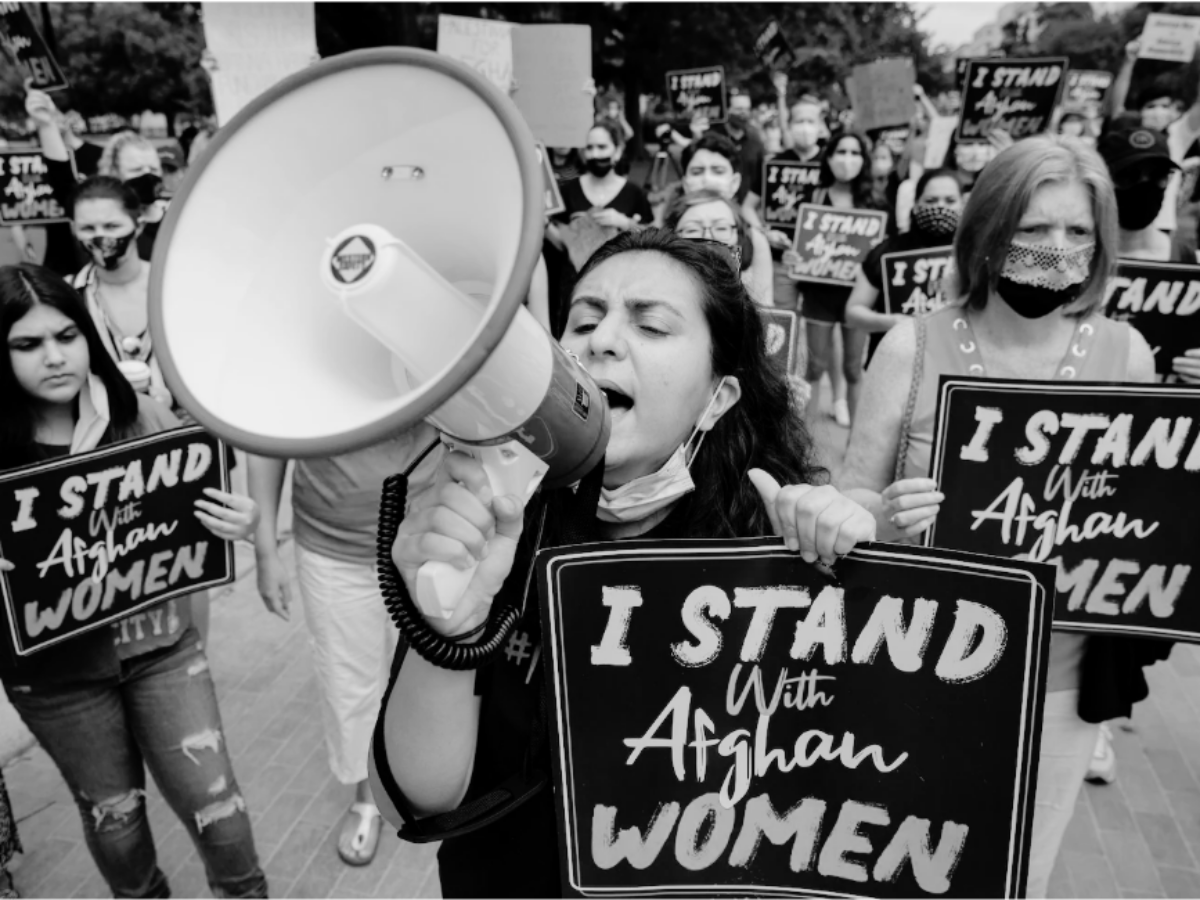
“Since 2017, Afghanistan’s score has deteriorated 28 percent on the WPS Index. The return of the Taliban to power is unraveling the progress Afghan women have made and worsening the situation for women around the country,” said Ambassador Melanne Verveer, executive director of GIWPS and former U.S. Ambassador of Global Women’s Issues.
With forced displacement approaching 90 million and at all-time highs, the WPS Index has now been adapted and applied to systematically measure the situation of forcibly displaced women. The results for five African countries –Ethiopia, Nigeria, Somalia, South Sudan, and Sudan – show that displaced women and girls face a higher risk of all forms of gender-based violence and economic marginalization and financial exclusion, and often felt less free to move about. Indeed, displaced women were found to experience an average disadvantage of about 24 percent. And they generally face much higher risks than host community women of violence at home, rising as high as 42 percent in South Sudan.
“This year’s edition of the index systematically measures the situation of women around the world. The massive challenges created by the pandemic mean that intersectional analysis and policy making are more important than ever as governments and communities strive to build back better,” adds Dr. Jeni Klugman.
The report is funded by the Norwegian Ministry of Foreign Affairs.
Explore More

From Participation to Lasting Influence
Afghan Women Pursuing Peace Under Oppression