WPS Index 2025/26

Progress for women’s rights and wellbeing has stalled globally, according to the 2025/26 Women, Peace and Security (WPS) Index.
WPS Index scores reveal that global progress on women’s status has largely stagnated since tracking began in 2017, with declines in certain regions.
“As wars and conflicts reach a historic peak, progress on women’s status nears a historic low,” says lead author Haleema Hasan.
Since 2017, the Georgetown Institute for Women, Peace and Security, in collaboration with the Peace Research Institute Oslo, has produced the biennial WPS Index to rank countries on women’s status using 13 robust and globally recognized indicators that span the dimensions of women’s inclusion, justice, and security.
Once again, Denmark ranks as the top country for women’s wellbeing according to the WPS Index, scoring more than three times higher than Afghanistan at the bottom. This year, for the first time, two countries in the Latin America and the Caribbean region are in the top 20 percent: Costa Rica (ranking 34th, up from 60th) and Uruguay (35th, up from 59th).
The United States ranks 31st, up from 37th, based on data available up until 2024. However, recent policy changes threaten to undo progress.
Another key finding of the WPS Index is that countries where women’s status is higher are also more peaceful, prosperous, and resilient, including in the face of climate change and economic shocks.
“Our data show that advancing women’s rights and status is not only an ethical and moral imperative; it is also a practical and collective one,” says Ambassador Melanne Verveer, Executive Director of the Georgetown Institute for Women, Peace and Security.
The WPS Index results come at a time when conflicts are escalating worldwide with devastating consequences, especially for women and vulnerable groups. Approximately 676 million women worldwide were exposed to conflict in 2024, a staggering 74 percent rise since 2010 and the highest number of women exposed to conflict ever recorded.
Amidst these alarming trends, some of the greatest improvements in women’s status have come from conflict-affected countries, including Congo and Yemen.
“These are alarming numbers. We know from research that conflict has profound and lasting consequences for individuals, affecting both their immediate well-being and long-term development”, says Siri Aas Rustad, Research Professor and Project Leader at the Peace Research Institute Oslo’s Centre for Gender, Peace and Security.
The WPS Index report is funded by the Government of Norway.
Explore More
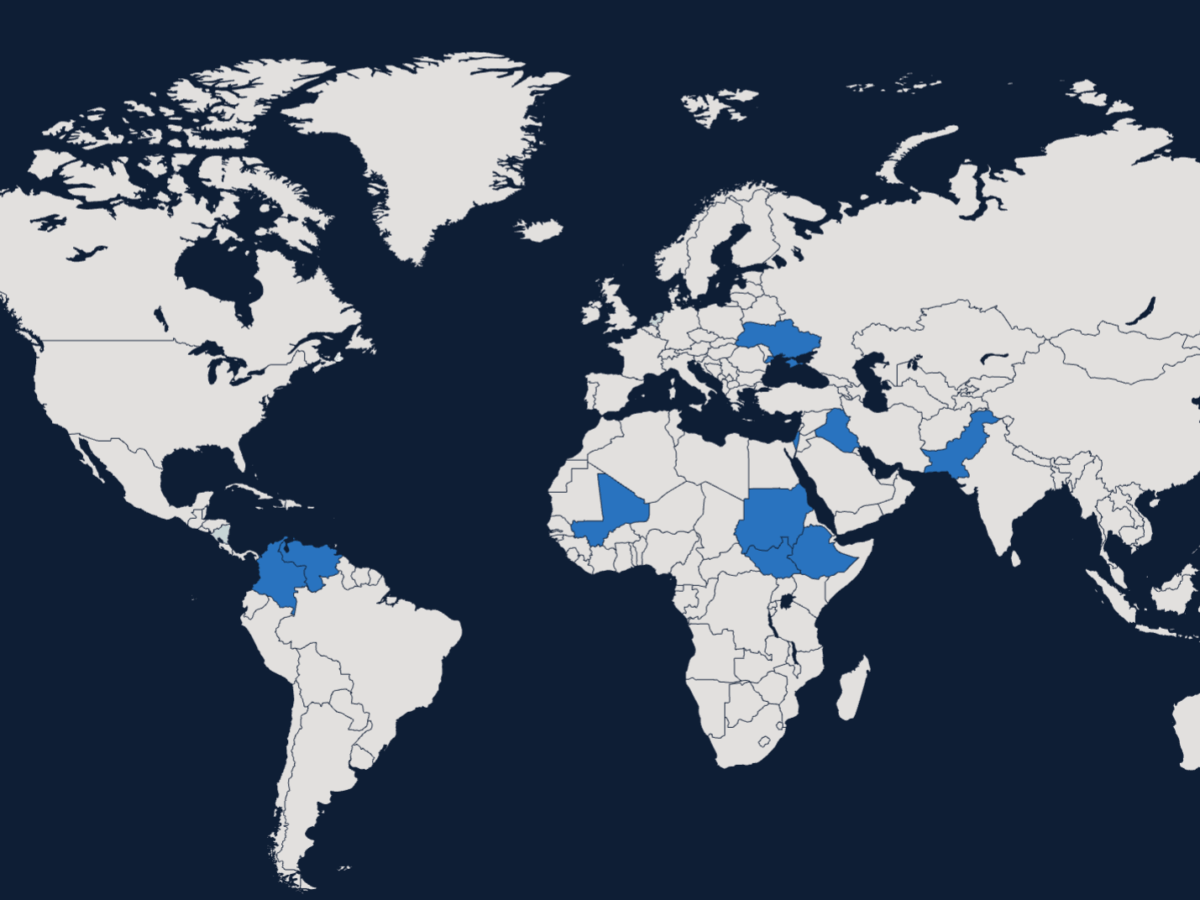
Conflicts and Trends to Watch in 2026

Women, Peace, and Security Shadow Report to Congress: What Was Built, What…