Protecting Women Environmental Defenders: Lessons from Colombia

For women environmental defenders, protecting the environment is inseparable from peacebuilding, protecting human rights, and territorial survival. In Colombia, where I am from, women environmental defenders are often described as being “on the front lines” of the climate crisis. And we are. But this phrase only captures part of the reality. For many rural, Indigenous, Afro-Colombian, and peasant women, defending the environment is not an abstract political cause. It is the defense of water, food, ancestral knowledge, community, life in all forms, and the possibility of remaining in their homeland with dignity. We are not only confronting climate impacts; we are also confronting armed conflict, extractivism, land dispossession, racism, forced displacement, gender-based violence, different forms of discrimination, and institutional abandonment. In a country where armed violence and environmental destruction often overlap, protecting nature is also a form of peacebuilding.
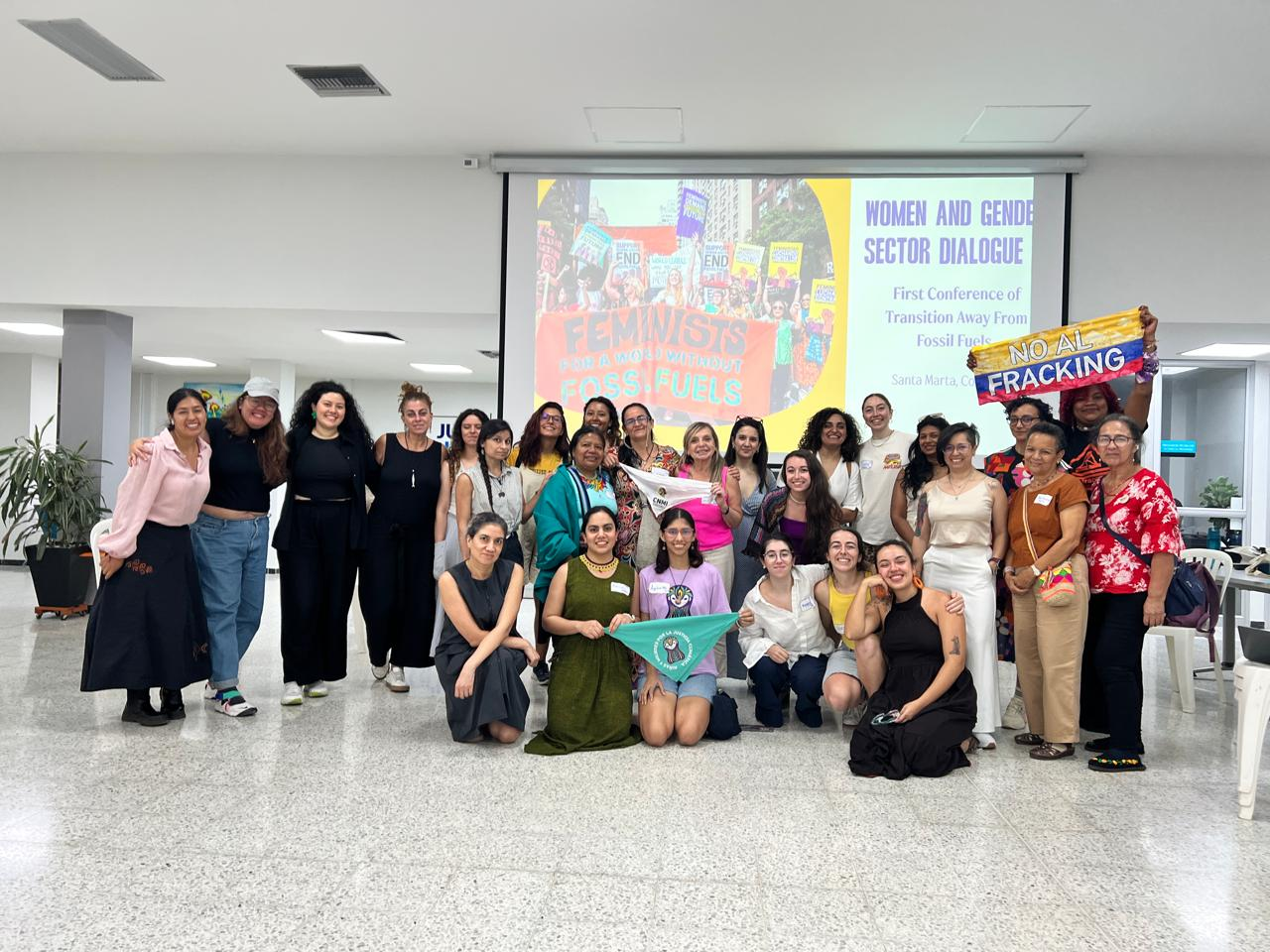
One of the Most Dangerous Countries for Environmental Defenders
Colombia remains one of the most dangerous countries in the world for land and environmental defenders. Global Witness documented 48 killings of land and environmental defenders in Colombia in 2024, the highest number recorded globally that year. Frontline Defenders’ 2025/2026 Global Analysis found that land, environmental, and peasants’ rights activists were the human rights defenders who were the most likely to be killed worldwide, and Colombia had the highest number of documented killings of human rights defenders in the world. These risks are not isolated from broader political and economic dynamics. Harms are linked to armed groups, land disputes, and illicit and extractive economies, which have escalated amid weak implementation of the Peace Agreement and the lack of meaningful participation of communities because of fear in decisions that affect territories.
Women environmental defenders additionally face specific and gendered forms of violence. Women are threatened not only because they defend land and the environment, but also because they challenge traditional gender roles, pushing back on militarized control and demanding political participation. Attacks against women often target their families, their sexuality, their motherhood, their reputations, and their leadership. These forms of violence seek not only to silence individuals and break collective processes, but also to delegitimize women’s leadership. Women also have to use different coping mechanisms when they face these attacks; for example, Indigenous women often cannot simply relocate when facing a threat, and international protection resources are not designed to respond to these more nuanced protection needs.
Yet, women-led organizations continue to build protection systems and demand change. Across Colombia, women create early-warning networks, accompany threatened leaders, document violence, defend seeds and food sovereignty, organize community kitchens, monitor environmental harms, preserve memory, and sustain spaces for dialogue in territories marked by fear.
LIMPAL Colombia—the Colombian section of the Women’s International League for Peace and Freedom, a global feminist peace organization and an organization to which I belong—offers one example of this approach in practice. Working at the intersection of Women, Peace and Security, ecofeminism, territorial defense, feminist political participation, and the demilitarization of everyday life, LIMPAL demonstrates that protection extends far beyond emergency response. Women-led organizations also create lasting forms of safety through political education, advocacy, collective memory, community care, and locally rooted peacebuilding.
These efforts are often not recognized as “traditional security,” but they are an essential infrastructure for peace, security, and Colombia’s climate future. Attacks on environmental defenders—physical, digital, reputation, and psychosocial—undermine these critical protection systems and create a security threat for the country.
This is why the protection of women environmental defenders cannot be understood only through an individual security lens. Bodyguards, emergency phones, relocation, or police reports may be necessary in some cases when defenders face threats or are attacked, but they are not enough to fully protect and support the women, families, organizations, and communities leading these critical efforts. Beyond the individual, protection must be collective, territorial, feminist, and preventive.
Heightened Concerns because of Colombia’s Incoming Administration
Protecting the women who are defending the environment is especially urgent in Colombia’s current political moment. The incoming administration of Abelardo de la Espriella has raised concerns among environmental and human rights actors because of its support for fracking, fossil fuel expansion, and potential rollbacks of environmental protections. Outgoing Colombian Environment Minister Irene Vélez Torres has warned that recent climate and environmental gains could be at risk under the new government, particularly regarding fossil fuels, Amazon protection, Indigenous environmental governance, and sensitive ecosystems such as páramos.
In this context, supporting women environmental defenders is not only about responding to threats after they occur. It is about asking what kinds of development, security, and climate policies will be imposed on Colombia’s territories, and who will bear the costs. A transition that expands extractive frontiers, weakens environmental safeguards, or excludes communities from decision-making cannot be called just. Green or fossil-based, any model that sacrifices territories and silences defenders reproduces violence.
Colombia must move away from security responses that treat communities as obstacles or threats. The state must use a feminist, antimilitarist approach to protecting its environment. It should not protect environmental defenders with one hand while advancing policies that place their territories at risk with the other. Security must mean the ability of women leaders to speak, organize, cultivate, care, denounce, and decide without fear.
Opportunities to Support Women Environmental Defenders in Colombia
International organizations and policymakers have an important role to play. To protect the environment and women environmental defenders, they should:
- Fund women-led and grassroots organizations such as Barranquilla +20 and LIMPAL Colombia at scale to address the challenges and opportunities in Colombia today. Funding should be direct, flexible, and long term because short-term project cycles do not match the sustained nature of territorial defense.
- Prioritize the prevention of rights violations against women environmental rights defenders, both individually and collectively, by investing in early-warning systems, community-based risk monitoring, rapid-response protocols, legal and psychosocial support, safe reporting channels, and meaningful accountability for threats and attacks.
- Support collective protection mechanisms—not only individual protection schemes—through flexible funding for women-led protection networks, accompaniment strategies, emergency funds, digital and physical security training, safe meeting spaces, transportation, and assistance for families and organizations affected by threats.
- Embed strong human rights safeguards, meaningful consultation, and territorial consent in all climate-finance decisions to prevent projects from increasing risks to women environmental rights defenders and their communities.
- Treat Indigenous, Afro-Colombian, peasant, feminist, and LGBTQI+ knowledge as agents of change and political knowledge, not simply as testimony to be extracted.
Protecting women environmental defenders requires defending civic spaces in Colombia. When social protest is stigmatized, when environmental regulation is weakened, when armed actors control daily life, or when women leaders are left alone, democracy itself is at risk.
Women environmental defenders in Colombia are protecting forests, rivers, ecosystems, and the possibility of peace. We are defending life against economies and forms of security that too often normalize dispossession. If Colombia’s future is to be democratic, peaceful, and climate-just, their leadership must not only be recognized. It must be protected, resourced, and followed.
Current policy debates raise broader questions about how security is defined and whose security is prioritized. The future of environmental governance in Colombia will depend not only on which policies are adopted by the incoming administration, but on whether those most affected by environmental and security decisions are able to participate safely and meaningfully in shaping them.
Juanita Serrano Zapata is a feminist, antimilitarist activist and member of Fundación Barranquilla+20, a Colombian youth- and women-led organization working at the intersection of climate justice, biodiversity, water governance, and gender equity. She is a researcher and practitioner with over ten years of experience in international cooperation, humanitarian action, and peacebuilding in Colombia, the Middle East, and Africa. Juanita has worked with communities affected by armed conflict, displacement, and environmental destruction, and has led programs on gender, territorial rights, and women’s protection with organizations including the Colombian Truth Commission, Fundación Mi Sangre, and the Women’s International League for Peace and Freedom. She is a former Rotary Peace Fellow, and through the scholarship, she did a Master’s in Peace, Resilience and Social Justice from the University of Bradford, United Kingdom.
This article is part of a series. GIWPS is engaging civil society networks, implementing NGOs, and local women to highlight pioneers on the frontlines who are developing and implementing localized and national solutions, policies, and programming at the intersection of gender, climate, and conflict.
Related Content: Meet the Moment: Colombia’s Presidential Election and the Future of Peace, Democracy & Climate Action
Explore More
‘A Huge Injustice’: Ukraine’s War Widows Battle to Claim Compensation for Fallen…
This is a shortened version of a story originally published by Fuller.…

Seven Questions on Human Rights, Institutional Leadership, and Democratic Resilience in Poland…
Sylwia Gregorczyk-Abram took office as Poland’s Commissioner for Human Rights in July…
Suara dari Muara: Untold Stories from the Women Documenting Life on Jakarta’s…
In July of this year, the women of Kampung (village) Muara Angke,…