Suara dari Muara: Untold Stories from the Women Documenting Life on Jakarta’s Changing Coast

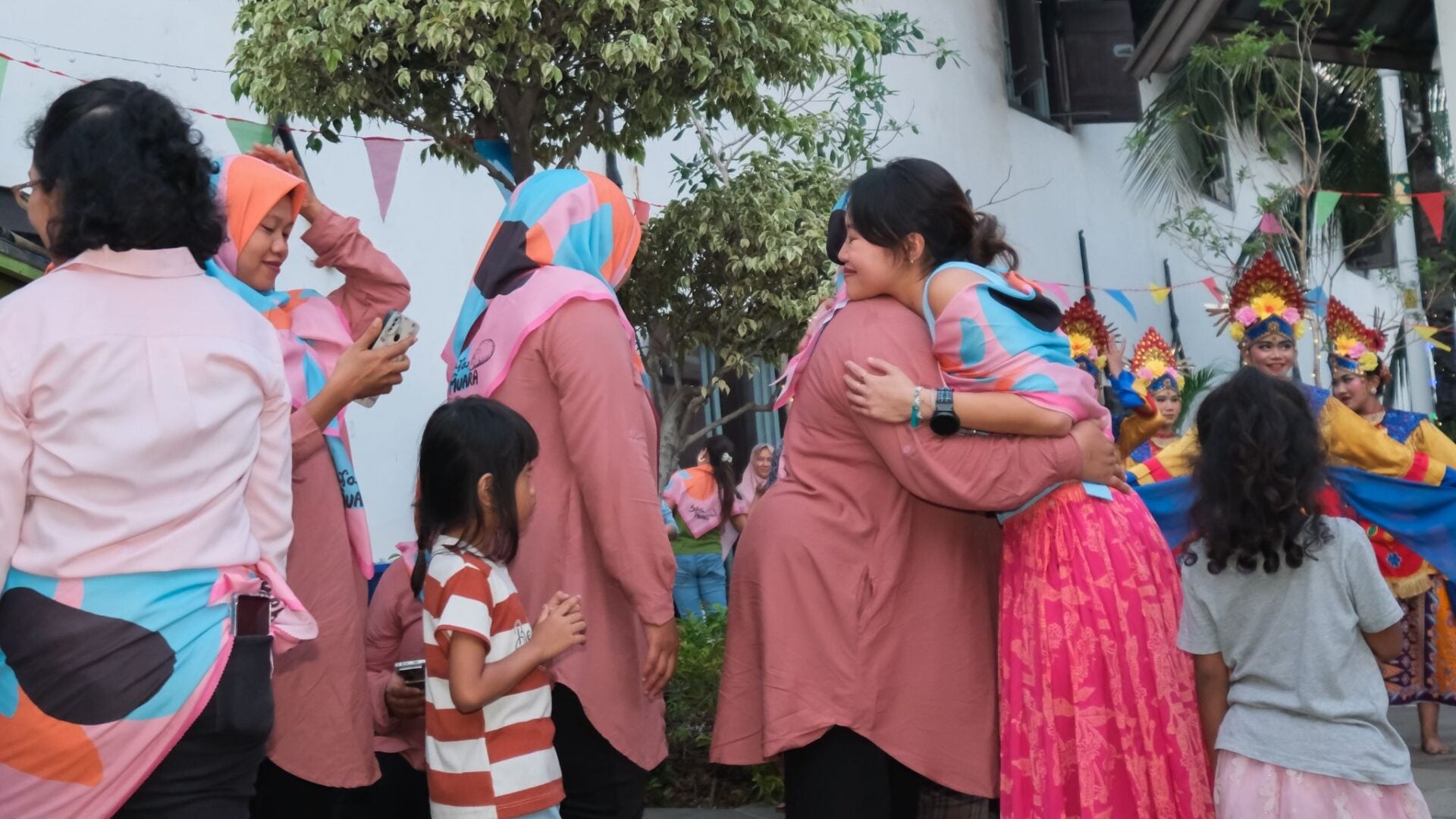
In July of this year, the women of Kampung (village) Muara Angke, a coastal community in North Jakarta, were given a platform at the Maritime Museum to share their stories and lives as women in a mostly forgotten coastal community.
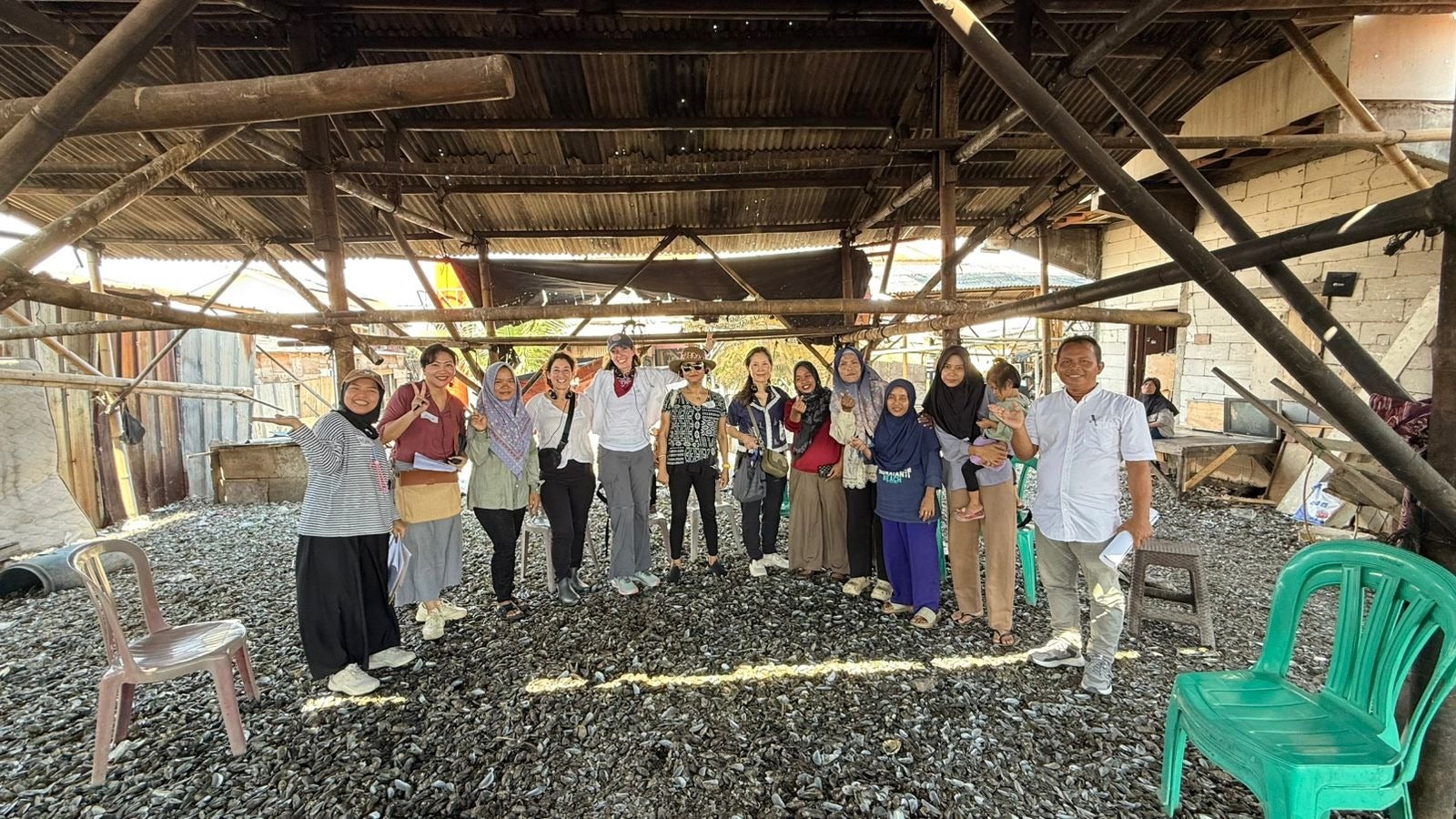
The project and exhibition, Suara dari Muara (Voices from the Estuary), is the culmination of three months of collaboration between Georgetown SFS Asia-Pacific (GSAP) and the women of Muara Angke. Together, they worked to bring out their voices and stories of all the joys and challenges of living on the coast of Jakarta.
Life in a Changing Landscape
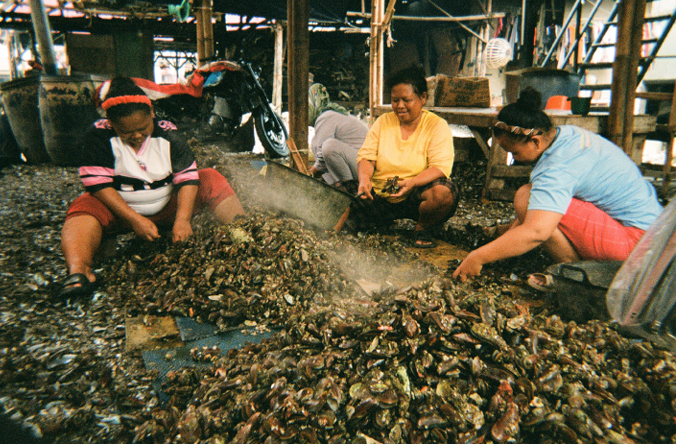
Jakarta is a sinking city. Coastal communities especially must contend with tidal floods for several days each month, bringing seawater into the streets and their homes. Most of the women in Muara Angke work as mussel shellers. Every morning, around 11a.m.the men of the community return after four to five hours of harvesting mussels from Jakarta Bay. They place the mussels in large drums and steam them, creating piles of steaming-hot mussels for the women to peel.
For the women, the work means earning around 35,000 rupiah (approximately $1.96 USD) per drum, alongside the physical pain of sitting down and bending over for hours. They typically finish two drums a day.
Beyond their role in the fishing industry, the women of RW 22—the densely populated neighborhood nestled between two rivers and the Java Sea on whom this project focuses—provide unpaid care work to uphold the community. Tidal flooding raises the risk of various illnesses, and damp conditions can lead to respiratory problems. The burden of maintaining cleanliness is often disproportionately on women, leaving them more exposed to these risks.
Without a piped water connection, residents of Muara Angke pay 200–300 times more for water than the PAM (municipal water) rate. In her photovoice journal one woman wrote, “Clean water is hard to come by. Day to day, I use borehole water—it’s salty, but that’s alright, because clean water is expensive. One jerrycan costs 5,000 rupiah.”
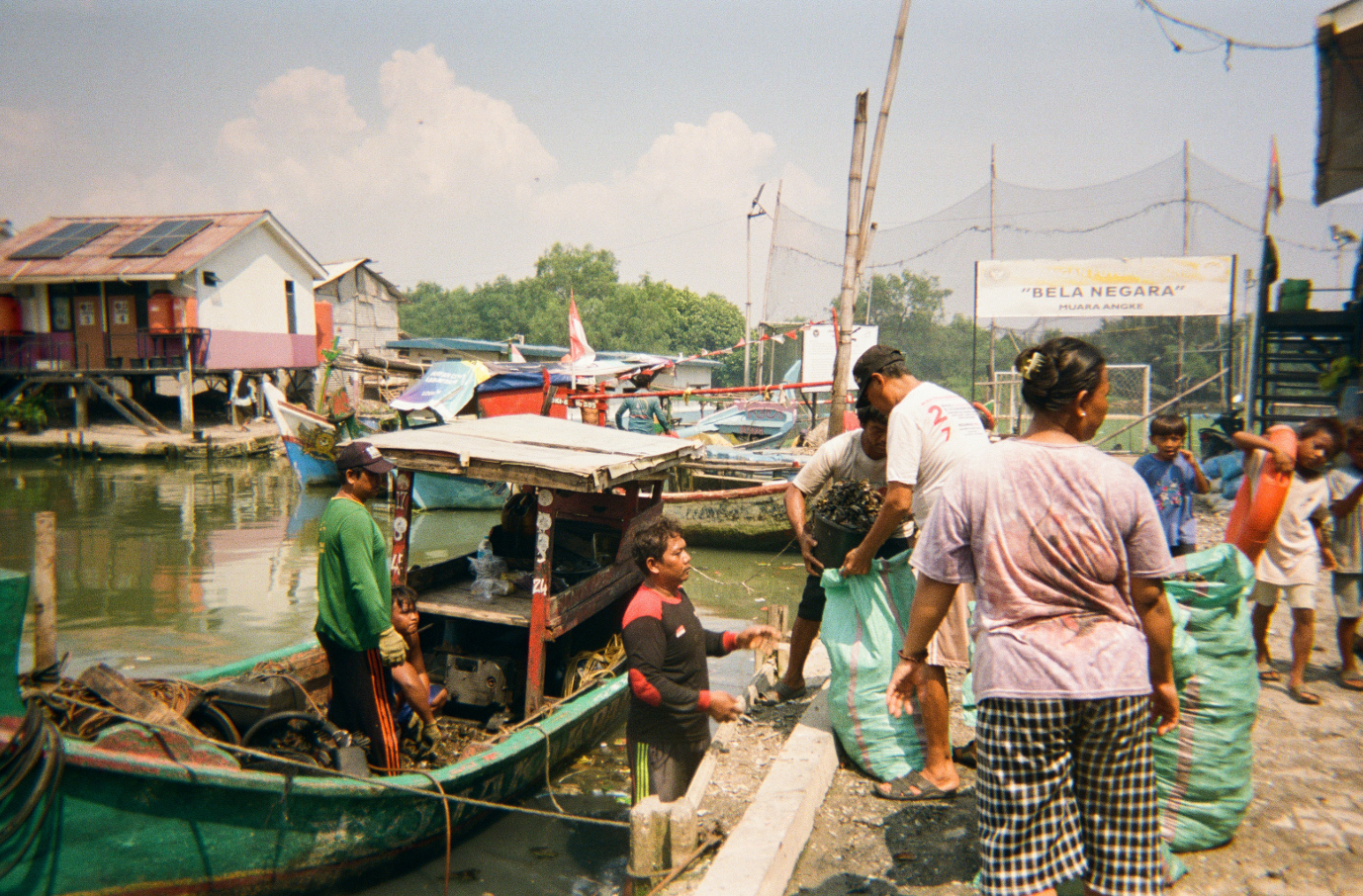
But life on the coast is more than just flooding and hardship.
Despite its challenges, the women of Muara Angke enjoy their work. Peeling mussels offers a flexible lifestyle: they determine if and when they work, and they can take care of their children at the same time. Most of the women who live in Muara Angke are migrants, and the relationships they’ve built over barrels of freshly caught mussels have created a community of mutual support and resilience.
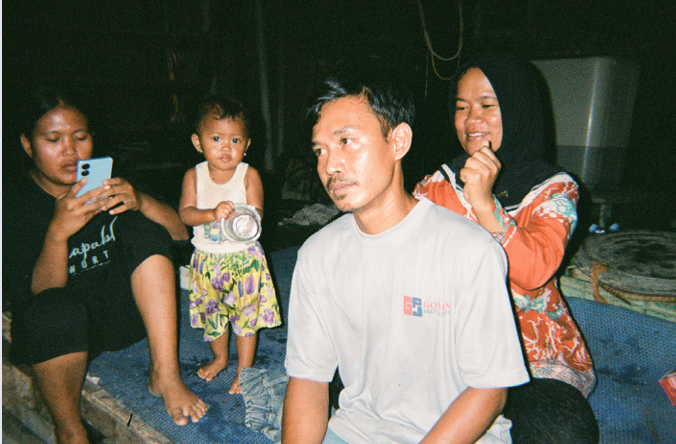
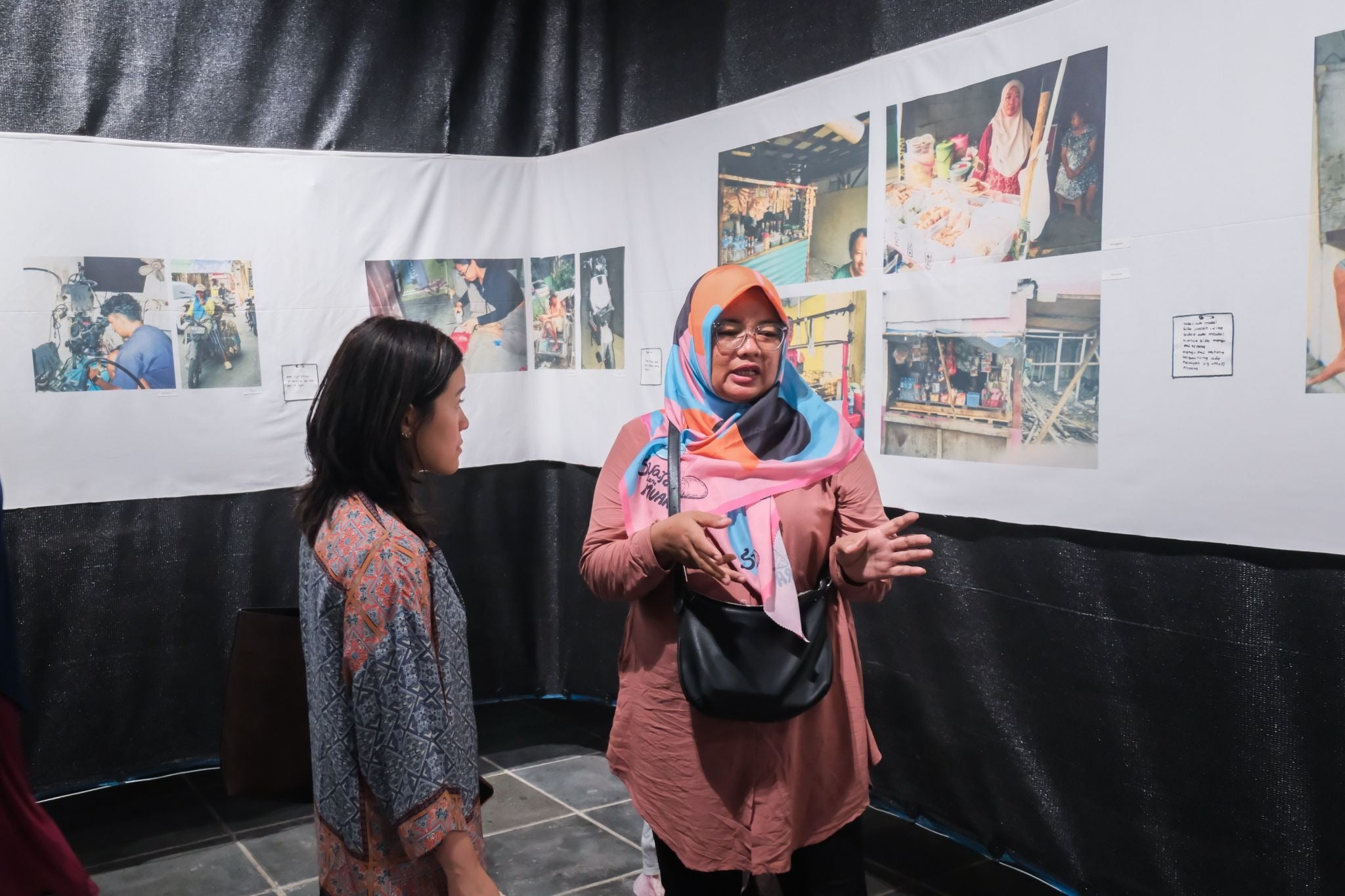
These complex narratives are what the exhibition is meant to showcase. Rather than simply documenting the challenges of living on Jakarta’s coast, the goal is for the women to capture their unique perspective. GSAP gave the women disposable cameras to tell their story: the difficult parts, the joyful parts, and the hopeful parts.
Amid economic precarity, the threat of tidal flooding, climate change, shifting coastal ecosystems, and the many social challenges they navigate, each photograph tells a story of how they endure, how they care, and how they sustain their families, their community, and the village they call home.
In looking at these photographs and reading these stories, we not only learn about life in Kampung Muara Angke — we come to understand women as essential actors in coastal society. They are observers, guardians, and producers of knowledge about the spaces in which they live. The work of the women of Kampung Muara Angke also invites us to see and understand the coast as a living space worthy of care, protection, and meaning — every single day.
A Shared Commitment: How GSAP and the Georgetown Ambassadors Brought These Stories to Light
This initiative thrived through two distinct yet complementary levels of support. GSAP led the hands-on fieldwork and community collaboration, facilitating workshops on storytelling and documentation to help the women capture their daily lived experiences.
During their recent trip to Indonesia, the Georgetown Ambassadors for Women, Peace and Security participated in a “human library” exchange with the women of Muara Angke. Insights from the visit informed Georgetown Ambassadors’ conversations throughout the rest of the trip, and the stories of Muara Angke continue to stay with participants even today.
When funding shortages threatened the exhibition’s launch, the Georgetown Ambassador community mobilized critical resources, ensuring these stories reached the public.
A Platform for Change: The Maritime Museum Showcase
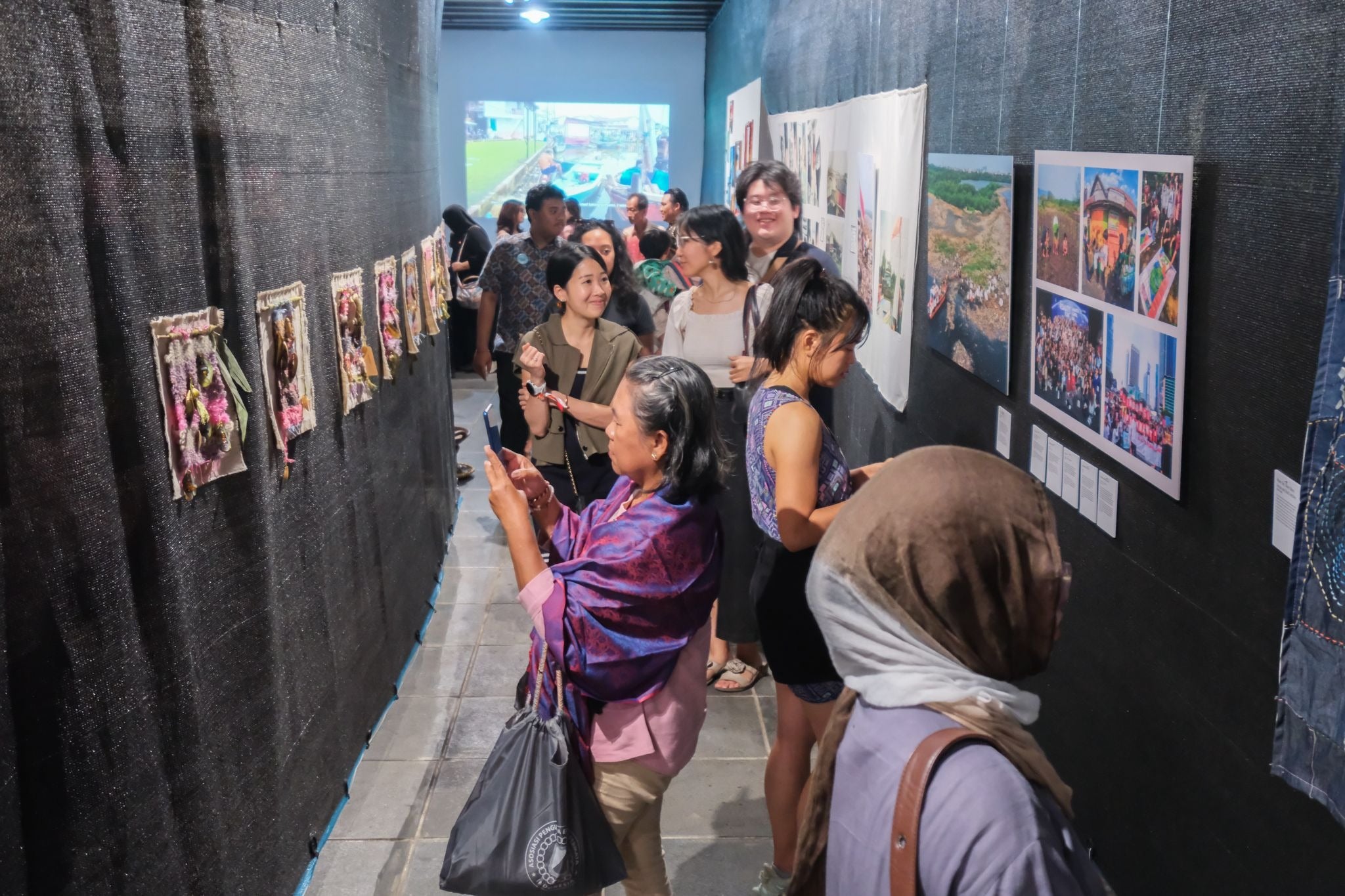
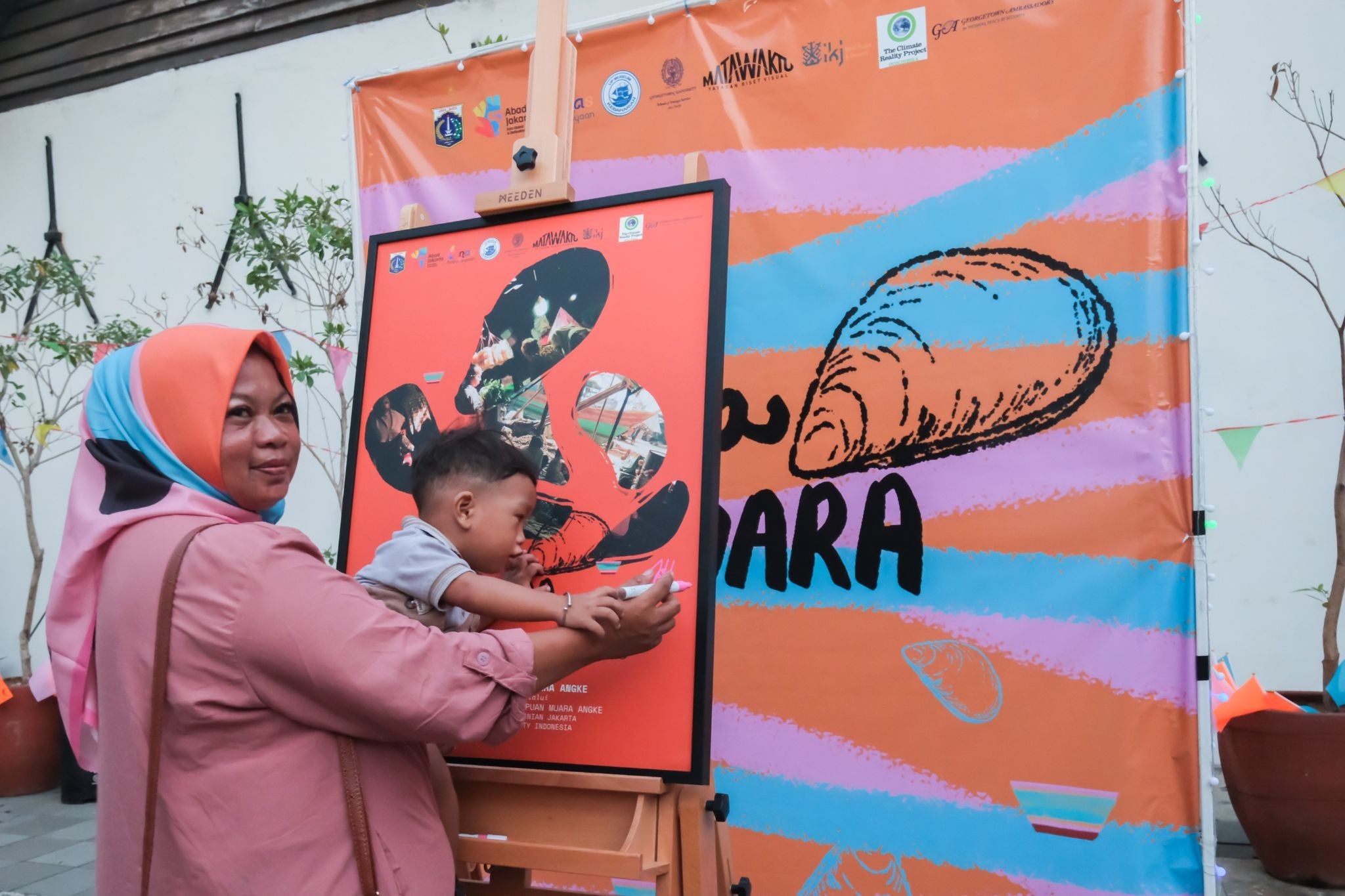
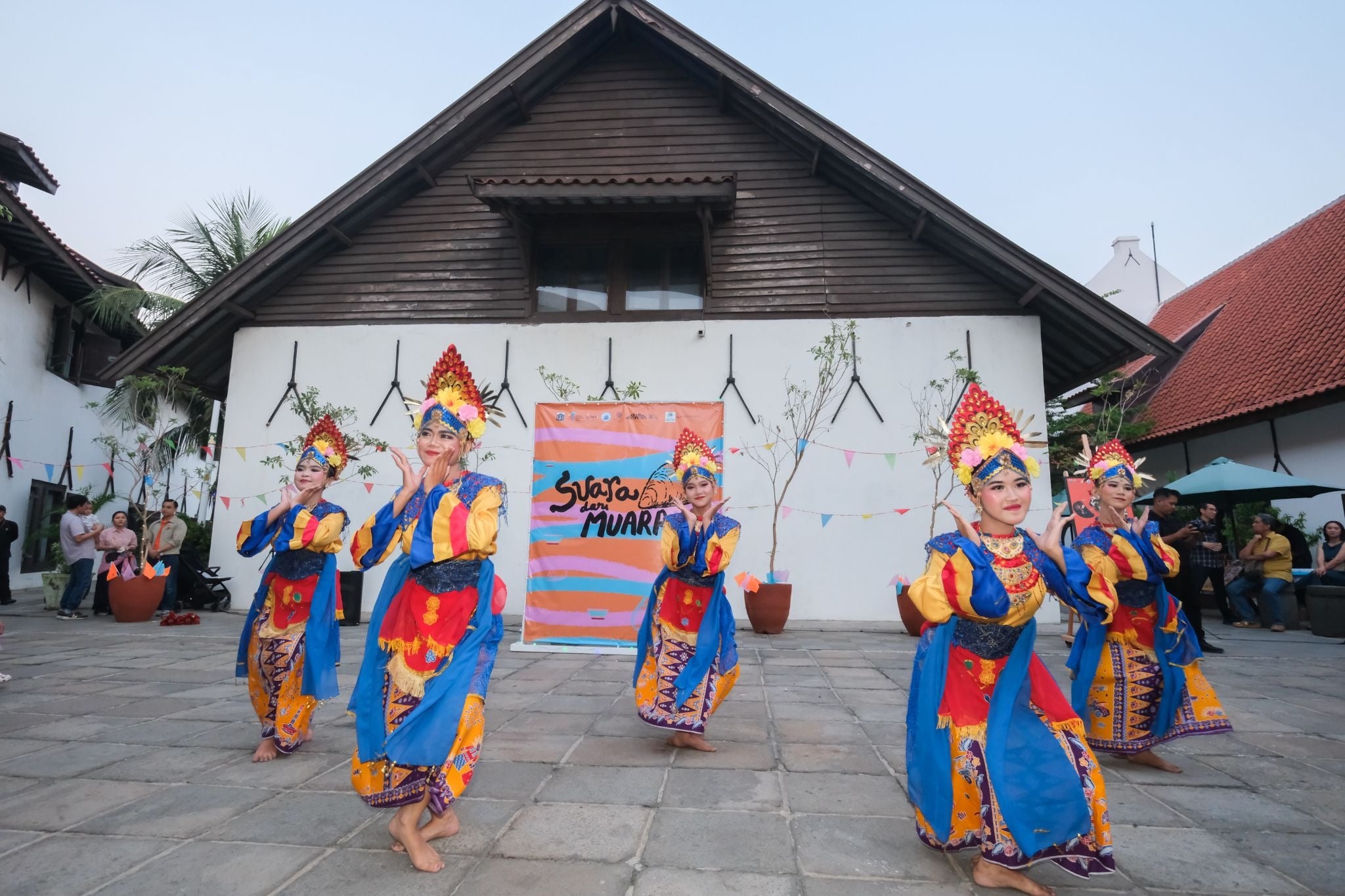
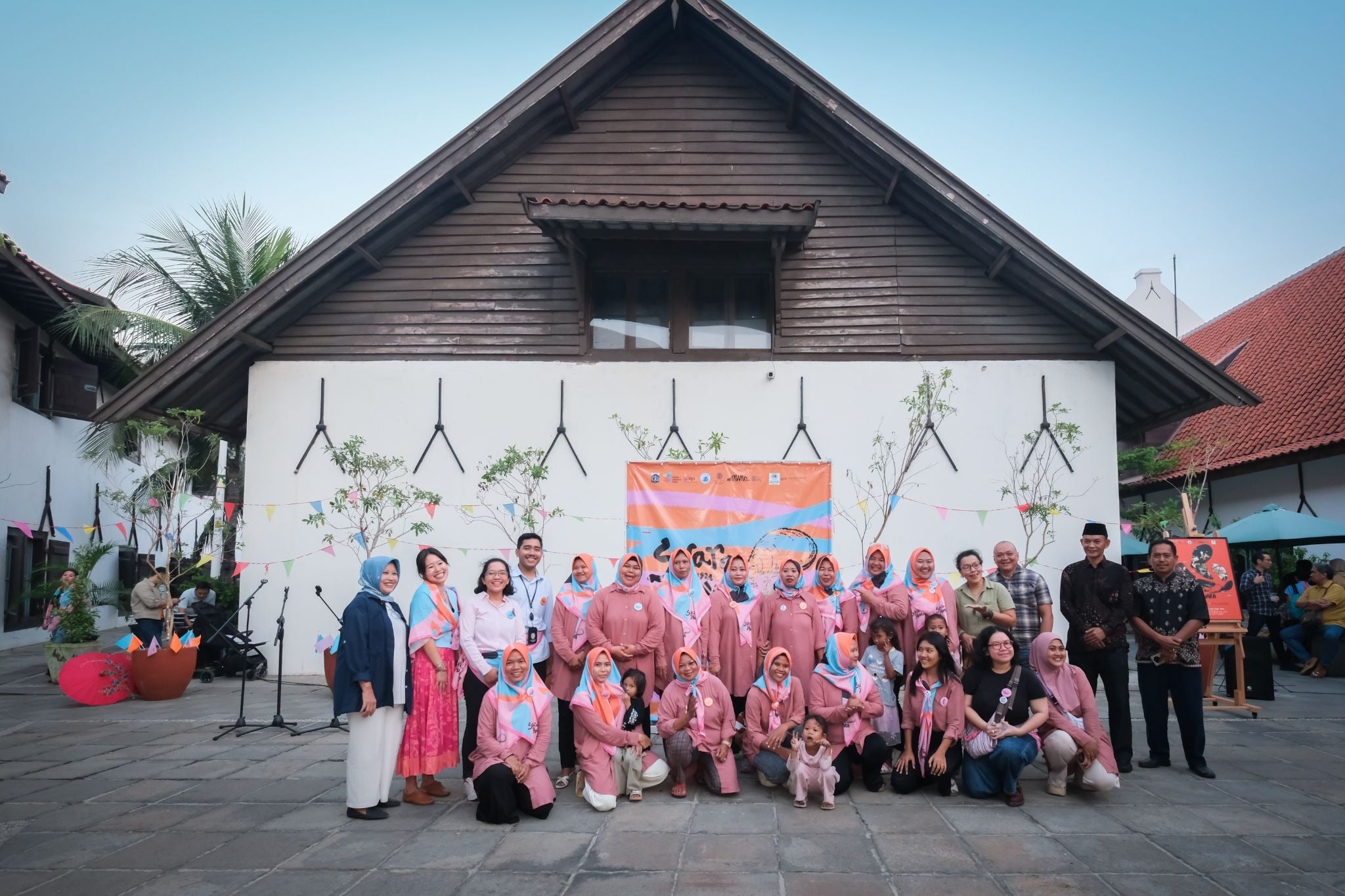
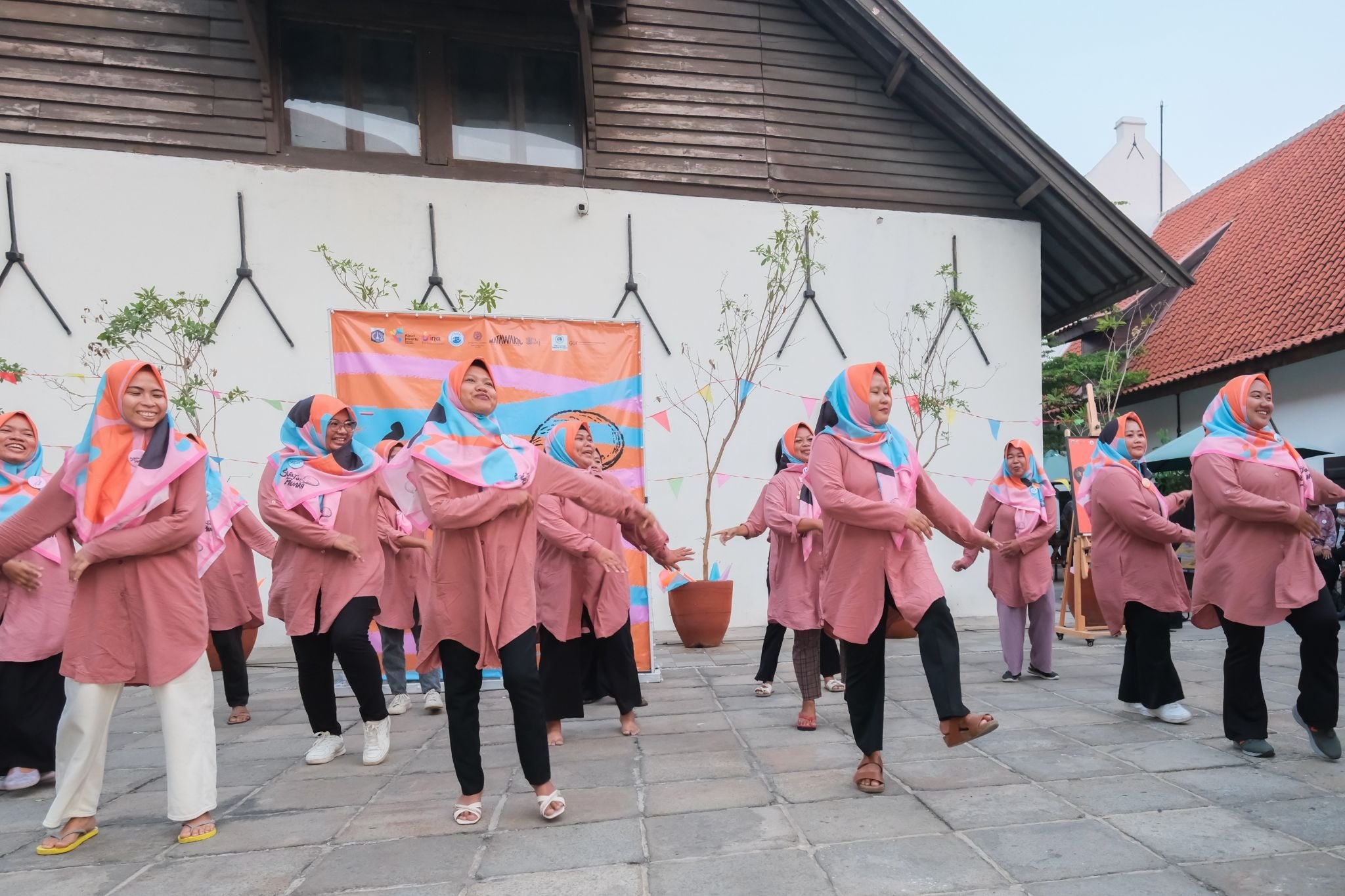
The women of Muara Angke attended the exhibition’s opening night to recount their lived experiences, and they even treated the 200+ attendees to a traditional dance performance. The opening night was designed as a Pesta Rakyat (Community Festival), where street vendors set up in the museum’s plaza to bring Muara Angke into the heart of Jakarta’s Maritime Museum.
The exhibition was not simply about documenting the challenges of life on Jakarta’s coast. It was about creating a space for the women to tell their own stories—in their own way—to an audience that might otherwise never hear them.
Dr. Elle Wibisono is the Technical Director and Research Fellow at the Blue Lab (Georgetown Asia Pacific). Before teaching at Georgetown, she was a fisheries scientist at Conservation International’s (CI) Center for Oceans and led a team of Konservasi Indonesia scientists to conduct biodiversity and fisheries research aboard the OceanXplorer vessel in the Indian Ocean.
This article is part of a series. GIWPS is engaging civil society networks, implementing NGOs, and local women to highlight pioneers on the frontlines who are developing and implementing localized and national solutions, policies, and programming at the intersection of gender, climate, and conflict.
From Jakarta, Georgetown SFS Asia Pacific is learning, connecting, and building alongside the people shaping the future of the Asia Pacific and the Global South.
Explore More
The Changing Landscape of Peace Mediation: Expert Analysis of The Rise of…
In partnership with the Sasakawa Peace Foundation’s Mediation Support Center, the Georgetown…

Sudanese Women Share How to Prevent Mass Atrocities and Promote Peace
Last week, the Georgetown Institute for Women, Peace and Security (GIWPS) hosted…
5 Takeaways from UNGA 81
The Georgetown Institute for Women, Peace and Security (GIWPS) recently returned from…