GIWPS Climate Security Newsletter

Ahead of World Environment Day, the Georgetown Institute for Women, Peace and Security (GIWPS) is excited to launch our climate security newsletter, sharing key convenings, policy engagements, and new research across our climate security portfolio.
At GIWPS, we examine how climate shocks, gender inequalities, emerging conflicts, and fragility are increasingly shaping one another in ways that negatively affect women’s peace and security. We focus on both the risks and opportunities these dynamics generate and the pathways to more sustainable, inclusive, and effective policy and program responses.
We remain committed to advancing climate security policy, research, and advocacy, and elevating the leadership of women shaping responses at the local, national, and global levels.
Evidence Snapshot
- Women are 14 times more likely to die in a climate-related disaster than men.
- Less than 0.01% of global climate finance integrates both climate action and women’s empowerment.
- Investing in female farmers could add $1 trillion USD to global GDP.
- In low and middle-income countries, rural female-headed households lose on 8% more income during heatwaves and 3% more during floods than male-headed households
- Climate shocks drive displacement, violence, child marriage, livelihood loss, and increased unpaid care burdens for women and girls.
GIWPS Climate Engagements
We continue to convene high-level panels, drive international dialogue, and foster global collaboration at the critical intersection of gender, climate, and security.
Women and Water Security
Last month, GIWPS convened a virtual panel on “Water, Women, and Security: Preventing Conflict in an Era of Climate Stress” in partnership with the Ministry for Foreign Affairs of Finland, the African Ministers’ Council on Water, the Women in Water Diplomacy Network, and the Globe Care Foundation, and moderated by GIWPS Executive Director Ambassador Melanne Verveer.
The panel discussed how climate-driven water insecurity is reshaping gendered risks and conflict dynamics, and highlighted how integrating the Women, Peace and Security (WPS) agenda into water policy and programming can drive more inclusive, water-resilient systems. The panel gave specific recommendations for integrating WPS in all six themes of the 2026 UN Water Conference, which will take place in the United Arab Emirates (UAE) in December and is co-hosted by Senegal.
GIWPS also hosted a briefing for water security advocates with Shaima Gargash, Director of Energy and Sustainability at the UAE Ministry of Foreign Affairs, ahead of the UN Water Conference.
GIWPS in Jakarta
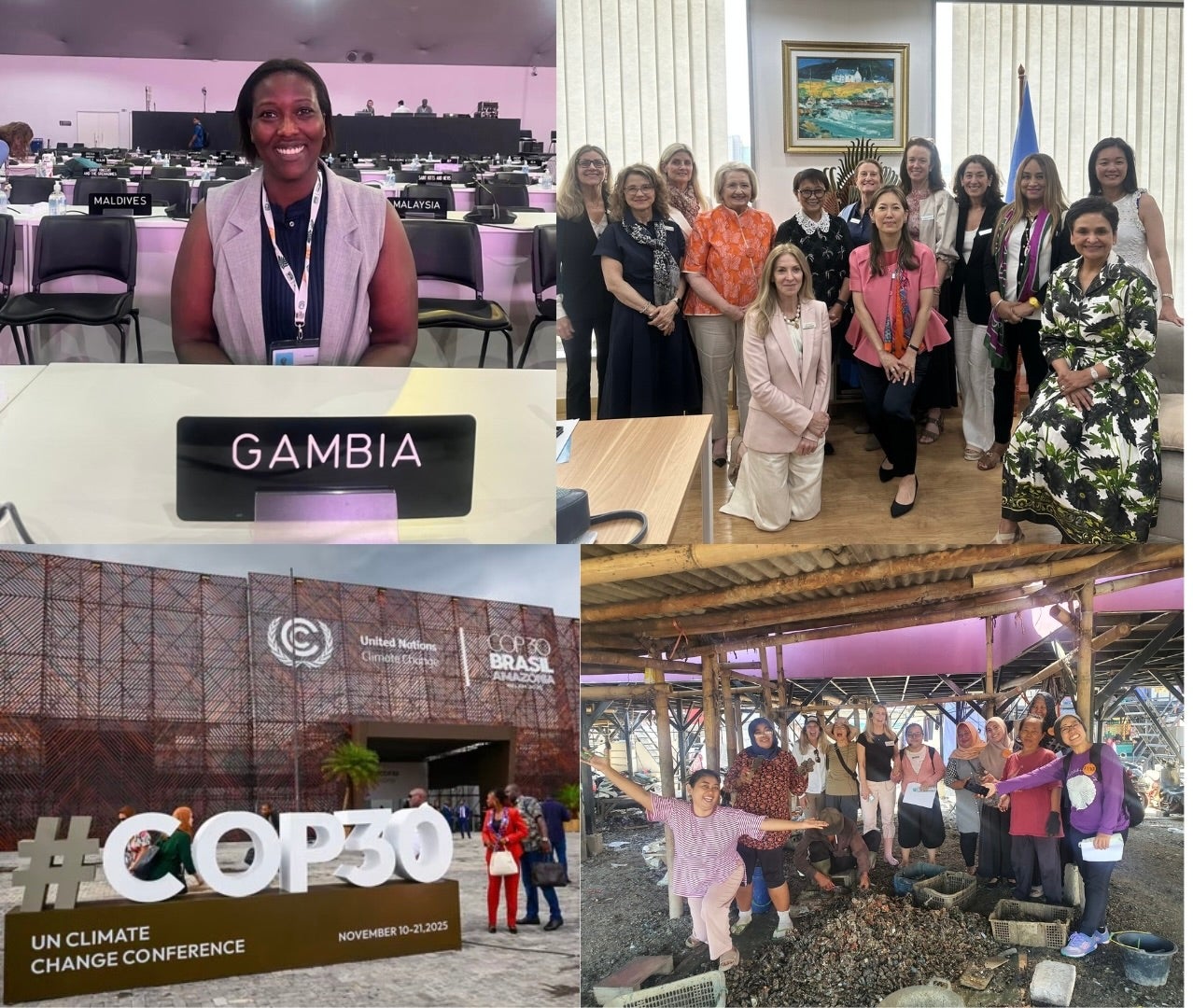
GIWPS traveled to Jakarta with a delegation of our Georgetown Ambassadors for Women, Peace and Security led by Ambassador Verveer to learn how Indonesian leaders are advancing the WPS agenda and women’s progress. While there, the Georgetown Ambassadors met with UN Special Envoy on Water Retno Marsudi to discuss the water scarcity crisis that is accelerating around the globe. The former Indonesian Foreign Minister stressed the need for innovative solutions for water security that will enhance greater engagement across all sectors.
Testimony at the House of Lords
GIWPS held a briefing for the House of Lords hosted by Baroness Mary Goudie. GIWPS’ Director of Policy and Programs, Kimberly Brody Hart, and Gender and Climate Security Fellow, Tamara Bah, joined former UK Minister of Energy, Baroness Margaret Curran, to present how climate change acts as a threat multiplier, deepening fragility and conflict risk globally. They highlighted findings from the GIWPS 2026 Climate Forecasting Report, underscoring that when women’s leadership and inclusive governance are prioritized, states are better able to anticipate, adapt to, and recover from climate shocks.
GIWPS at COP30
GIWPS’ Tamara Bah led the drafting of the Africa Group of Negotiators Ministerial Briefing on gender priority areas for the Belém Gender Action Plan, including statement language submitted to the COP30 Presidency. The briefing used GIWPS climate finance research and advanced key provisions on finance linkages to strengthen the means of implementation at the ministerial level. Bah also served as a panelist at the World Green Economy Organization Pavilion on women’s leadership in climate diplomacy, drawing findings and recommendations from the GIWPS policy paper on women’s representation and negotiation capacity at COP.
Featured GIWPS Publications
Women’s Water Security
This paper examines the growing crisis of women’s water insecurity across the Middle East. “Beyond Security: A Plan for Women’s Water Security Policy and Governance in the Middle East” outlines policy recommendations to close critical gender gaps and makes the case for how equitable water access can strengthen resilience and contribute to a broader peace dividend. Authored by GIWPS MENA Policy Associate Gihan Elhadidy and GIWPS’ Tamara Bah, the paper was launched at a virtual webinar GIWPS convened with the UK Foreign, Commonwealth and Development Office, Social Development Direct, and the International Water Management Institute.
Africa Water Vision 2063
GIWPS’ Tamara Bah also interviewed representatives from the African Ministers’ Council on Water to discuss how the new Africa Water Vision 2063 and Policy (AWV63&P) reframes water security as a peace and governance matter, and why women’s leadership is central to climate-resilient water stability.
AI and Climate Security
GIWPS Gender and Climate Security Fellow published an article in New Security Beat (Stimson Center) on AI’s hidden environmental costs and risks for women.
The Relationship Between Women’s Status & Climate Response
Our latest WPS Index shows a strong correlation with the Notre Dame Climate Adaptation Index, suggesting that countries where women’s status in inclusion, justice, and security is higher are also better equipped to adapt and respond to climate crises.
- Colombia is one of the world’s most dangerous countries for land and environmental defenders, with women from Indigenous and Afro-Colombian communities at heightened risk of violence and exploitation. Yet, women in Colombia are leading advocacy efforts and developing sustainable solutions to the climate crisis at the local, national, and global levels.
- In both Iran and Iraq, women and girls are disproportionately impacted by intensifying drought and environmental degradation which is accelerating water scarcity, undermining agricultural livelihoods, and compounding fragility, particularly amid ongoing regional conflict.
- Somalia is one of the countries in Africa most acutely impacted by the climate-conflict nexus, which is driving mass displacement and widespread hunger. These compounding crises fall heaviest on women and girls, who constitute an estimated 80 percent of displaced populations and experience heightened vulnerabilities, including gender-based violence, early marriage, and loss of education and livelihoods.
Read More:
Climate and Conflict: The Impact on Women and Girls
Across countries monitored by the WPS Conflict Tracker, climate is driving conflict and displacement, exacerbating risks to women and girls. At the same time, women-led efforts prove critical to combatting the impacts of climate change through advocacy, leadership, and innovative solutions.
What We’re Reading
- What the Critical Minerals Race Means for Women (Foreign Policy)
- Water and Women: When a Drop of Water Becomes a Matter of Justice (The Iraqi Civil Society Solidarity Initiative)
- Six women win 2026 Goldman prize, world’s top environmental award (Al Jazeera)
- SEEDS OF RESILIENCE: Lessons from Japan on Human-Centered Paths to Disaster Recovery (Sasakawa USA)
- Gender-Based Violence: Overcoming an Unseen Barrier to Effective Climate Action Report (UK Aid, Australian Government, What Works)
- e-Learn course on climate, peace, and security, exploring how climate-related risks shape conflict dynamics, governance challenges, and gendered vulnerabilities (UN CC)
Looking Ahead
Ambassador Verveer will speak at the Zero Waste Forum in Istanbul. Organized under the theme “Road to Antalya: Zero Waste as Climate Action,” the forum will serve as a critical platform to advance COP31-aligned initiatives. Women remain at the heart of the zero-waste movement and broader climate action—comprising the majority of the global informal waste workforce, driving household resource management, and pioneering community-based sustainability solutions. Waste, water, and climate are deeply interconnected, and elevating women’s leadership in these sectors is essential to achieving global climate targets.
Additionally, GIWPS Gender and Climate Security Fellow Tamara Bah will present critical insights on protecting female environmental rights defenders at the 4th International Conference on Environmental Peacebuilding in Canada.
Looking further into the year, GIWPS will continue to deepen its global engagement ahead of COP31, which will be held in Turkey this November, as well as the 2026 UN Water Conference in December, where we remain focused on embedding WPS principles across all six thematic tracks.
“Peace and security are not just about the absence of conflict—they’re also about justice, inclusion, and the right to live in a healthy environment. That’s why our peace efforts are deeply connected to environmental justice and women’s empowerment. By protecting our environment and ensuring women have a voice in decisions that affect our lives, we are building the foundation for long-term peace, dignity, and community resilience.” – Anonymous Peacebuilder, Philippines (Respondent, GIWPS WPS Survey)
Explore More
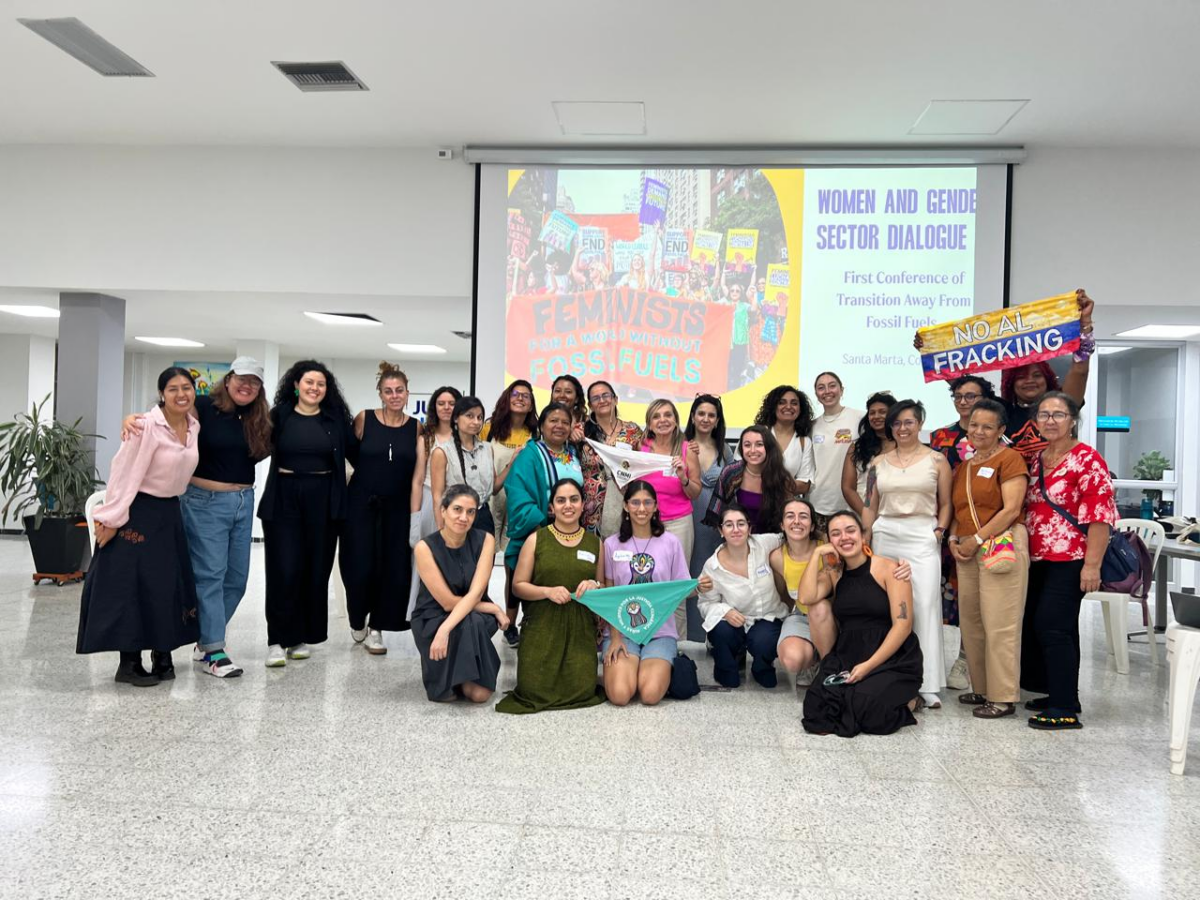
Protecting Women Environmental Defenders: Lessons from Colombia
For women environmental defenders, protecting the environment is inseparable from peacebuilding, protecting…

Following the Money: Rethinking Financial Power in a Climate-and Conflict-Driven World
One thought has stayed with me after a series of conversations about…